Burst Fade Mullet: Trendy Haircut Styles & Ideas
I’ve been cutting hair for years, and the burst fade mullet is one of the most requested cuts in my chair right now. It’s not just a trend. It’s a real haircut that works for busy guys, curly hair, straight hair, and even kids.
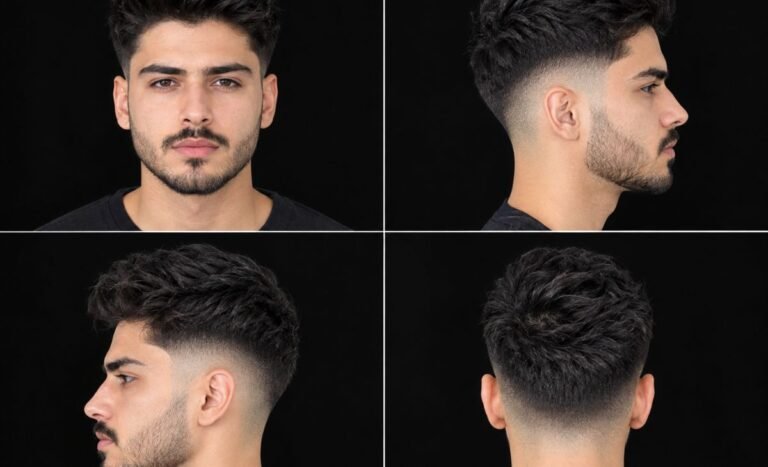
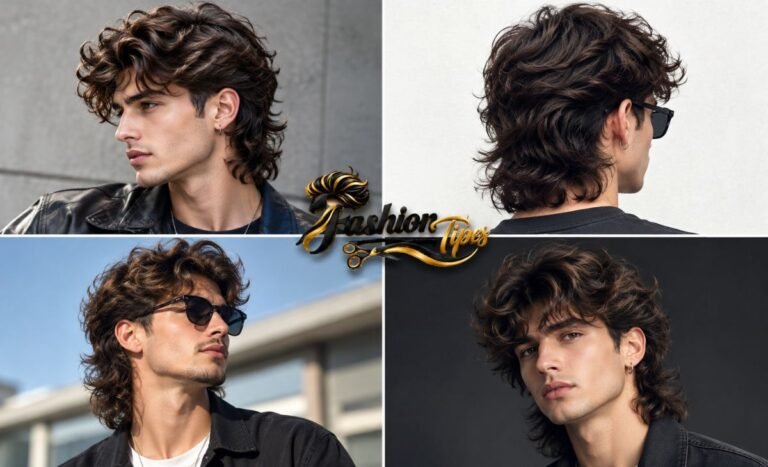
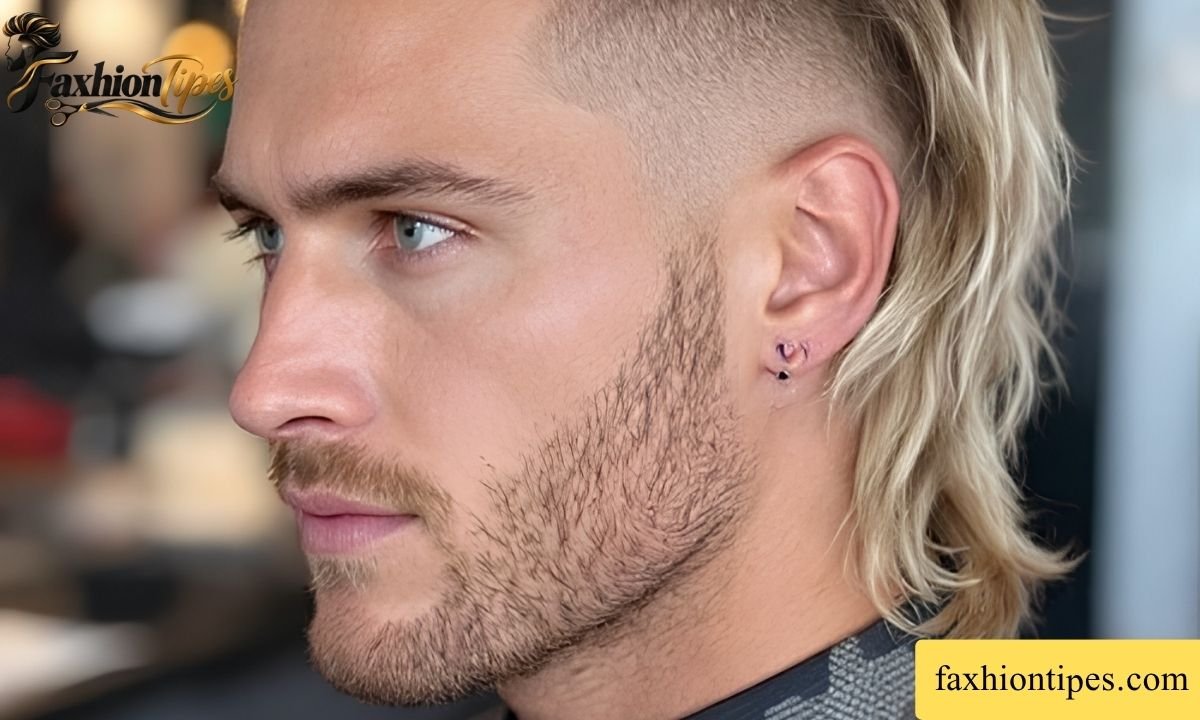
A burst fade mullet mixes a rounded fade around the ear with long hair left in the back. You get short, clean sides and a bold tail. It’s sharp up front and wild in the back. That mix is exactly why people love it.
In this guide, I’ll walk you through what this cut actually is, how much it costs, which guard numbers your barber should use, and which version fits your face shape. No fluff. Just what you need before you sit in the chair.
What Is a Burst Fade Mullet
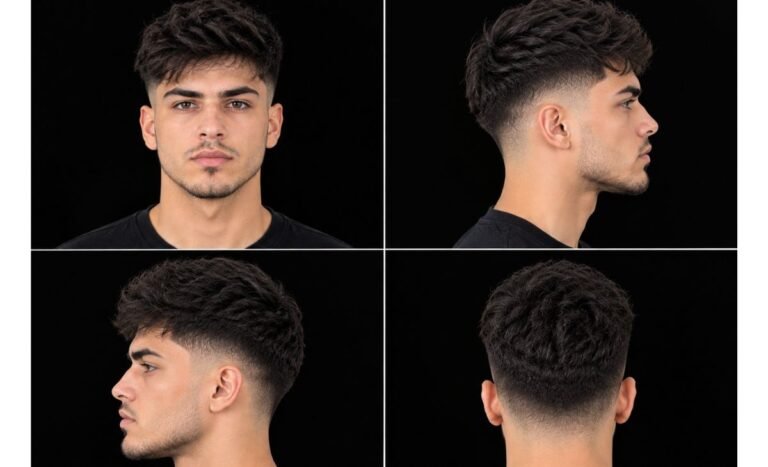
A burst fade mullet is a haircut with a curved fade that wraps around the ear like a burst of light, paired with long hair kept in the back like a mullet. The fade fades tight near the ear and blends outward in a half-circle shape instead of a straight line.
Most barbers cut the burst fade with a size 0 or 1 guard closest to the skin, blending up to a 3 or 4 on top. The back stays untouched, usually 3 to 6 inches long depending on how bold you want the mullet tail.
This cut costs between $25 and $60 at most barbershops, depending on your city and shop quality. Ask for “a burst fade mullet with a skin fade around the ear” so your barber knows exactly what you want.
Why Choose a Mullet Fade
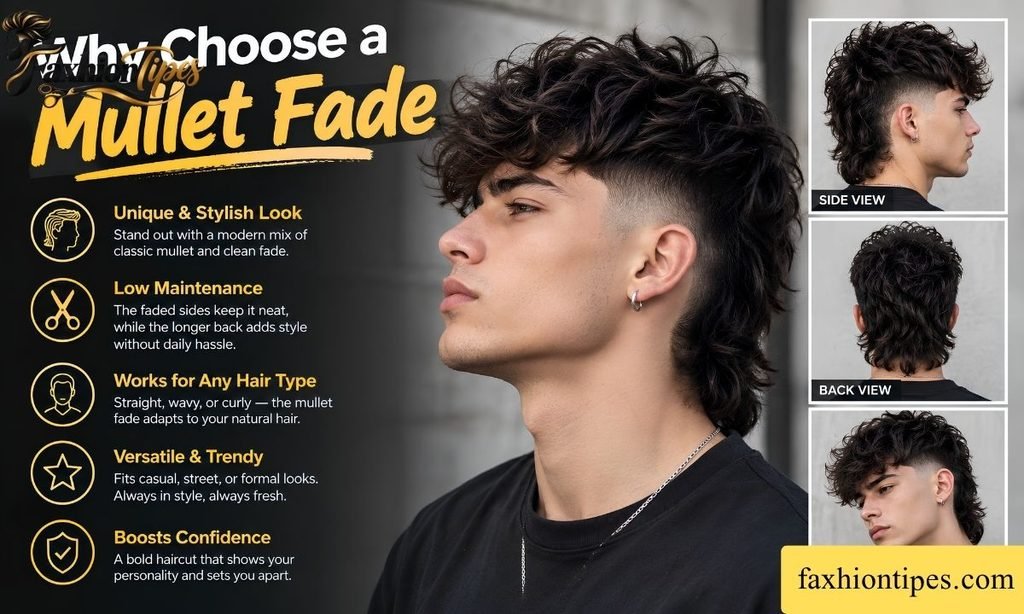
A mullet fade gives you a low-maintenance front and a statement back in one cut. You look neat at work and bold on the weekend. That’s the whole appeal.
Here’s why guys keep asking for it:
- It grows out better than a normal fade since the length in back hides regrowth
- It works on straight, wavy, and curly hair types
- It suits round, square, oval, and heart face shapes with small tweaks
- It needs a touch-up only every 3 to 4 weeks
- It pairs with beards, no beard, glasses, and most hairlines
A burst fade mullet also photographs well from every angle, which is part of why it’s blown up on social media over the past two years.
Read more hair ; burst fade mullet
Is a mullet a burst fade?
No, a mullet is not automatically a burst fade. A mullet is any style with short front and sides and long back hair, while a burst fade is a specific curved fade pattern around the ear. You can pair a mullet with a burst fade, a drop fade, or a taper, and each one changes the whole look.
Is mullet haram in Islam?
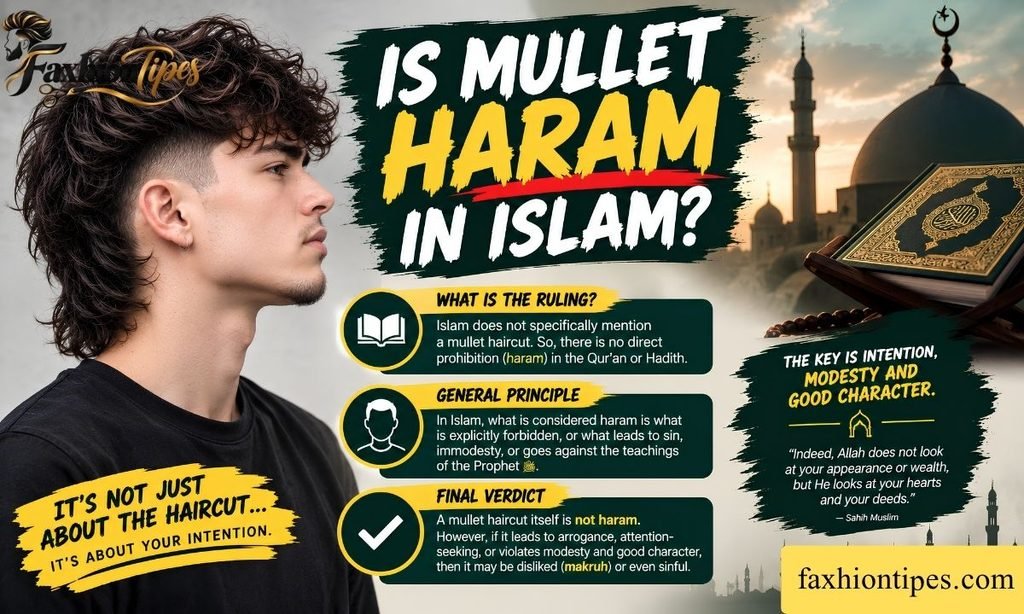
There’s no single ruling that says a mullet is haram. Islamic guidance generally discourages haircuts that copy specific styles tied to disbelief or that involve shaving parts of the head unevenly without reason, known as qaza. Scholars differ on this, so it’s best to ask a trusted local imam if you want a clear answer for your own situation.
Is a burst fade haram?
A burst fade itself is just a fade pattern, not a religious symbol, so most scholars don’t flag it directly. The concern some raise is around uneven shaving (qaza), where parts of the head are shaved and other parts left long in a way seen as inconsistent. If this matters to you, talk to a local scholar before booking the cut.
What is the V Burst fade?
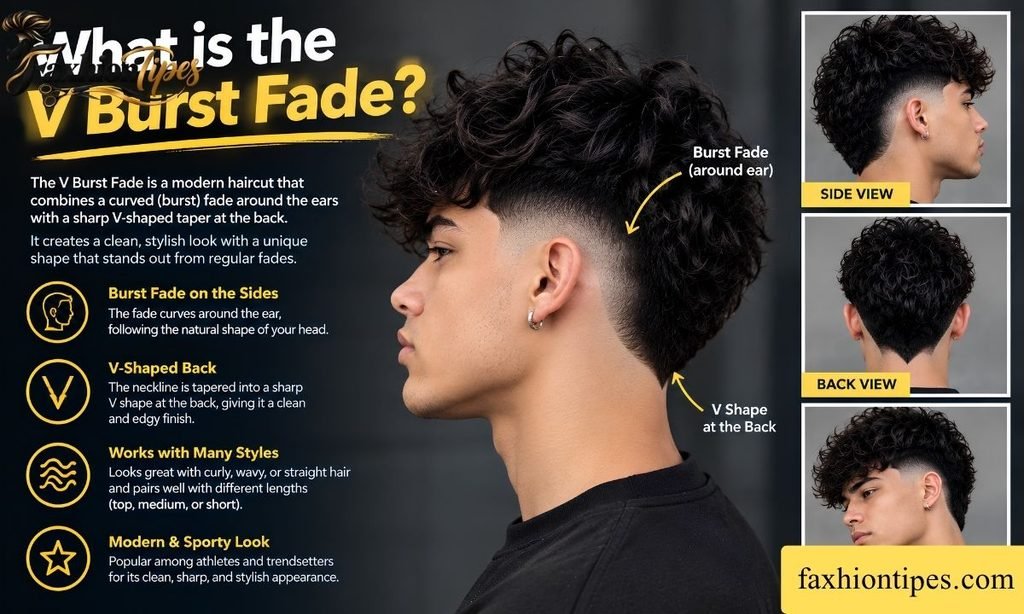
A V burst fade is a burst fade mullet where the back hairline is cut into a sharp V shape instead of a rounded or straight line. Barbers use clippers or a straight razor to carve the V point at the nape of the neck. It’s a bolder, more graphic version of the standard burst fade mullet.
Burst Fade Mullet vs Drop Fade Mullet
Both cuts use long back hair, but the fade shape changes the whole vibe. Here’s how they stack up:
| Feature | Burst Fade Mullet | Drop Fade Mullet |
| Fade shape | Curves around the ear | Drops lower behind the ear |
| Best for | Round and square faces | Oval and long faces |
| Guard numbers | 0 to 4 blend | 1 to 5 blend |
| Styling effort | Low | Low to medium |
| Price range | $25–$60 | $30–$65 |
A burst fade mullet keeps more visual roundness near the ear, which softens sharp jawlines. A drop fade mullet pulls the fade line down and back, which adds length to a shorter face.
Burst Fade Mullet vs Taper Mullet Fade
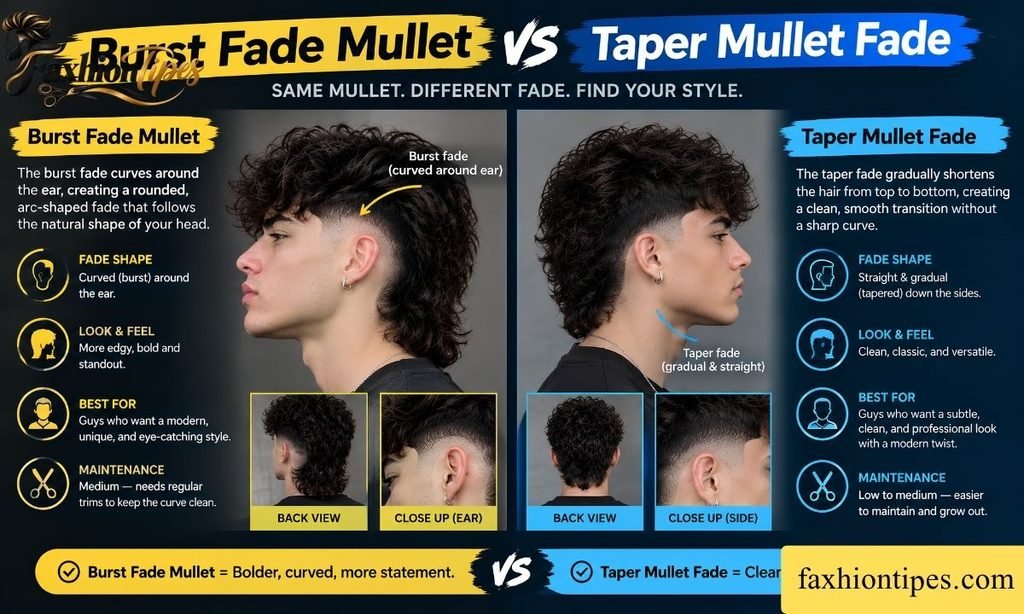
A taper mullet fade uses a straight, gradual fade instead of a curved one, so it looks more traditional and works better in office settings. A burst fade mullet is louder and trendier, with that curved burst pattern standing out more.
If you want something your boss won’t ask questions about, go taper. If you want heads to turn, go burst. Both keep the same long mullet tail in back, so the real difference sits entirely in the sides.
Face Shape Tips
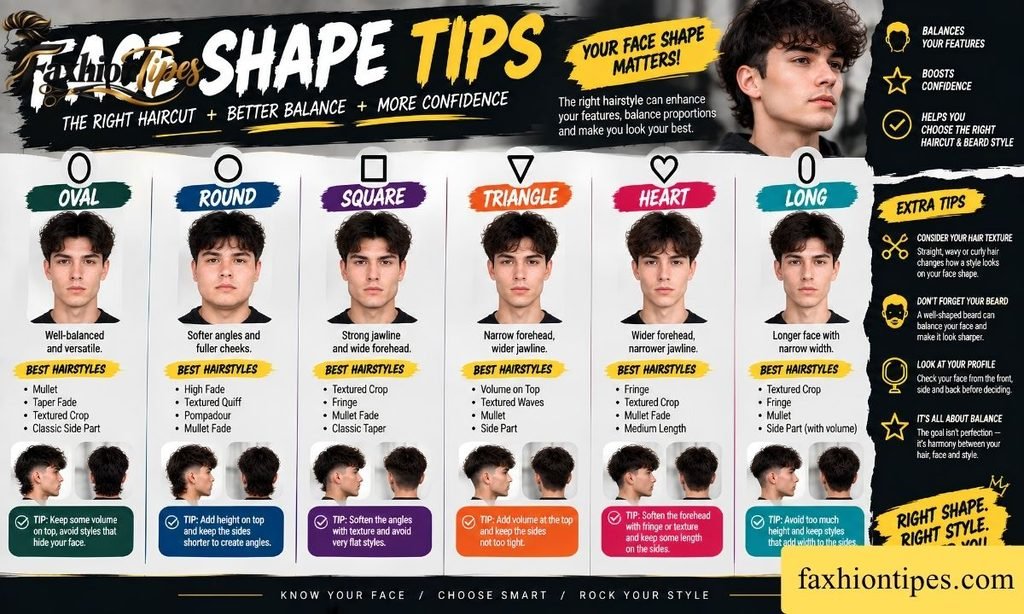
Your face shape decides which burst fade mullet version actually suits you. Here’s a quick breakdown:
- Round face: Ask for more height on top and a tighter burst fade to add length
- Square face: A burst fade mullet softens strong jaw angles nicely
- Oval face: Almost any burst fade mullet version works here
- Heart face: Keep the top shorter and let the mullet tail add balance at the bottom
- Long face: Skip too much top height; keep it flatter with a low burst fade
Tell your barber your face shape and one goal, like “I want it to look less round” or “I want more length.” That one sentence saves you a bad haircut.
Burst fade mullet men
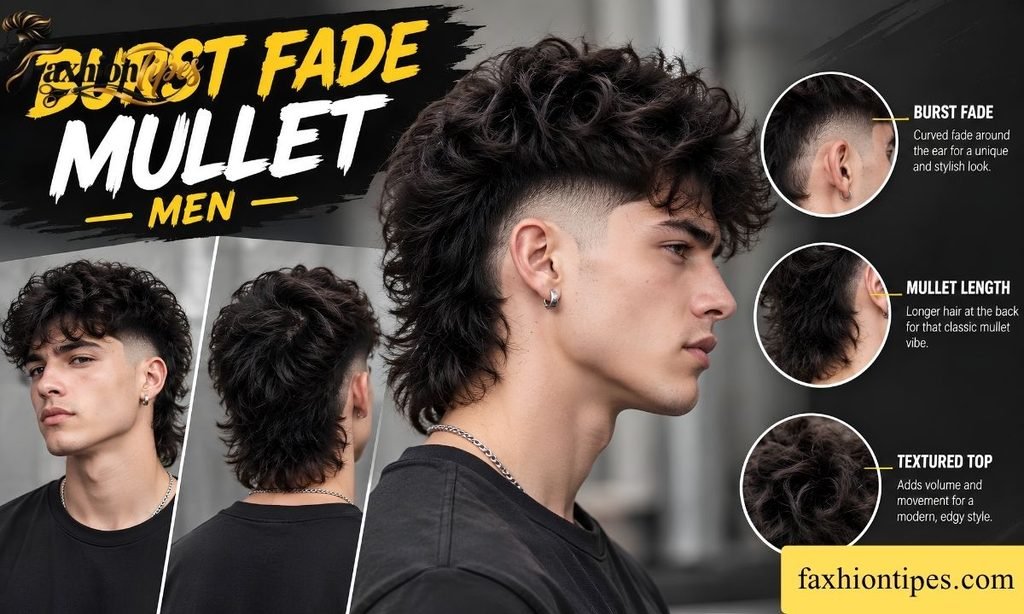
Men choosing a burst fade mullet today usually want a low-maintenance style that still looks intentional and current. This version leans masculine with sharper, tighter fade lines and less texture on top compared to softer women’s or unisex mullet fades. It suits guys with straight to wavy hair and works well for both office jobs and creative fields. Ask your barber for a 1 guard on the sides blending into scissor-cut length on top, with the back left 4 to 5 inches long.
Bangs, Hairline, and Sideburns
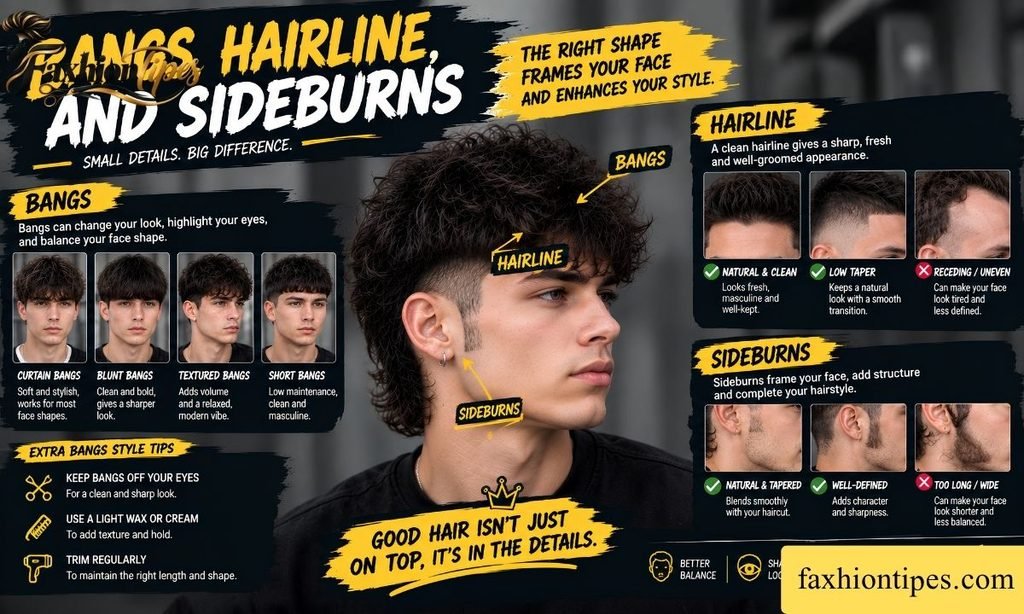
Bangs on a burst fade mullet usually fall just above the eyebrows and get textured with scissors so they don’t look blunt. A straight hairline works for most face shapes, but a slightly rounded one softens a square jaw better.
Sideburns should connect cleanly into the burst fade, not stop abruptly. Ask your barber to “taper the sideburns into the burst” so there’s no harsh line by your ear. This small detail is what separates a clean cut from a messy one.
1. Classic Burst Mullet
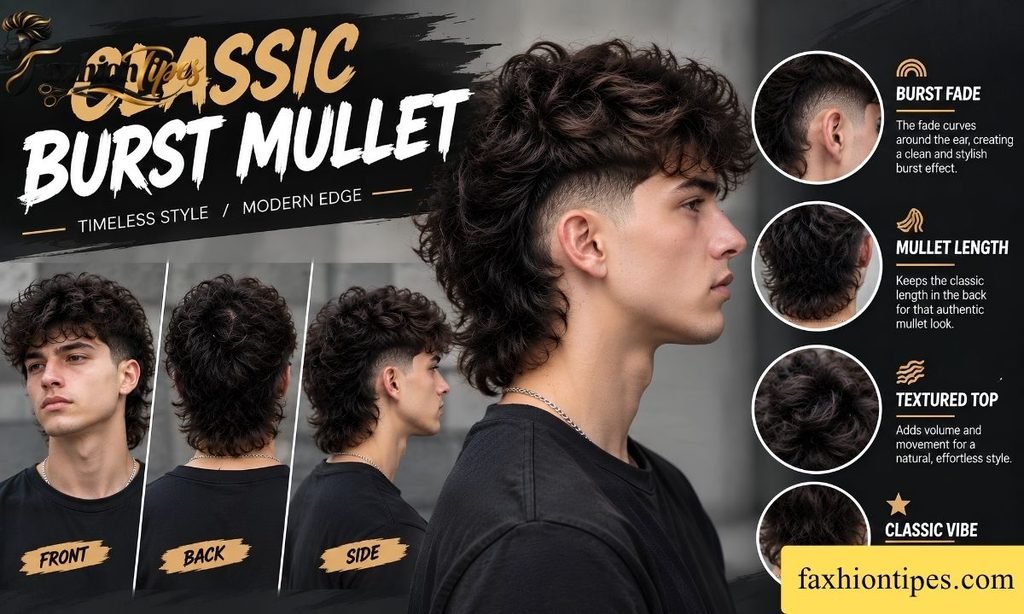
The classic burst mullet is the original version most barbers learned first, with a simple round burst fade and a moderate-length tail. This style suits guys who want the mullet look without going too extreme on either end. Barbers typically use a 1 guard blending to a 3, with the back kept around 4 inches. Wash it every other day and use a light pomade to keep the top from getting flat.
2. Burst Fade Mullet Haircut
This version is the full package, combining a tight skin-level burst fade with textured length on top and a natural mullet flow in back. It works best on guys with medium-density hair who want maximum contrast between short and long sections. Your barber should go 0 guard at the ear, blending to scissor-length on top over about a 2-inch zone. Get it trimmed every 3 weeks so the burst edges stay crisp.
3. Low Burst Fade Mullet
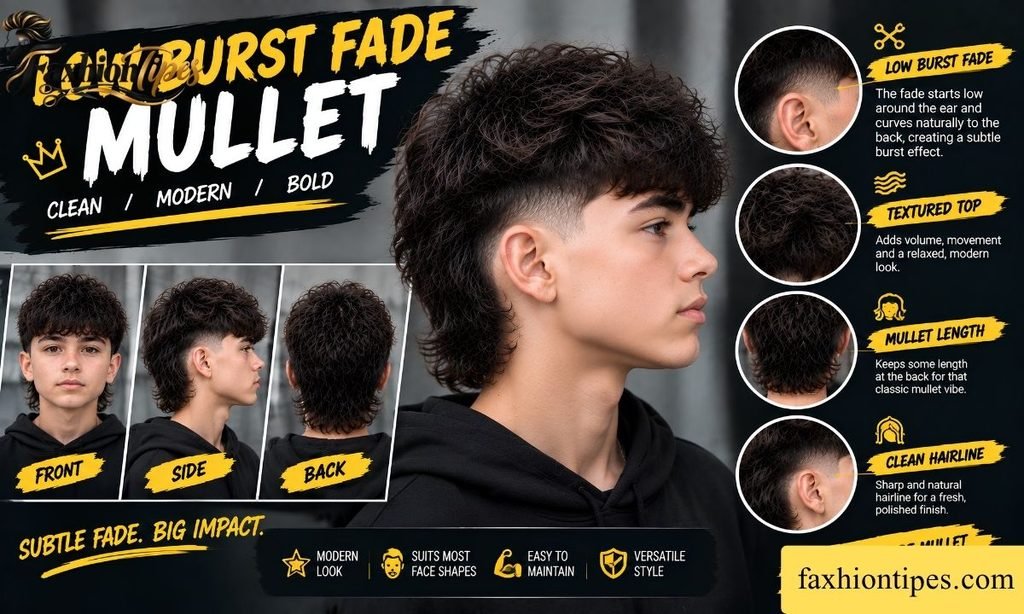
A low burst fade mullet keeps the fade starting further down, closer to the ear lobe, instead of climbing high up the head. This suits guys with thinner hair since it shows off more natural volume up top. Barbers usually start the fade at guard 1 right above the ear and blend up slowly. It needs less frequent touch-ups, often every 4 to 5 weeks, since the fade line grows out slower.
4. Straight Hair Burst Fade Mullet
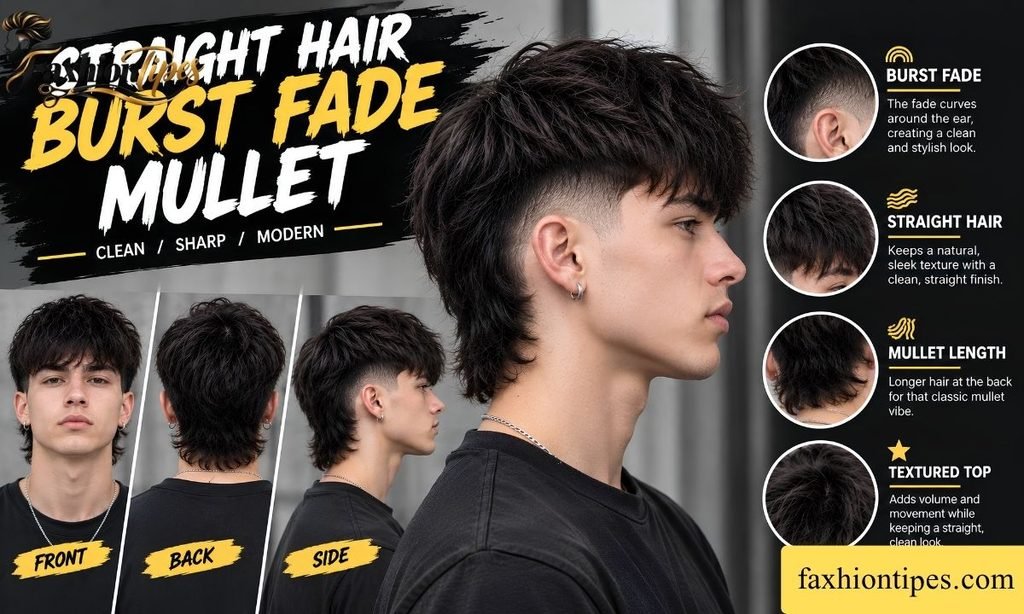
Straight hair holds the burst fade line the cleanest, since there’s no curl pattern to blur the blend. This version suits guys who want sharp, visible clipper work and a defined edge around the ear. Ask for a 0.5 guard fade with the top cut to one length using scissors over comb. Style it with a matte clay to avoid the shiny, flat look straight hair can get.
Burst fade mullet short
A short burst fade mullet trims the back tail down to 2 to 3 inches instead of letting it grow long, giving you a subtler mullet effect. It’s ideal for first-timers nervous about committing to a dramatic mullet or for workplaces with stricter dress codes. This version pairs a standard burst fade with a shorter nape, so you get the shape without the drama. Trim every 3 weeks to keep the short tail from looking uneven as it grows.
5. Burst Fade Mullet Curly Hair
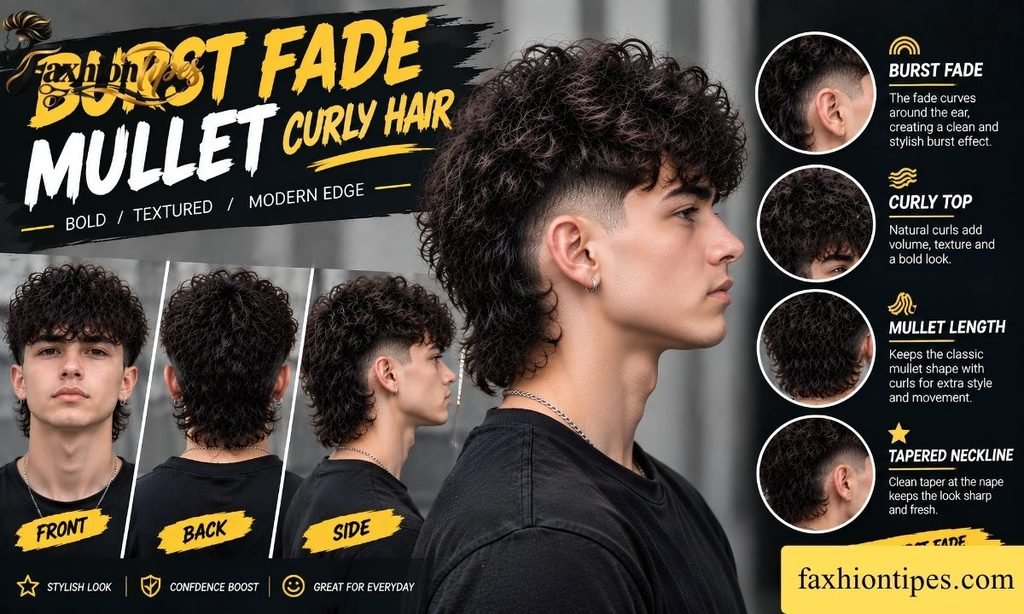
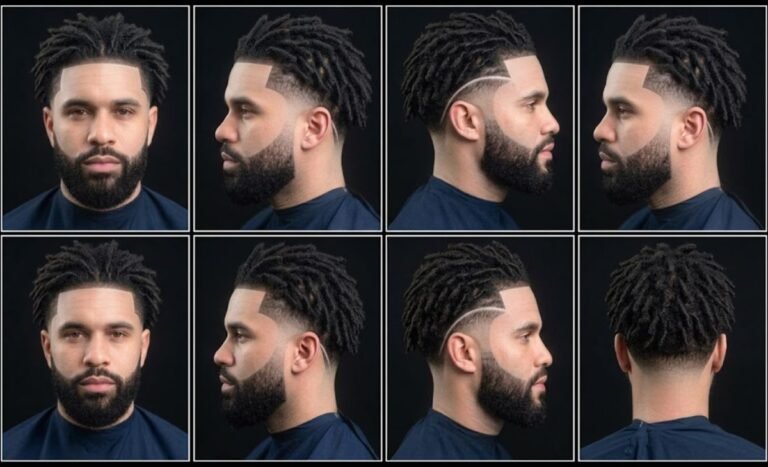
Curly hair adds natural texture that makes the burst fade pattern look even more dynamic and full. This version suits guys who want volume on top without using much product. Barbers should use clippers over comb on curls, not a direct 0 guard, to avoid cutting too close and losing curl definition. Use a curl cream instead of gel, since gel can weigh curls down and hide the burst shape.
6. Mullet Skin Fade
A mullet skin fade takes the fade all the way down to bare skin, giving the sharpest possible contrast against the long back hair. This suits guys with strong hairlines and no scalp concerns like eczema or sensitivity. Ask your barber for a “skin fade blending to a 3 on top” for this exact look. It grows out fastest of all mullet fade versions, so plan for a touch-up every 2 to 3 weeks.
7. Mullet Side Fade
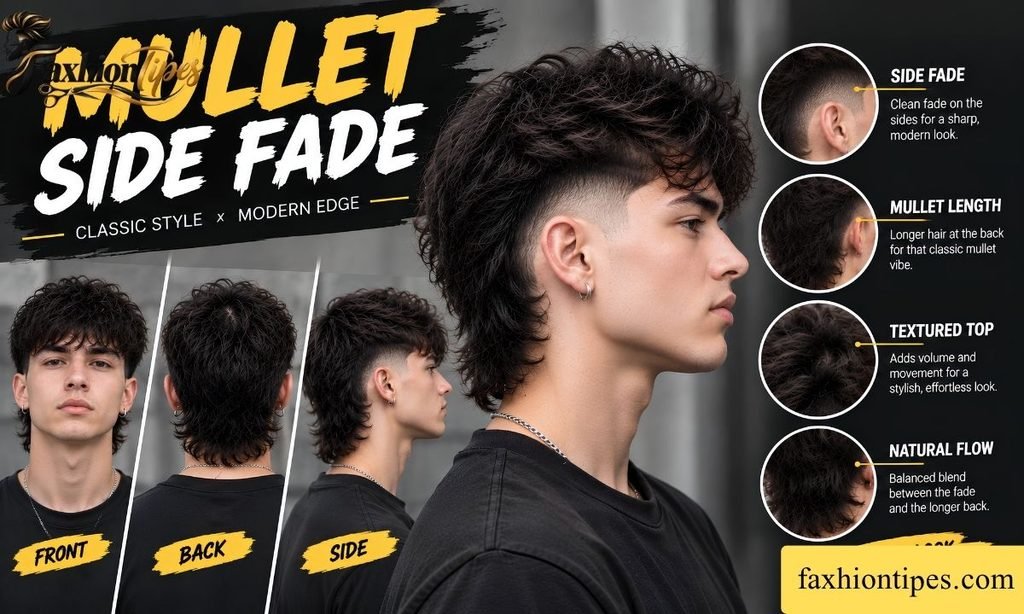
A mullet side fade focuses the fade work only on the sides, leaving the back area near the crown untouched and blending directly into the mullet length. This works well for guys who want a simpler cut with less clipper detail overall. Barbers usually run a 2 guard on the sides only, skipping the burst curve for a straighter line. It’s easier to maintain at home between shop visits since the fade zone is smaller.
8. Modern Mullet Fade
The modern mullet fade updates the old-school mullet with sharper fade work and a more textured, piece-y top instead of the flat 80s look. This version suits guys who follow current trends and want something Instagram-ready. Barbers use a 1 to 4 guard blend with point-cutting scissors on top for texture. A light matte wax finishes it off without looking greasy.
9. Taper Mullet Fade
A taper mullet fade uses a gradual, straight-line fade instead of a curved burst, giving a more traditional, professional finish. This suits guys in corporate jobs or conservative industries who still want the mullet’s long back. Ask for a 2 guard tapering to a 4, kept straight and even. It’s the easiest version for barbers to replicate consistently, so it’s a safe pick for regular visits.
Burst Fade mullet French crop
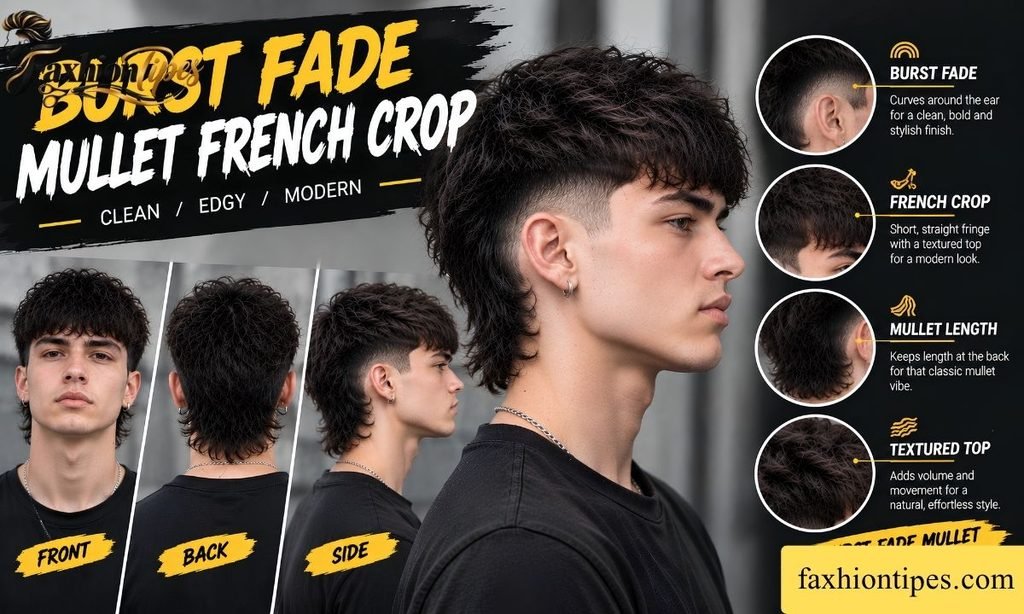
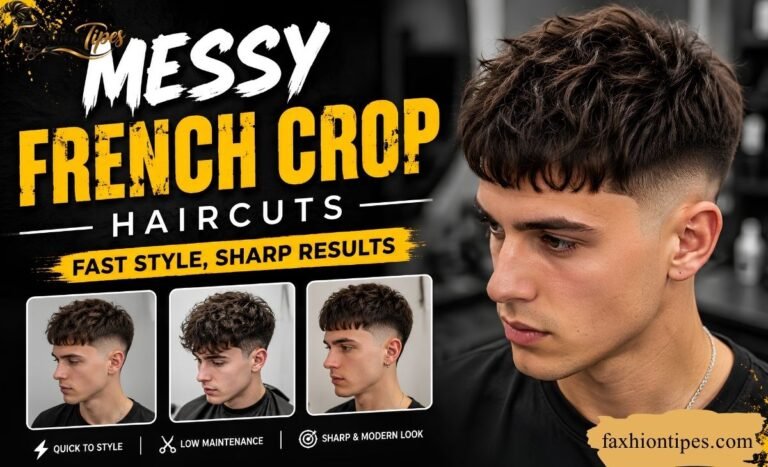
This version combines a short, blunt fringe from the French crop with a curved burst fade on the sides and a mullet tail in back. It suits guys with straight or wavy hair who want a defined fringe up front and drama in the back. Barbers cut the fringe to about 1 to 2 inches with scissors, then fade the sides with a 1 guard. Style the fringe forward with a strong-hold paste for the best French crop shape.
10. Curly Mullet Fade
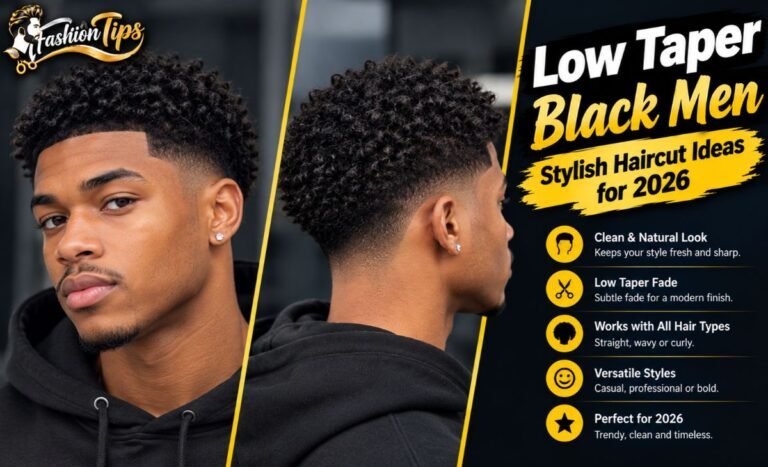
A curly mullet fade lets natural curls stay long and loose in the back while the sides get faded down for contrast. This suits guys with type 2 or 3 curls who want low daily styling effort. Barbers should cut dry, not wet, so curls fall into their true shape before fading the sides with a 1 or 2 guard. Scrunch in a curl-defining cream weekly to keep the back section from frizzing.
11. Short Mullet Fade
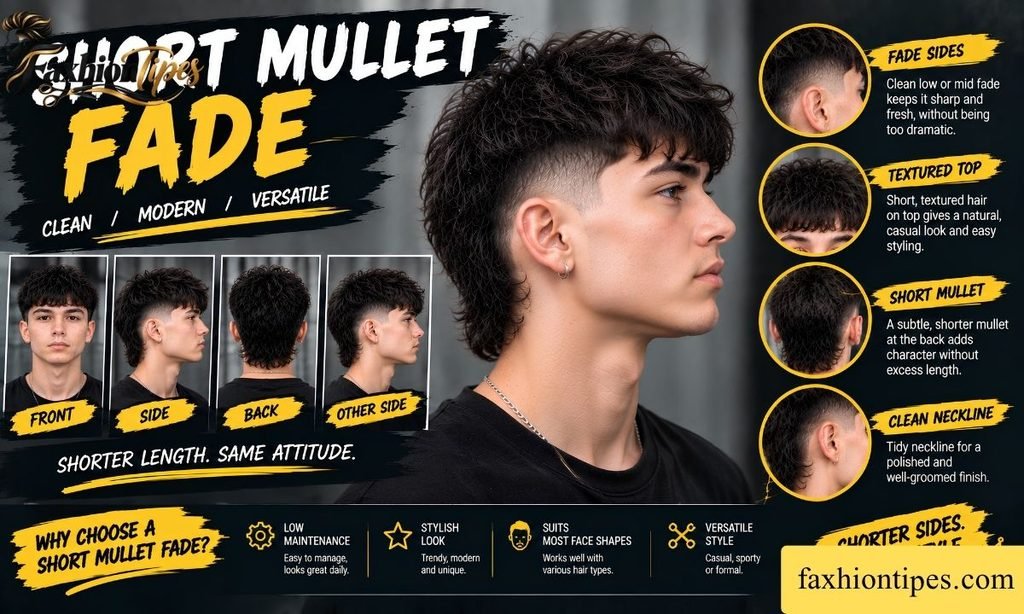
A short mullet fade trims both the top and the back closer than most mullet versions, making it more subtle and office-friendly. This suits guys easing into the mullet trend for the first time. The back stays around 2 inches with a 2 guard fade on the sides for a soft blend. It needs trims every 3 weeks to keep the short length looking sharp instead of shaggy.
12. Kids Mullet Fade
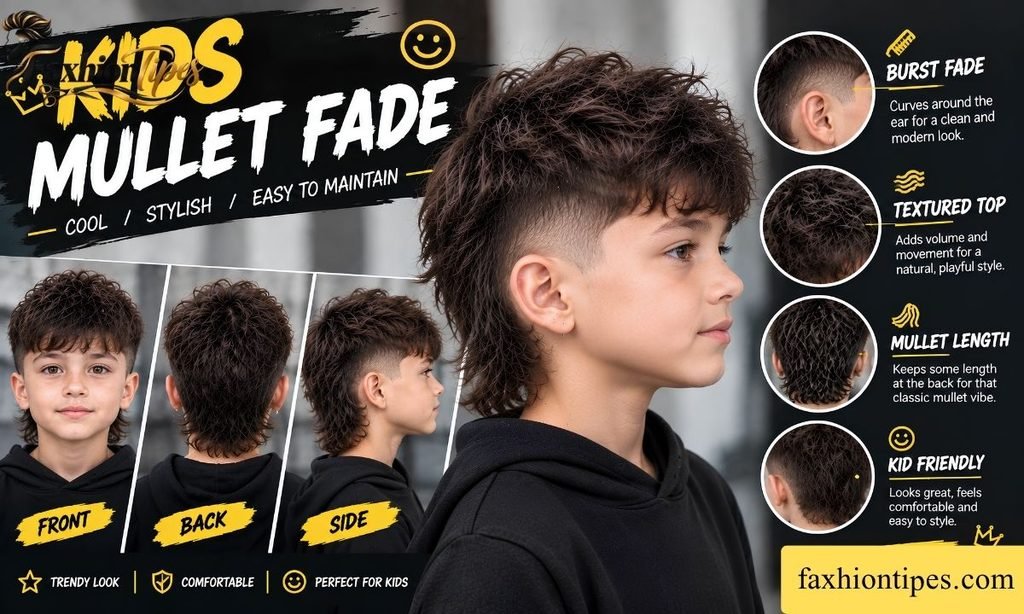
A kids mullet fade uses gentler, higher guard numbers to keep the cut soft and comfortable for younger scalps. This version suits boys ages 5 to 12 whose hair is often finer and thinner than adult hair. Barbers typically use a 2 guard minimum, skipping skin fades to avoid irritation. Keep the back trimmed every 4 weeks since kids’ hair often grows faster than adults expect.
13. Taper Modern Mullet Fade
This style blends a classic straight taper with modern texturing on top and a burst detail near the ear only. It suits guys who want 80% professional and 20% edgy in one cut. Ask for a 3 guard taper with a small burst accent kept tight around the ear alone. A matte cream on top keeps the modern texture visible without looking wet.
14. Taper Short Mullet Fade
The taper short mullet fade is the most conservative version on this list, pairing a gentle taper with a short back length under 2 inches. This suits guys who want to try the mullet shape without a bold statement. Barbers use a 3 guard blending to a 5, with scissors finishing the back for a soft edge. It holds its shape well and only needs a trim every 4 to 5 weeks.
Read more hair ; burst fade mullet
FAQs
What is a burst fade mullet?
A burst fade mullet combines a rounded “burst” fade — cut close around the ears in a semi-circle — with a mullet’s short front/sides and longer back. It blends fade precision with mullet volume.
How long does hair need to be for a burst fade mullet?
You typically need at least 4-6 inches on top and back before cutting. Shorter hair limits how much length you can leave for the mullet’s signature back section.
How much does a burst fade mullet cost?
Prices usually range from $25-$60 at a barbershop, depending on location and barber skill. Detailed burst fades often cost more than standard fades due to the precision required.
How often do you need to get a burst fade mullet trimmed?
Every 2-3 weeks to maintain the fade’s crispness. The mullet portion can grow longer between visits since only the sides need regular touch-ups.
Does a burst fade mullet work for curly hair?
Yes, curly hair actually adds great texture and volume to the mullet section, while the burst fade keeps sides neat and defined.
Summary
A burst fade mullet is a bold, low-maintenance cut that mixes a curved fade with long back hair, and it works on almost any hair type or face shape once you pick the right version. From the classic burst mullet to the kids mullet fade, there’s a variation here for nearly every guy. Bring this guide to your next appointment, show your barber the guard numbers, and get the exact burst fade mullet you want.