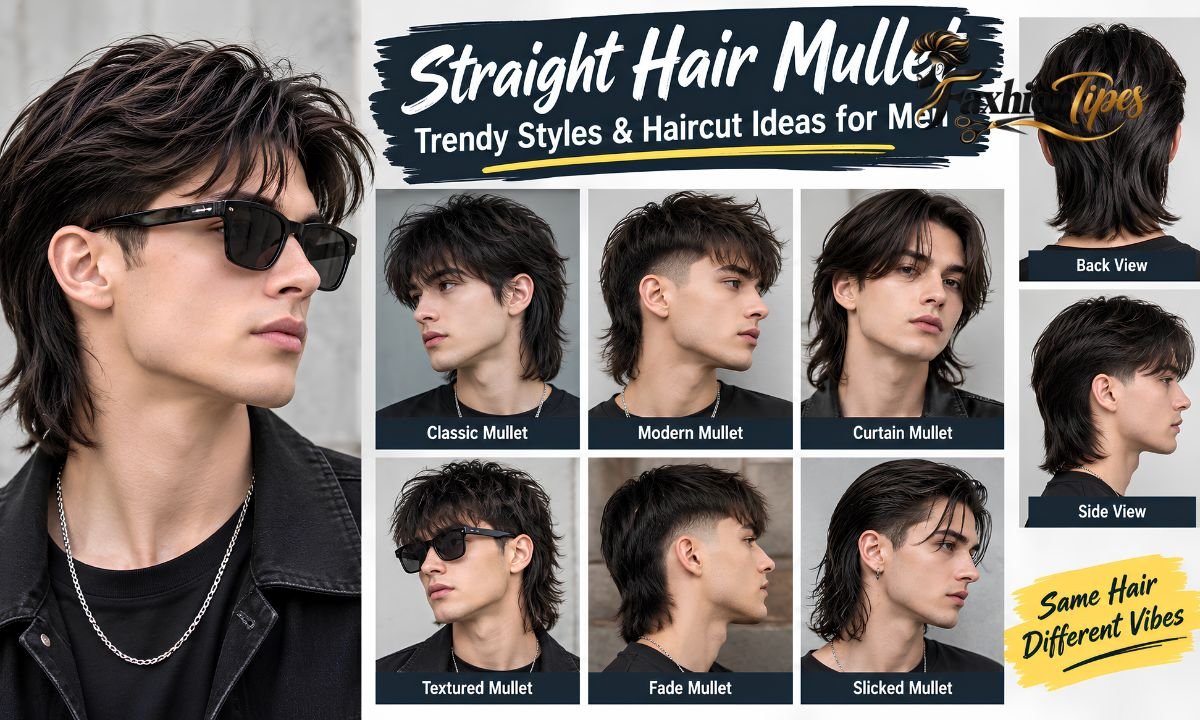
Straight Hair Mullet: Trendy Styles & Haircut Ideas for Men
You’ve seen it all over your feed. Now you want a straight hair mullet of your own, and you want it done right. This cut takes the classic mullet shape and pairs it with straight hair, which honestly makes it look sharper and easier to manage than the curly or wavy version. I’ve cut a lot of these in the chair, and I’m going to walk you through every real variation, what it costs, what to tell your barber, and which version actually fits your face.
A straight hair mullet is not one single haircut. It’s a whole family of styles, and picking the wrong one for your hair type is the most common mistake I see walk through the door.
What Is a Straight Hair Mullet?
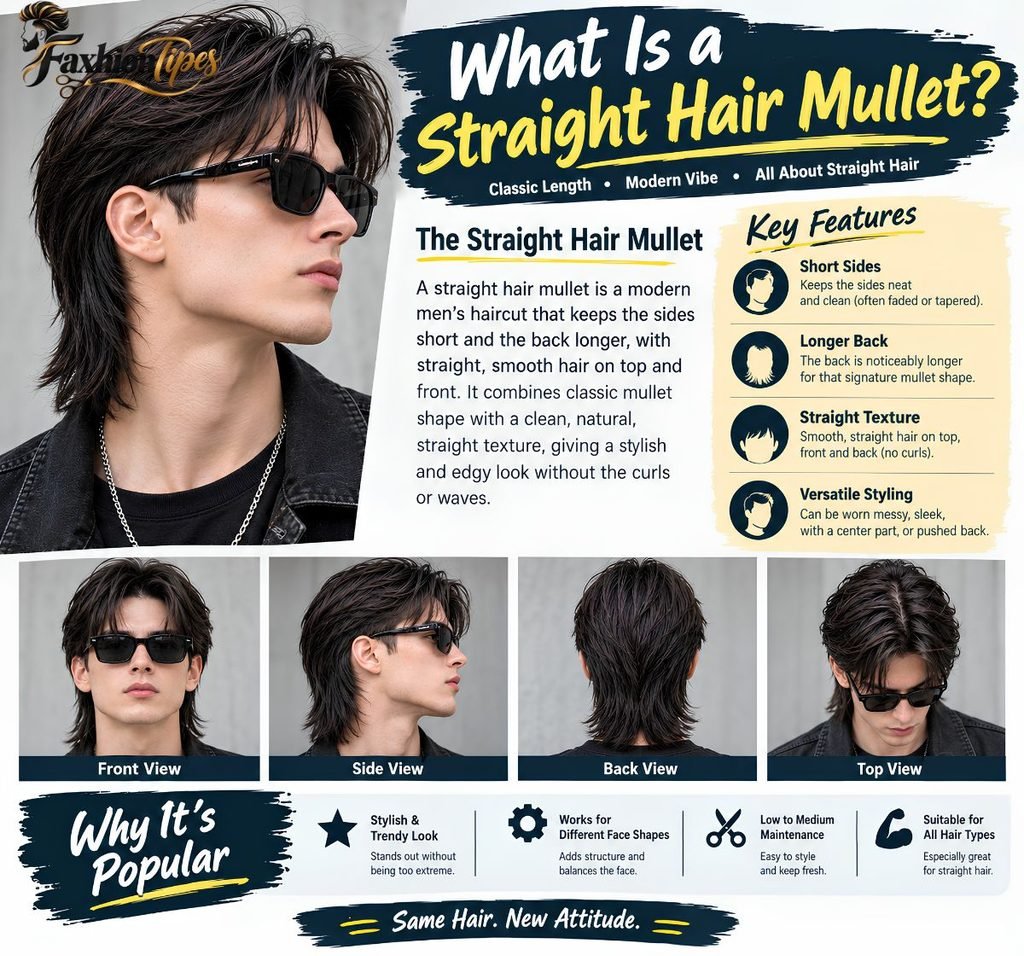
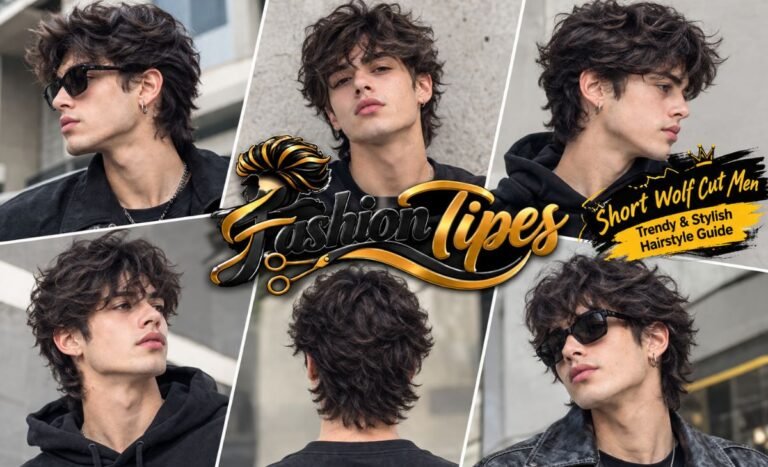
A straight hair mullet is a haircut with short or faded sides and a longer back, cut on hair that lies flat instead of curling or waving. The straight texture makes the length in the back look sleek instead of bulky. It also makes the line between short and long much cleaner. Guys with straight hair actually have an easier time growing this cut out evenly, because the hair doesn’t fight you with frizz or shrinkage.
Barbers like working with straight hair for this style because the fade blends without extra thinning work. That’s a real advantage if you’re new to mullets and nervous about upkeep.
Read more hair: straight hair mullet
Why Straight Hair Is Perfect for a Mullet
Straight hair holds a mullet shape better than curly hair because it falls in one direction and shows off the length contrast clearly. You get a crisp line where the short sides meet the long back, without any extra product needed to control frizz. That’s why a straight hair mullet photographs so well and why it’s blown up online this year.
Modern Straight Hair Mullet
The modern take on this cut uses a tighter fade and shorter sides than the old-school 80s mullet, while still keeping length in the back. It suits guys who want the mullet shape without looking like a throwback. Ask for a size 2 guard on the sides blended into a fade, with 4 to 6 inches left untouched in the back. Wash day is easy since straight hair air-dries flat without much fuss.
Straight Hair Mullet Variations
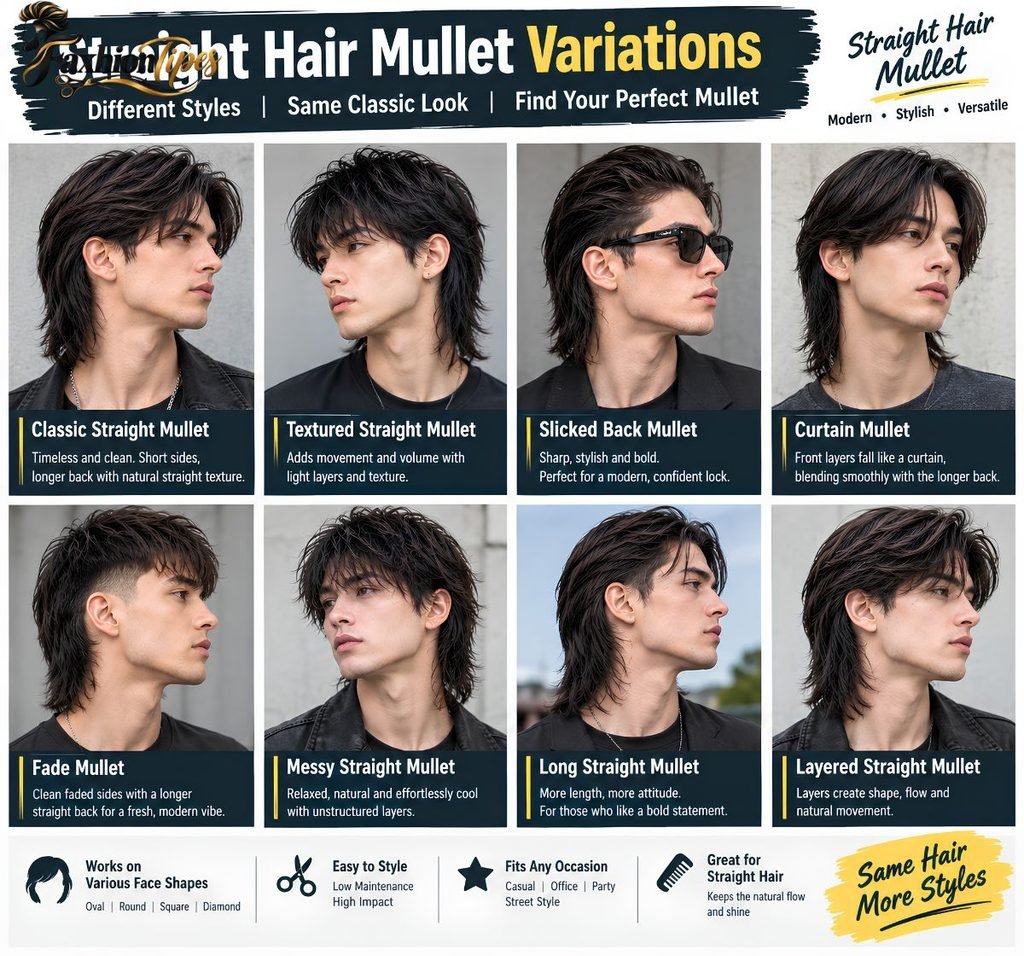
There are nine main versions of the straight hair mullet, and each one fits a different hair length, face shape, or lifestyle. Here’s a quick side-by-side before we break each one down.
| Variation | Best For | Guard/Length | Upkeep |
| Classic | Round or oval face | #3 sides, 5″ back | Trim every 5-6 weeks |
| Modern | Square or oval face | #2 fade, 4-6″ back | Trim every 4 weeks |
| Taper Fade | Any face shape | #1-#3 taper, 5″ back | Fade touch-up every 3 weeks |
| Low Taper | Long or oval face | #1 low, 5-6″ back | Touch-up every 3-4 weeks |
| Fade | Square or diamond face | Skin fade, 5″ back | Touch-up every 2-3 weeks |
| Short | Round or square face | #2 all over, 3″ back | Trim every 4 weeks |
| Long | Oval or heart face | #3 sides, 8″+ back | Trim every 8-10 weeks |
| Layered | Any face, thick hair | Scissor layers, 6-8″ back | Trim every 6 weeks |
| Fringe/Bangs | Round or square face | #3 sides, bangs to brow | Trim fringe every 3 weeks |
You can expect to pay between $25 and $60 for a straight hair mullet, depending on your city and whether it includes a fade. Barbershops in bigger cities tend to sit at the higher end.
Classic Straight Hair Mullet
The classic straight hair mullet keeps the sides at a medium length instead of shaving them down, which gives it a softer, less dramatic look than newer versions. This version suits guys who want the mullet shape but still need something office-appropriate. Tell your barber to use a #3 guard on the sides and leave 4 to 5 inches of length in the back. It needs a trim every 5 to 6 weeks to keep the shape from growing out shaggy.
Straight hair mullet short
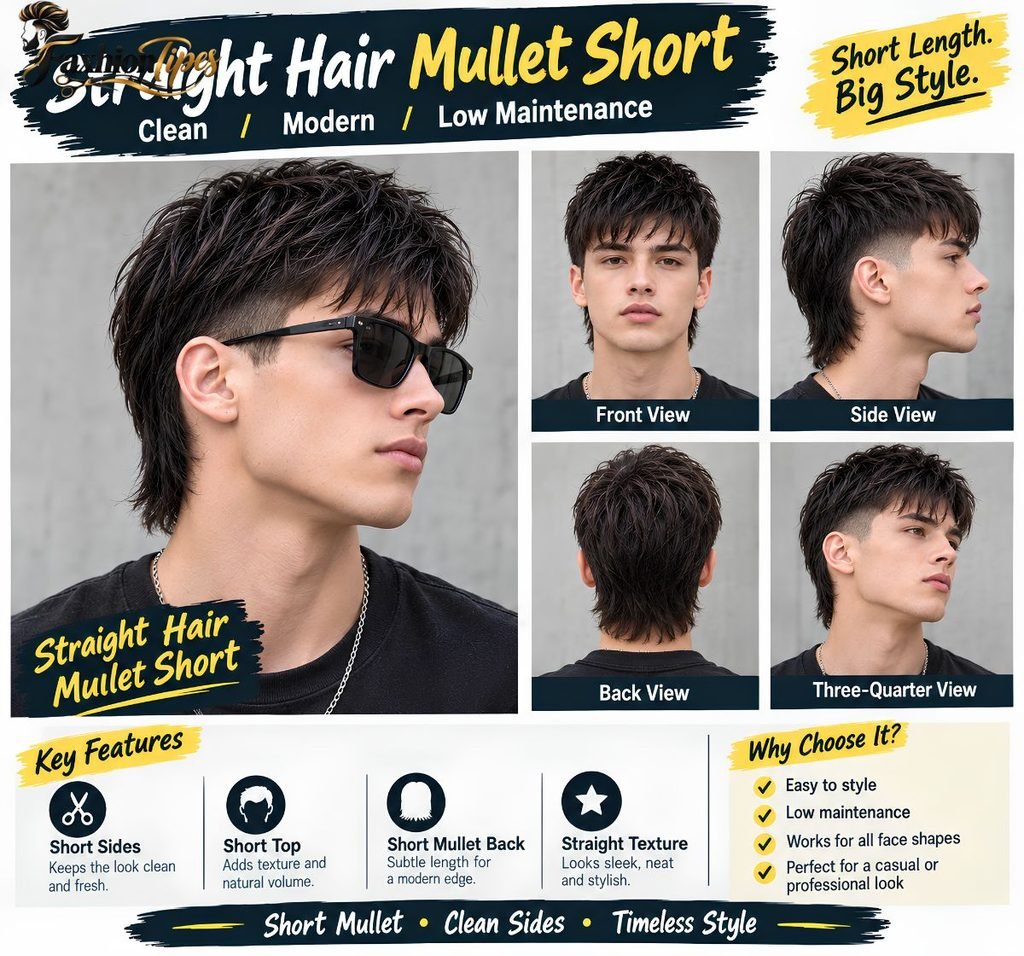
A shorter take on the classic keeps the back length closer to 3 inches, which reads more like a mullet-inspired crop than a full mullet. It’s a good starter option if you’re not sure you want to commit to a long back section yet.
Modern Straight Hair Mullet
This version swaps the medium sides for a tight fade, creating a bigger contrast against the long back section. Guys with square or oval faces get the most out of this style because the fade slims the sides visually. Ask for a #2 fade blending into skin at the hairline, with the back left at 4 to 6 inches. Since the sides grow out fast, plan on a touch-up every 3 to 4 weeks.
Straight Hair Mullet with Taper Fade
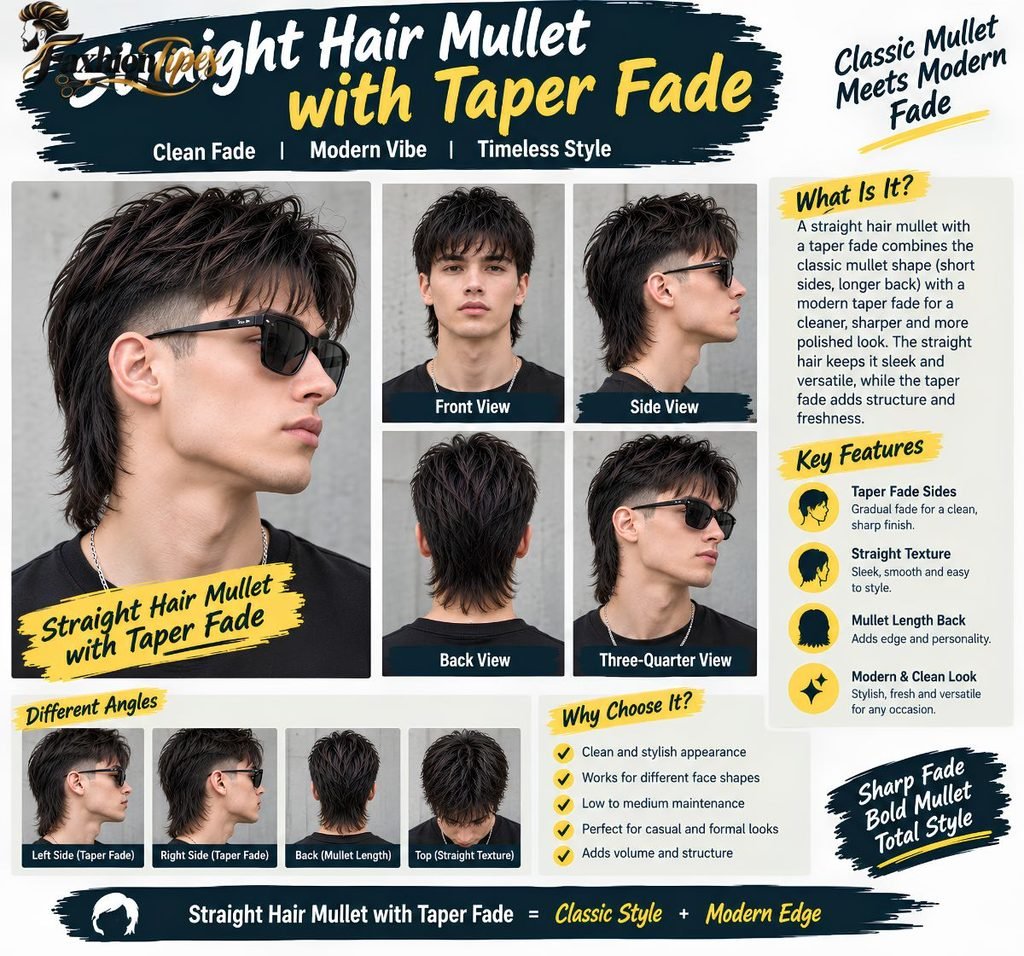
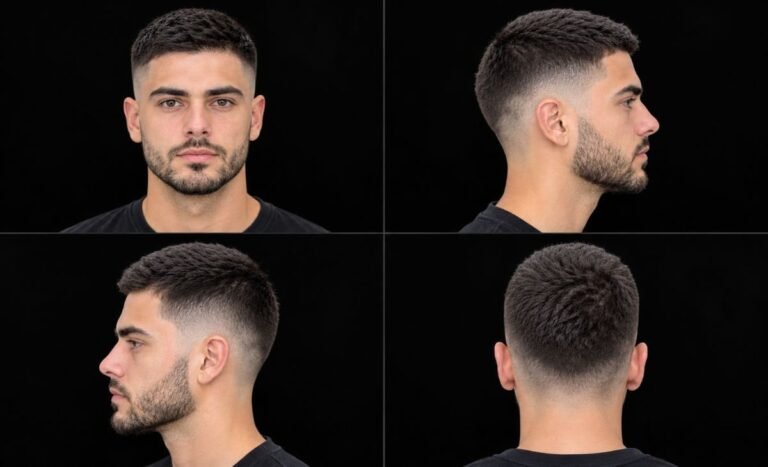
Adding a taper fade to the mullet softens the transition between the short sides and the long back, so there’s no harsh line. This works well if you want a mullet that still looks neat in a work setting. A barber will usually start the taper around the ear with a #1 or #2 guard and fade it down to skin near the neckline. Straight hair holds this blend cleanly, so you’ll only need a fade refresh every 3 weeks.
Straight hair mullet fade
The fade version pushes the sides shorter than a standard taper, going all the way to skin for maximum contrast. It pairs best with thicker straight hair, since thinner hair can look patchy against a hard fade.
Low Taper Straight Hair Mullet
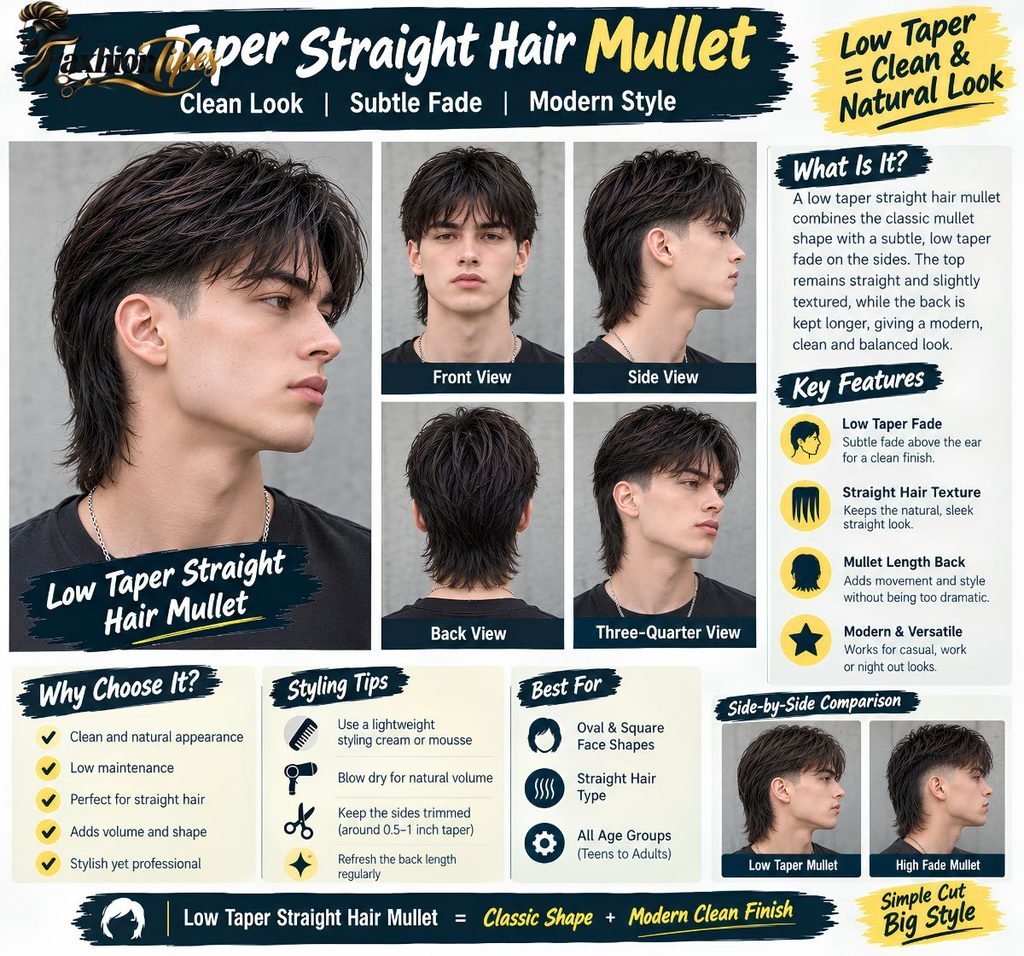
A low taper keeps the fade close to the neckline and ears instead of climbing up toward the crown, which suits guys with longer face shapes. This is the most low-maintenance fade option because it grows out slower than a high or mid fade. Request a #1 guard starting just above the ear, fading to skin at the bottom, with the back kept at 5 to 6 inches. Because the fade sits low, you can usually stretch touch-ups to every 3 to 4 weeks.
Straight Hair Mullet Fade
This is the boldest version, using a full skin fade on the sides against a noticeably long back section for maximum drama. It suits square or diamond face shapes, since the sharp sides balance strong jawlines. Your barber will run clippers with no guard up to the temple, then fade into a #2 or #3 near the top. Because skin fades grow out fastest, you’ll want a touch-up every 2 to 3 weeks to keep it crisp.
Straight hair mullet men
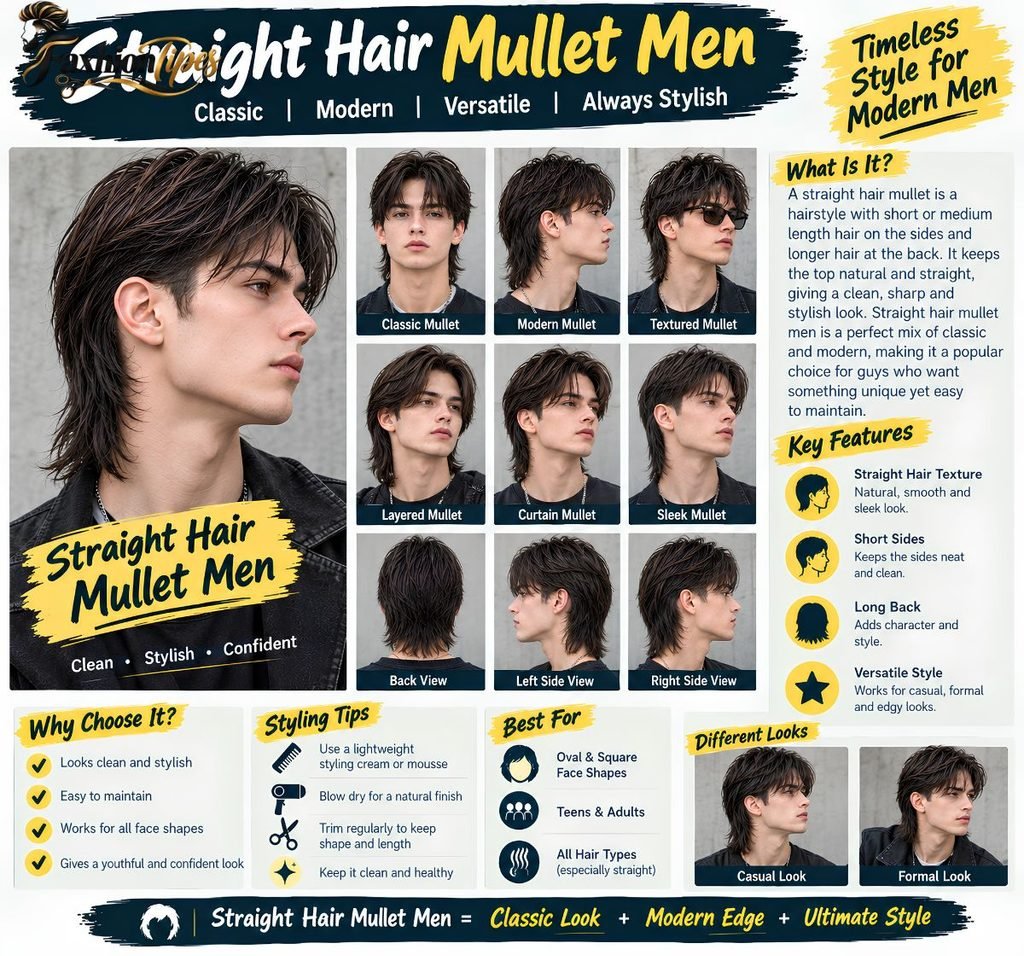
Most men asking for this cut want the fade paired with a slightly messier, textured top rather than a slicked-back finish. A light matte paste works better here than gel, since it keeps the straight texture looking natural instead of stiff.
Short Straight Hair Mullet
This version trims the back down to around 2 to 3 inches, giving you the mullet silhouette without a dramatic length difference. It works well for guys who want to test the style before growing it out longer. Ask for a #2 guard all over the top and sides, letting the back sit just slightly longer than the crown. Since everything is shorter, a monthly trim keeps the whole shape sharp.
Straight hair mullet Woman
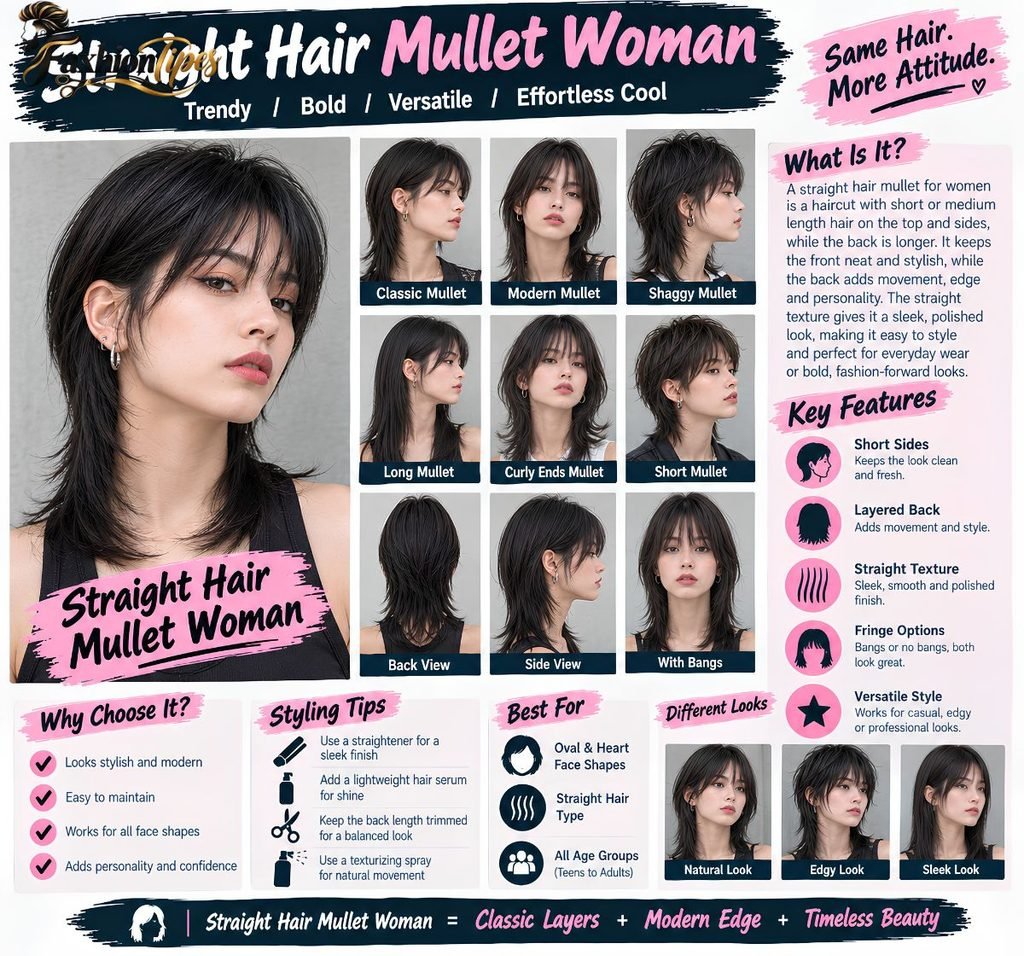
Women wearing this cut usually ask for a bit more length and layering through the crown compared to the men’s version, softening the overall shape. It still uses the same short-sides, long-back structure, just with more texture built into the top.
Long Straight Hair Mullet
The long version pushes the back section past 8 inches, creating the most dramatic length contrast of any straight hair mullet style. It suits oval and heart-shaped faces best, since the length elongates rounder faces too much otherwise. Sides stay at a #3 guard while the back grows freely with only a light trim to remove split ends. Because you’re growing hair out, plan on trims every 8 to 10 weeks instead of monthly.
Layered Straight Hair Mullet
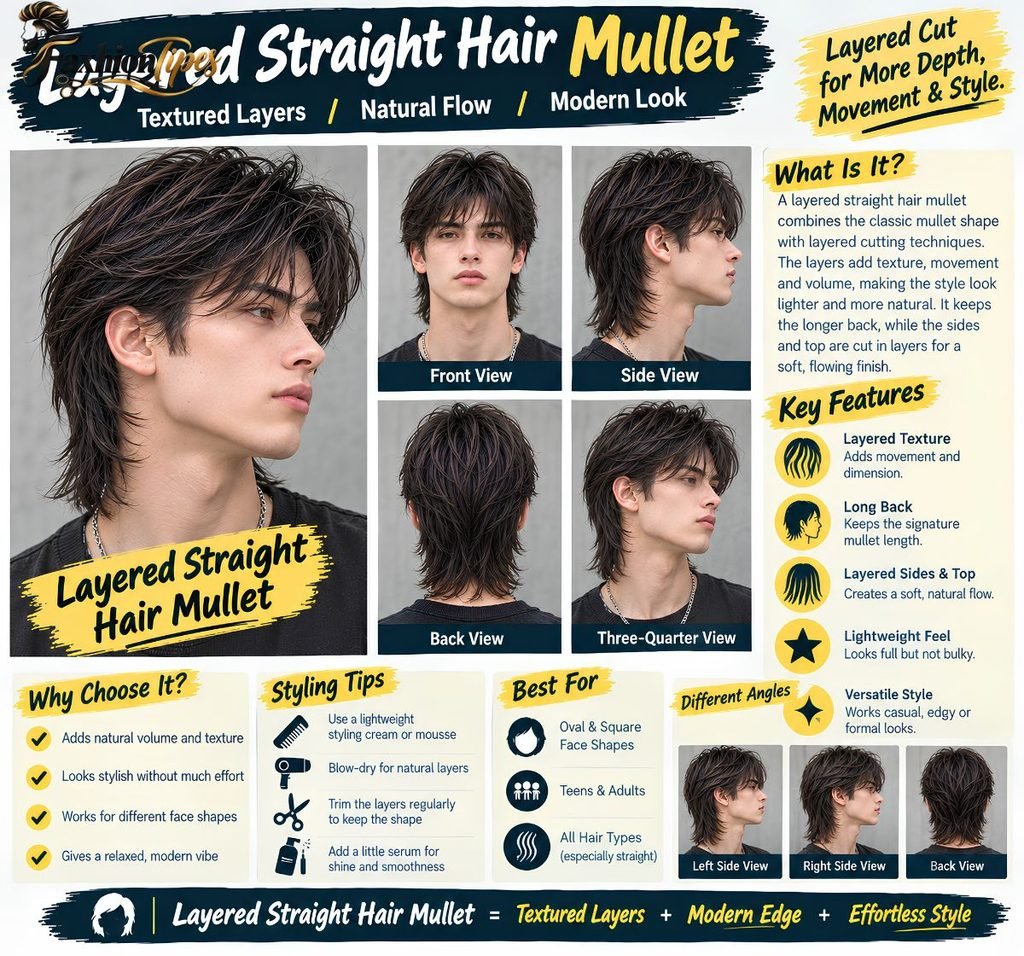
Layering adds movement to what could otherwise look like one flat slab of hair in the back, especially helpful if your hair is naturally thick. This version works best on guys with dense, straight hair that needs weight removed to avoid looking heavy. A barber will point-cut layers through the back section by hand instead of using a single clean line. Expect a trim every 6 weeks to keep the layers from blending back into one shape.
Straight hair Mullet Long
The long layered combination is the most requested version among guys growing out a mullet for the first time, since layers hide the awkward in-between stage. It also styles faster, since layers naturally fall into place without heavy product.
Straight Hair Mullet with Fringe or Bangs
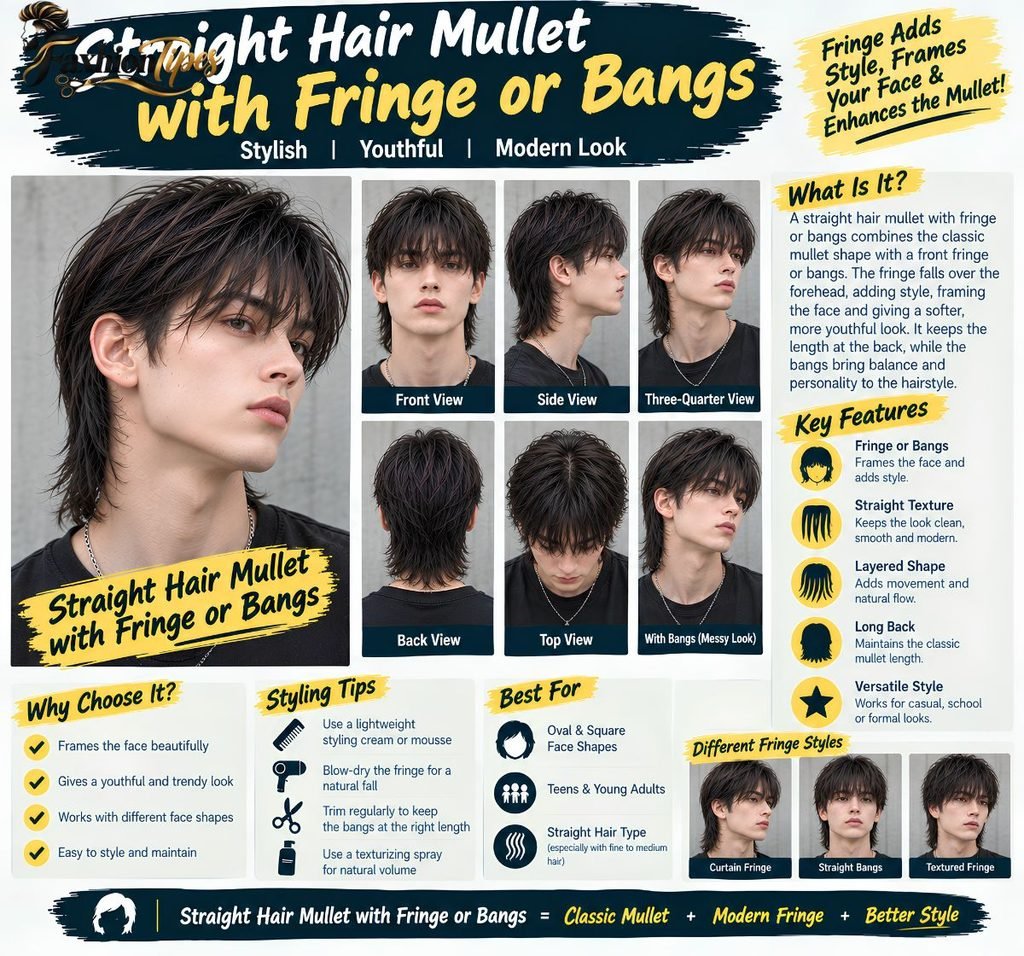
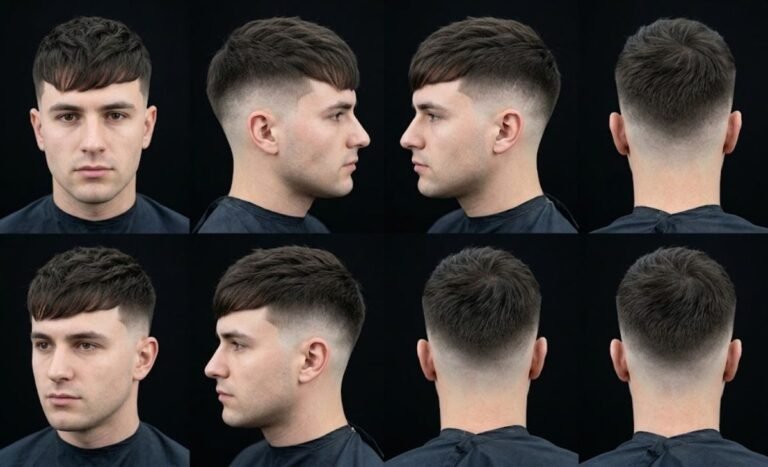
Adding a fringe brings the length forward over the forehead instead of keeping it all in the back, which balances out a longer face shape. This version suits round and square faces especially well, since the fringe breaks up a wide forehead. Sides are usually cut with a #3 guard, and the fringe is left long enough to sit just above the brow. Because fringes grow into your eyes fast, this needs a trim every 3 weeks to stay out of your line of sight.
Quick script for your barber: “I want a straight hair mullet — [guard number] on the sides fading to skin, and leave [length] in the back. Keep the top textured, not slicked.”
Read more hair: straight hair mullet
FAQs
What is a straight hair mullet?
A straight hair mullet is a mullet haircut cut for sleek, straight hair — short and tapered at the front and sides, with longer length left at the back.
Does a mullet work on straight hair?
Yes, straight hair actually shows off the mullet’s shape and layers more clearly since there’s no natural volume or curl to hide the contrast between the short top and long back.
How do you style a straight hair mullet?
Blow-dry with a round brush for lift at the crown, then use a flat iron on the top and sides for sleekness, leaving the back straight and loose.
Is a mullet good for fine straight hair?
Yes, mullets add the illusion of texture and movement to fine straight hair through the layered length at the back.
How often should I trim a straight mullet?
Every 6 to 8 weeks keeps the short front and sides neat while letting the back length keep growing out.
Summary
A straight hair mullet works because flat, straight strands show off the short-long contrast cleanly, with no frizz getting in the way. Pick your variation based on your face shape and how much upkeep you’re willing to do, then bring the barber script above into your next appointment. Sit down, hand your barber the guard number and length you want, and let the straight hair mullet do the rest.