Burst Fade Design: 15 Stylish Haircut Ideas for Men
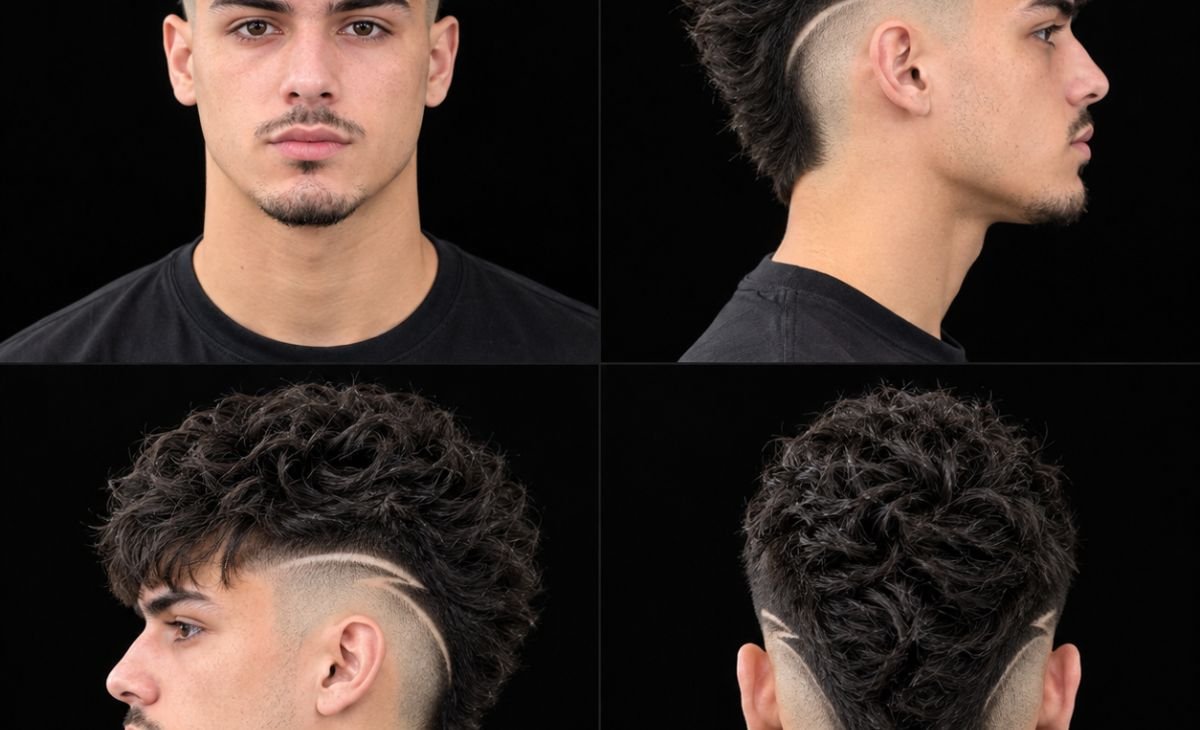
A burst fade design is a fade haircut with a shaved pattern cut into the hair around the ear. The fade curves in a half-moon shape, and the design sits right inside that curve. It’s one of the most requested cuts in barbershops right now, and for good reason. It looks sharp, it’s easy to keep clean, and it works on almost any hair type.
If you’ve been scrolling through photos trying to pick a style, this guide covers real barber details. You’ll get guard numbers, price ranges, face shape tips, and word-for-word ways to ask your barber for it. No guesswork here.
What Is a Burst Fade Design
A burst fade design is a haircut where the fade “bursts” out from behind the ear in a curved shape, instead of running in a straight line around the head. The design is a shaved pattern added inside that curved fade area.
Most barbers use a size 1 or 0.5 guard to start the fade close to the skin. Then they blend it up into longer hair on top with clippers or shears. The burst shape is what makes it different from a normal fade.
This cut costs between $25 and $60 in most shops. Adding a design usually adds $10 to $20, since it takes more time and a steady hand with a T-liner or foil-over clipper.
A burst fade design works on straight hair, wavy hair, curly hair, and coily hair. The main thing that matters is having enough length on top to show contrast against the shaved sides.
Read more hair : burst fade design
Burst Fade With Design vs Regular Burst Fade
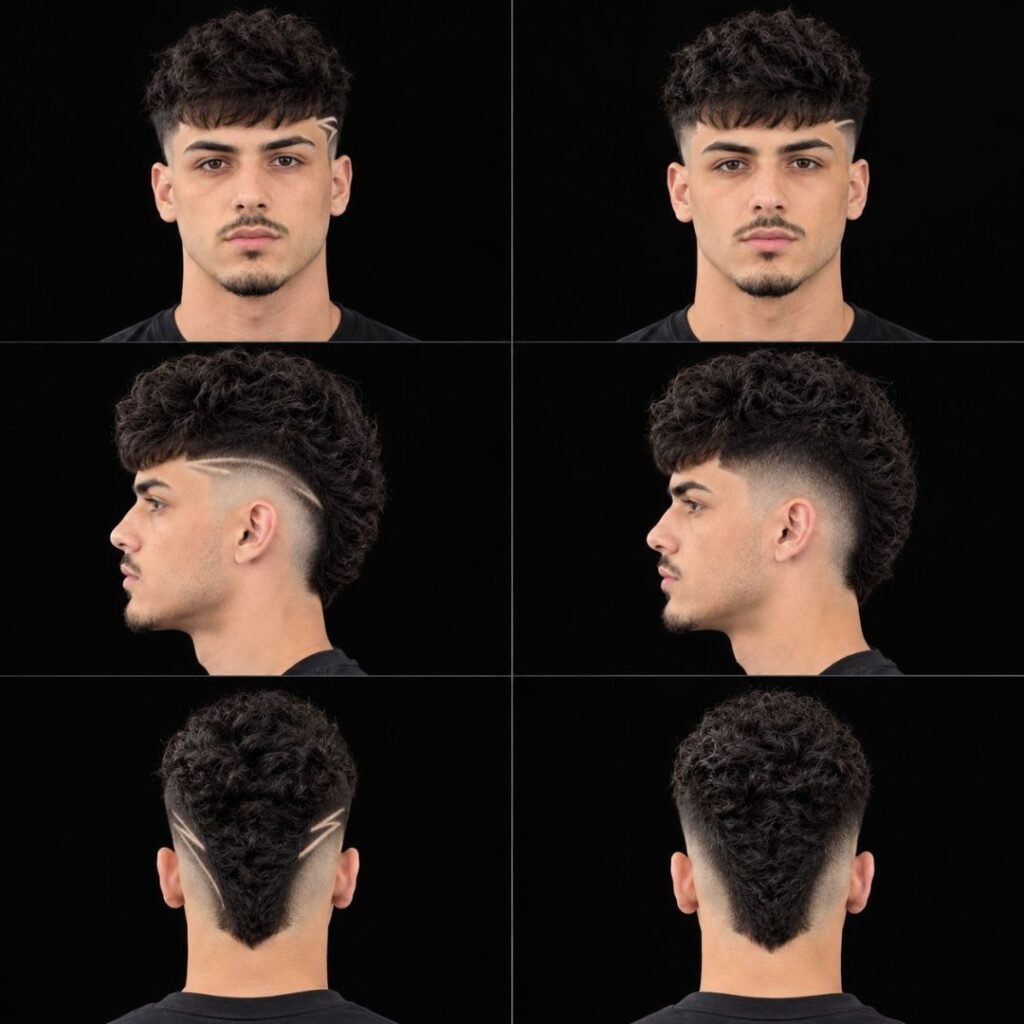
A regular burst fade has no shaved pattern. It’s just the clean curved fade around the ear, blending short sides into longer hair on top. A burst fade design adds a shaved line, shape, or pattern inside that fade area.
The regular version is lower maintenance. You can go three to four weeks between cuts without the design losing its shape. A design needs a touch-up every one to two weeks, since the shaved lines grow out fast and start looking messy.
Price-wise, a plain burst fade runs about $10 to $20 cheaper than one with a design. Ask for “just the burst fade, no design” if you want the simpler, lower-cost option.
Low Burst Fade
A low burst fade keeps the fade close to the skin only near the bottom, right above the ear and neckline. The blend starts low and moves up slowly, so more hair stays on the sides.
This version suits guys who want a subtle look for work or school. Barbers usually use a 1.5 or 2 guard at the base, then fade up. It needs a trim every three weeks to stay sharp, since the fade line sits lower and grows out slower than a high fade.
Where Should the Design Go on a Burst Fade
The design usually goes right where the fade curves around the ear, since that’s the widest flat space on the head. Some barbers also add designs in the nape area or along the temple.
Placement depends on your hair length and the size of the pattern. A small line or arrow fits fine behind the ear. A bigger design, like a star or geometric shape, needs more space, so it often sits higher near the temple.
Tell your barber exactly where you want it before they start clipping. A good script to use: “Can you put a thin line design right where the fade curves behind my ear?”
Behind the Ear Burst Fade Design
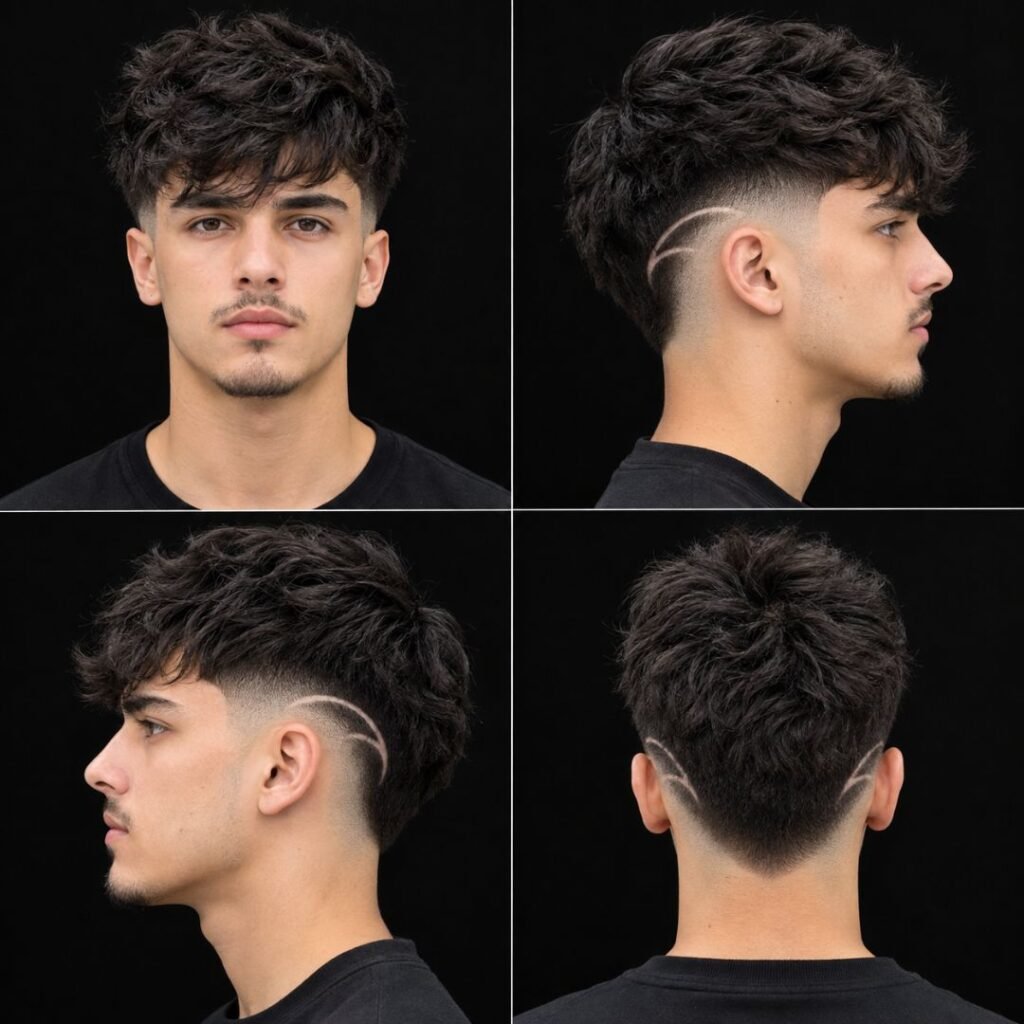
Behind the ear is the most common spot for a burst fade design because it’s flat, visible, and easy for the barber to reach with a T-liner. It’s also the classic burst fade shape.
This spot works best for short, simple designs like a single line, a small zigzag, or an arrow. Guys with any hair type can get this placement, since it doesn’t depend on curl pattern or length on top.
Barbers use a T-outliner, not a regular clipper, to carve the shaved lines cleanly. Plan on a touch-up every seven to ten days, since new hair growth fills in the lines fast in this spot.
Burst fade Design ideas
If you want something simple to start, ask for one straight or curved line behind the ear. It’s the easiest design to keep sharp between full haircuts, and most barbers can do it in under five minutes.
Nape and V Area Design
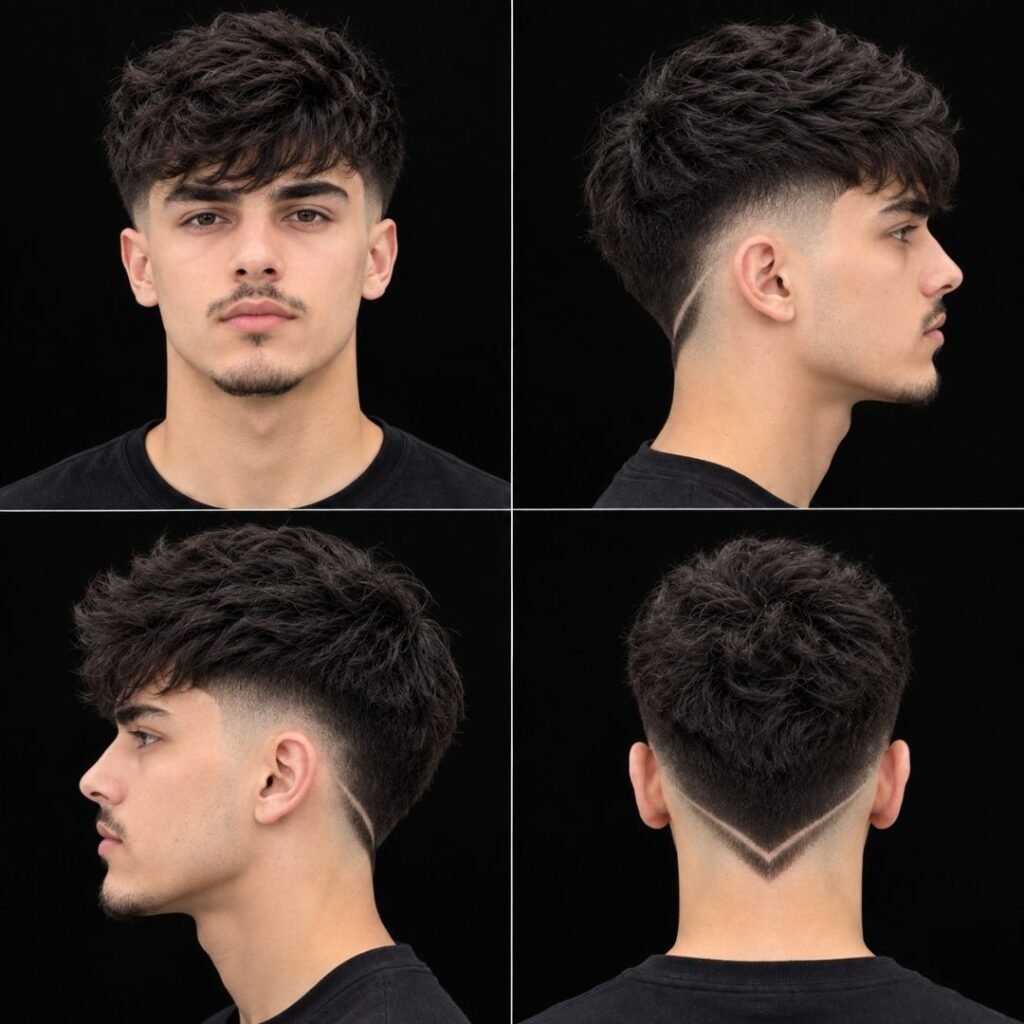
The nape is the back of the neck, right where the hairline naturally forms a V or rounded shape. A burst fade design in this spot draws the eye to the back of the haircut, not just the sides.
This placement suits guys who wear their hair short in the back anyway, since there’s less length to fight with. Barbers often use a 0.5 guard to fade the nape close, then shave the design with a T-liner along the natural V line.
Maintenance here is a bit easier than behind the ear, since the nape grows slower. A touch-up every ten to fourteen days keeps it looking fresh.
Burst fade design male
Men with thicker, coarser hair get the cleanest results in this spot, since the contrast between shaved skin and hair shows up better.
Best Burst Fade Design Ideas
Below are the specific designs barbers add most often to a burst fade. Each one works differently depending on your hair, face shape, and how much upkeep you’re willing to do.
Burst fade design v
A V-shaped design at the nape pairs naturally with the burst fade’s own curved shape, giving the whole cut a matching flow from front to back.
Burst Fade Line Design
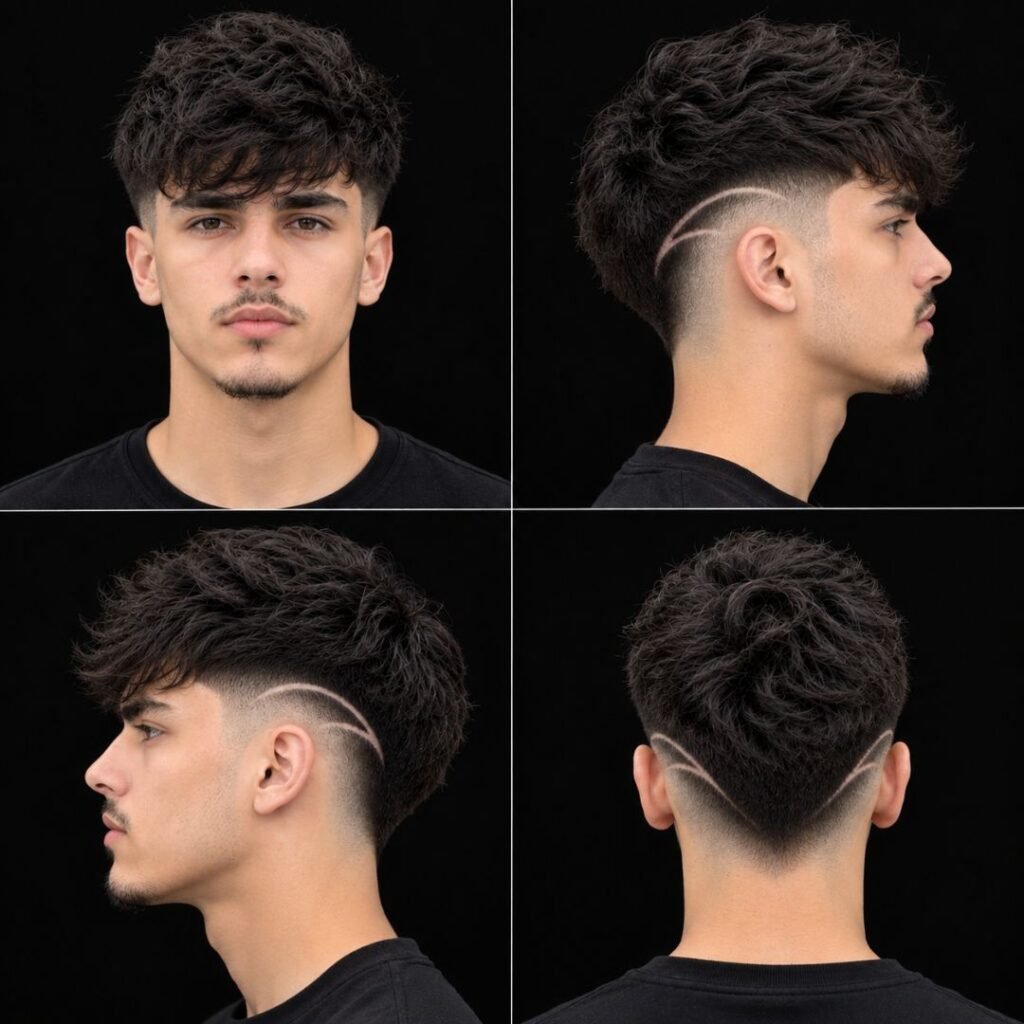
A line design is one or more straight or slightly curved shaved lines cut into the fade, usually behind the ear. It’s the simplest design and the easiest one for a barber to freehand.
This style suits guys who want a clean, understated look rather than something flashy. It works on any face shape, since a single line doesn’t add width or draw attention to specific features.
Barbers use a T-liner with no guard to get crisp, thin lines. One line takes about two minutes to add once the fade itself is done.
Plan on a touch-up every seven to ten days. The line blurs out fast as new hair grows in, faster than the fade around it.
Burst Fade Zigzag Design
A zigzag design uses sharp, angled cuts that bounce back and forth instead of running straight. It adds more movement and a bolder look than a plain line.
This design suits guys with round or square face shapes, since the sharp angles add visual edge to softer or wider features. It doesn’t work as well on very short hair, since there’s less room to carve clean angles.
Barbers need a steady hand and usually a stencil or comb guide for the first few zigzags. Ask for at least a half-inch of hair length around the design area so the pattern shows up clearly.
This one needs upkeep every seven days. Zigzags have more edges than a straight line, so they lose their crispness faster.
Burst Fade Lightning Bolt Design
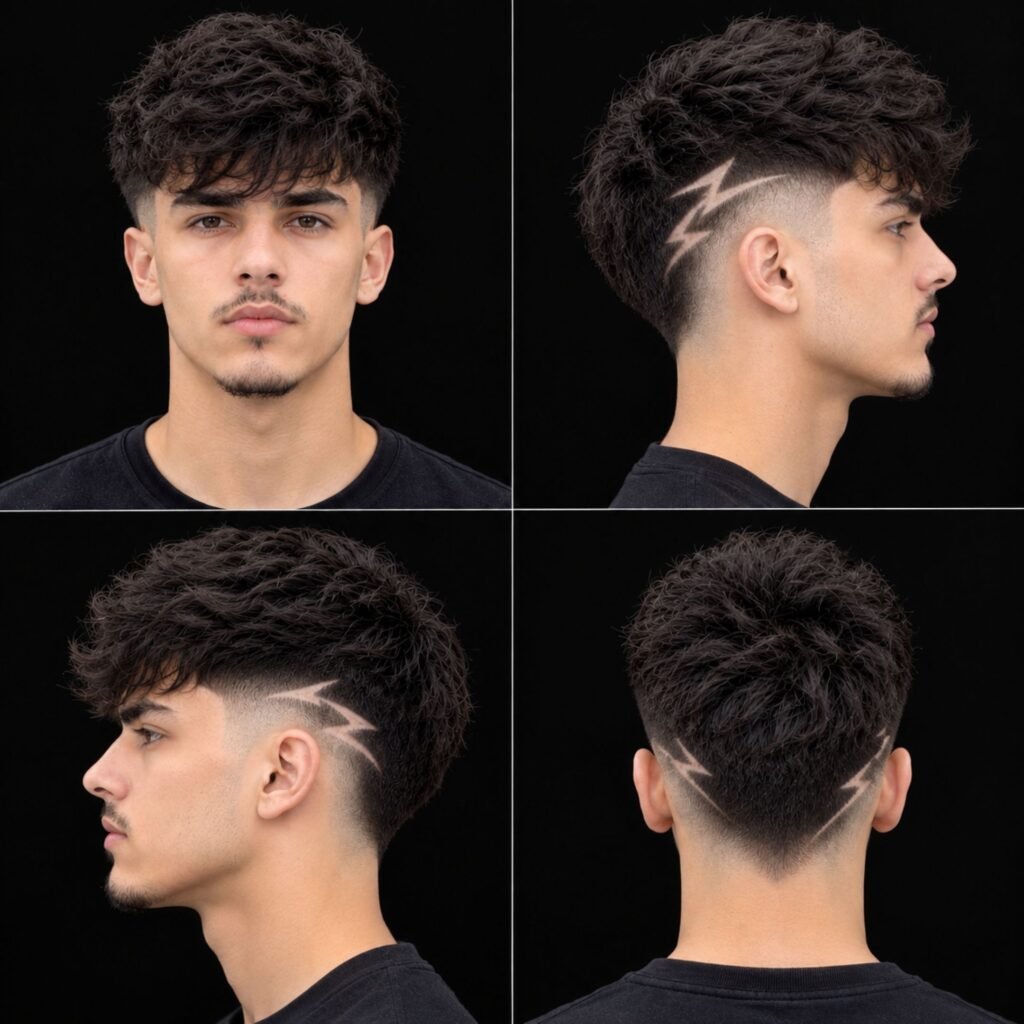
A lightning bolt design is a jagged, angled shape cut into the fade, usually placed behind the ear or near the temple. It’s one of the most recognizable shaved patterns out there.
This style works great for younger guys or anyone wanting a bold, playful look rather than a subtle one. Face shape doesn’t matter much here since the bolt is a standalone shape, not a line that follows your head.
Barbers often use a small stencil to trace the bolt shape before shaving it in with a T-liner. The design needs about three-quarters of an inch of hair around it for good contrast.
Expect to touch this up every seven to ten days, since the jagged edges of a bolt shape grow fuzzy fast.
Burst Fade Heart Design
A heart design is a small shaved heart shape, often placed behind the ear or near the nape. It’s a fun, personal choice more than a standard barbershop request.
This design suits guys who want something unique for a specific event, like Valentine’s Day or a birthday, rather than a permanent everyday style. It works on any hair type as long as there’s enough length for contrast.
Barbers shave this freehand or with a small stencil, and it usually takes under five minutes once the fade is finished.
Since it’s a smaller, detailed shape, it needs touch-ups every five to seven days to stay looking like a heart instead of a blur.
Burst Fade Star Design
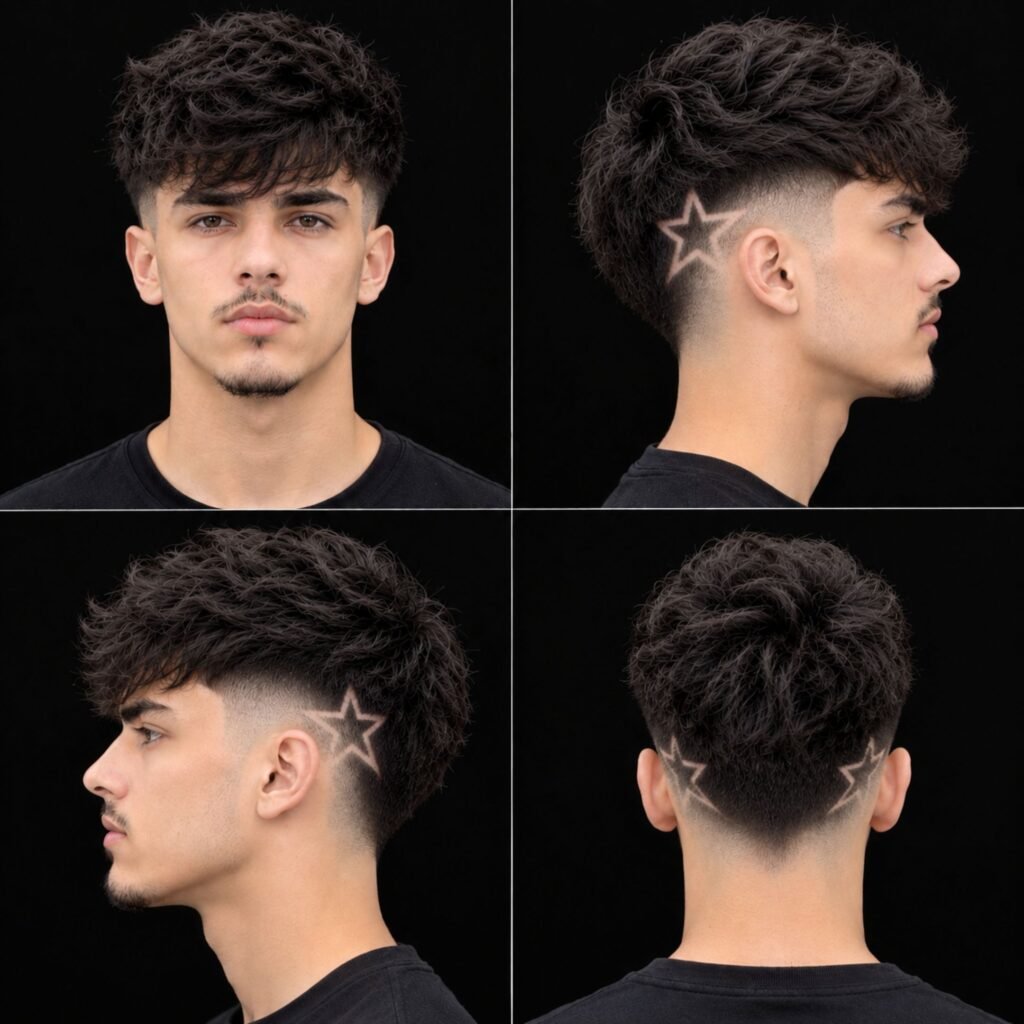
A star design uses straight-edged points cut into a shaved star shape, usually placed near the temple or behind the ear. It reads as more graphic and detailed than a line or zigzag.
Guys who want a standout look for photos or a special occasion often pick this one over the simpler designs. It suits shorter hair less well, since the points of a star need clean space to show up.
A stencil helps a lot here, since freehanding five even points is tricky even for experienced barbers. Expect the design itself to take five to eight minutes.
Because of all the small edges, this design needs a refresh every five to seven days to keep its shape sharp.
Burst Fade Geometric Design and Negative Space
A geometric design uses shapes like triangles, diamonds, or blocks, often combined with negative space, which means leaving patches of hair untouched inside the shaved area for contrast.
This style suits guys with thicker or coarser hair, since the negative space patches need enough density to stand out against the shaved parts around them. It’s a more advanced, artistic option.
Barbers usually need a stencil and extra time, often ten to fifteen minutes, to carve clean geometric edges and leave the negative space even.
This is one of the highest-maintenance designs on this list. Plan on touch-ups every five days, since geometric edges blur out quickly.
Burst Fade With V Design
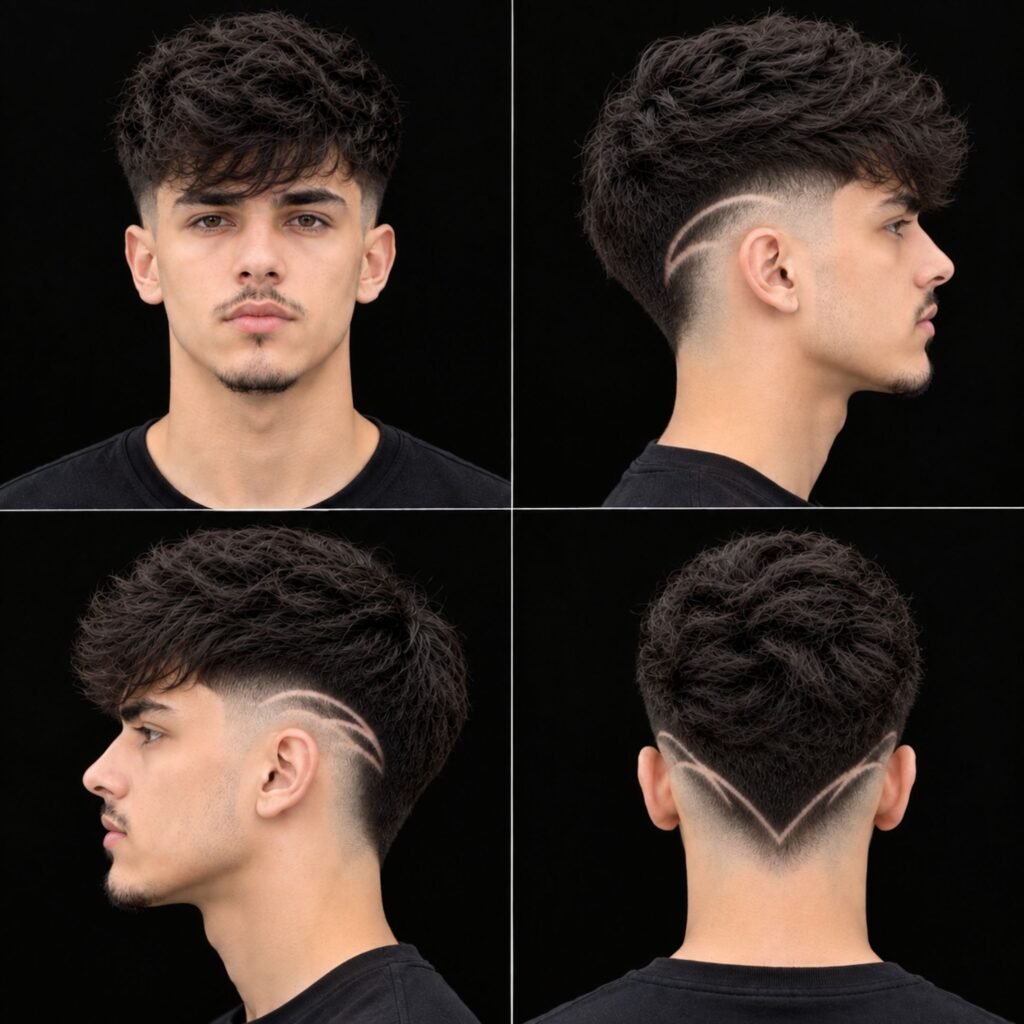
A V design is a shaved V-shape, most often placed at the nape to match the natural point where hair grows down the back of the neck.
This style suits guys who already keep their nape hair short, since it uses the natural hairline shape instead of fighting it. It works on straight and wavy hair especially well, since the V edges show up cleanly against smoother hair.
Barbers cut this with a T-liner, following the natural nape hairline outward into a sharper point. It takes about three to five minutes to add once the fade is set.
A V design needs a touch-up every ten to fourteen days, since the nape grows out slower than the sides of the head.
Burst Fade Curved Part Design
A curved part design is a shaved line that follows the natural curve of a side part, instead of running straight back like a regular part line.
This suits guys who already wear a side part or comb-over on top, since the shaved curve mirrors and highlights that part line. It works best with at least an inch of length on top for the part to actually show.
Barbers use a T-liner to trace the curve, usually starting above the ear and sweeping back toward the crown. This adds about three minutes to a normal burst fade design appointment.
Touch it up every seven to ten days, since the curve softens fast once new hair fills in along the part.
Burst Fade Arrow Design
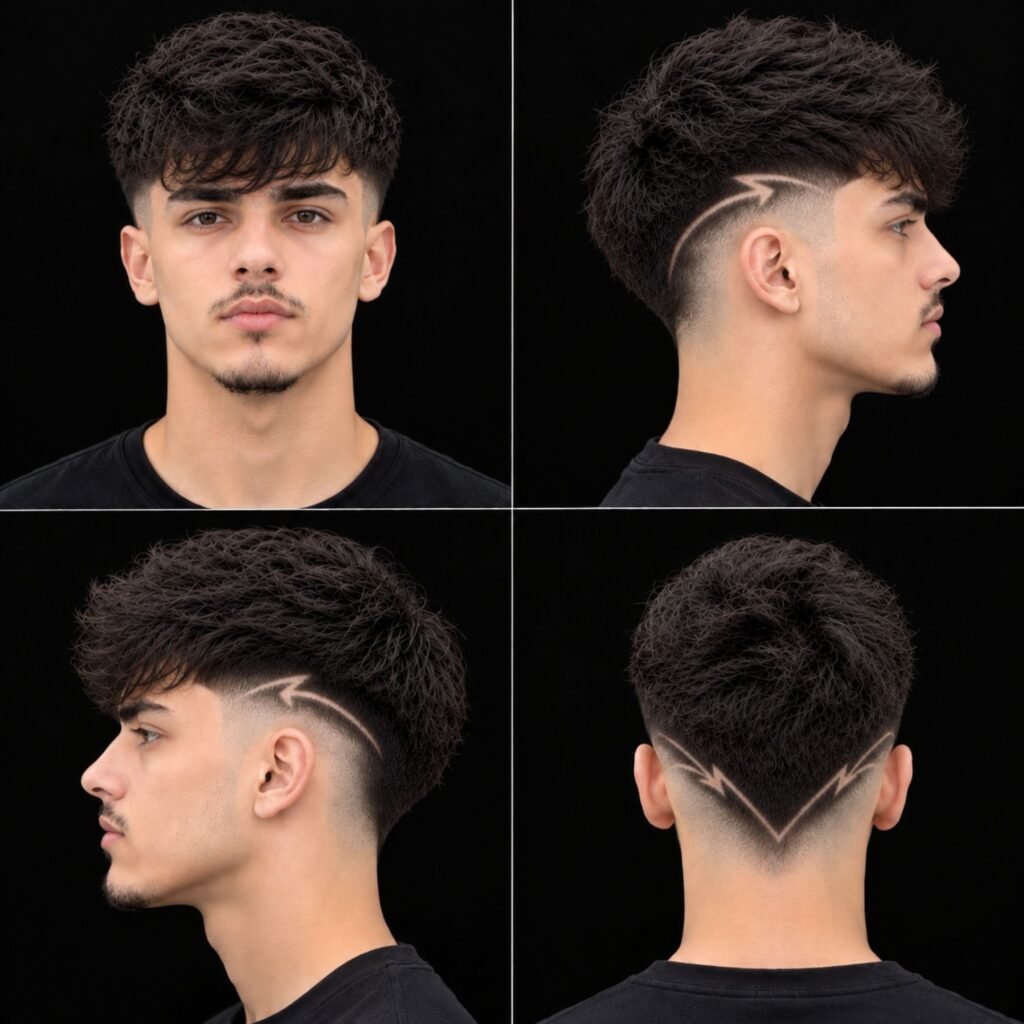
An arrow design is a shaved arrow shape, usually pointing toward the ear or down toward the neckline, often placed behind the ear alongside the burst fade curve.
This design fits guys who want something with a clear direction and a bit of edge, without going as bold as a lightning bolt or star. It works on any face shape since it’s a small, contained shape.
Barbers shave the arrow with a T-liner, and it takes about three to four minutes once the surrounding fade is finished.
Since the arrow has thin points, it needs a touch-up every five to seven days to avoid looking blurry.
Burst Fade Initial or Letter Design
An initial or letter design shaves a single letter, usually your first initial, into the fade near the temple or behind the ear.
This one suits guys who want something personal and specific to them, rather than a generic shape. It needs a skilled barber, since letters are harder to shave cleanly than lines or basic shapes.
Most barbers use a stencil for this, since freehanding a letter takes real practice. Expect it to add ten minutes to your appointment.
Letters need touch-ups every five to seven days, since the thin strokes fill in with new growth fast.
Burst Fade Tribal Pattern Design
A tribal pattern design uses flowing, curved shaved lines inspired by tribal tattoo art, often wrapping around the burst fade curve near the ear.
This style suits guys who already have tribal-style tattoos or just want a bolder, more detailed look than a simple line or shape. It needs thicker hair to hold contrast against the curved shaved lines.
This is an advanced design, so ask specifically for a barber who has experience with tribal or freehand pattern work. It can take fifteen minutes or more to complete.
Because of the fine curved detail, this design needs a touch-up every five days to stay crisp.
Burst Fade Sunburst Design
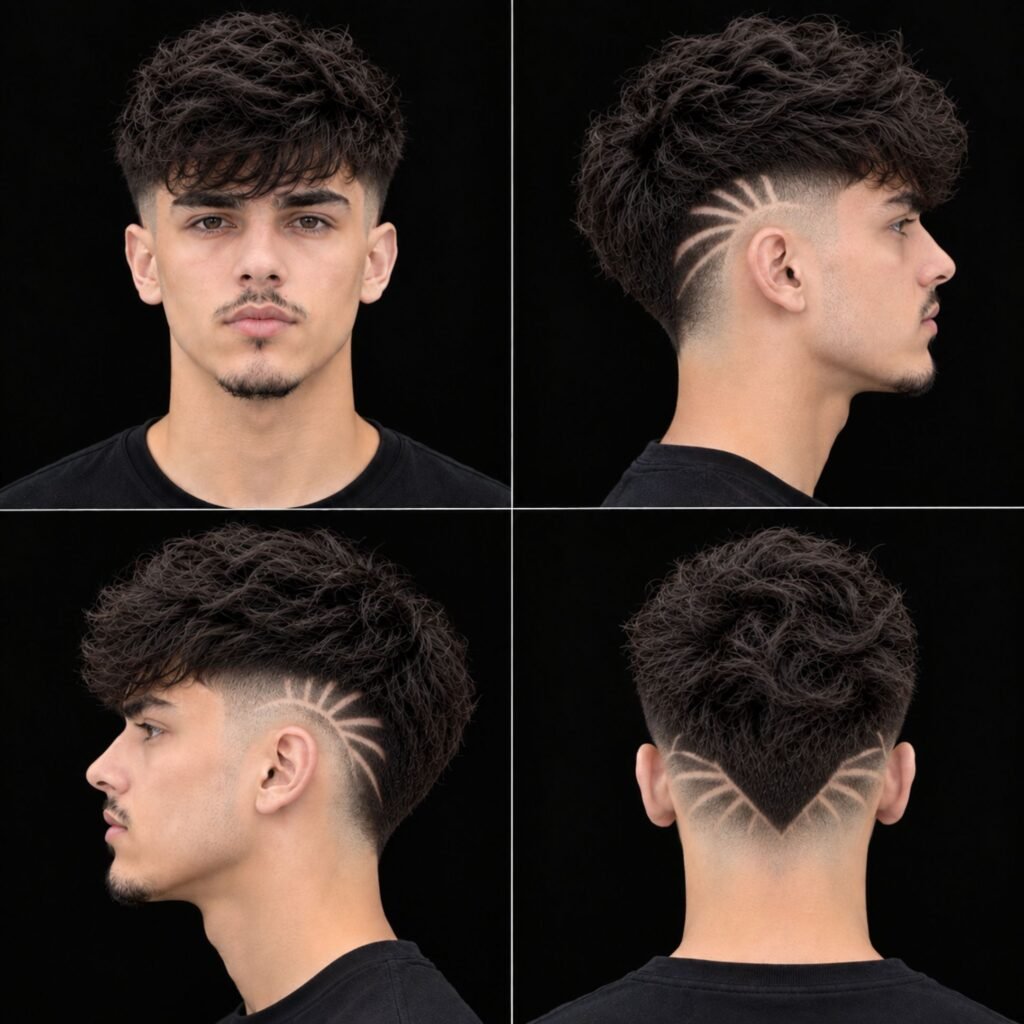
A sunburst design shaves several thin lines radiating outward from a center point, mimicking sun rays, usually placed behind the ear.
This design suits guys who want something eye-catching but still symmetrical and clean, rather than an irregular shape. It works best with an inch or more of hair length around the design for contrast.
Barbers often use a stencil to keep the rays evenly spaced before shaving each line with a T-liner. This design takes about eight to ten minutes total.
Expect a touch-up every seven days, since the thin rays are some of the first lines to blur as hair grows back.
Low vs Mid vs High Burst Fade Design
The height of the fade changes how bold your burst fade design looks and how often you need touch-ups. Here’s how the three main heights compare.
| Fade Height | Guard Size | Best For | Touch-Up Time |
| Low Burst Fade | 1.5–2 guard | Work, school, subtle looks | Every 3 weeks |
| Mid Burst Fade | 1–1.5 guard | Most face shapes, balanced look | Every 2 weeks |
| High Burst Fade | 0.5–1 guard | Bold designs, more contrast | Every 1–2 weeks |
A low burst fade design keeps things quiet and professional. A high burst fade design shows off the shaved pattern the most, since more skin is exposed above the ear.
Low Burst Fade Design
A low burst fade design combines the subtle, close-to-the-neckline fade with a shaved pattern kept small and simple, usually just a line or thin curve.
This combo suits guys in offices, schools, or any setting where a bold design might not fly. It works well on straight and wavy hair, since the low fade doesn’t need much length to blend cleanly.
Barbers typically use a 1.5 guard at the base and fade up slowly, then add the design with a T-liner near the bottom of the curve. This keeps the whole look understated.
Because the fade line sits low, it grows out slower than a high fade. You can usually stretch this style to three weeks before it needs a full redo, though the design itself may need a mid-point touch-up.
Read more hair : burst fade design
FAQs
What is a burst fade?
A burst fade is a haircut where the hair fades into a rounded, semi-circular shape around the ear, “bursting” outward instead of running in a straight line around the head.
How long does a burst fade last?
A burst fade typically lasts 2 to 3 weeks before it needs a touch-up, depending on how fast your hair grows.
Is a burst fade good for curly hair?
Yes, a burst fade works great with curly hair because the rounded fade blends naturally with the curl pattern and adds shape without flattening the curls.
What’s the difference between a burst fade and a taper fade?
A taper fade runs in a straight line down the sideburns and neckline, while a burst fade curves around the ear in a circular pattern.
How much does a burst fade haircut cost?
A burst fade usually costs between $25 and $60, depending on the barber, salon location, and hair length.
Summary
A burst fade design gives you a sharp, personal look that stands out from a plain fade. Whether you go with a simple line, a bold star, or a low-key version for the office, the key is picking a design that matches your hair, your face shape, and how much upkeep you’re ready for.
Bring a photo to your next barber visit and use the guard numbers and terms above to explain exactly what you want. Your barber will thank you for the clear direction, and you’ll walk out with a cut that actually looks like the picture.
3 Comments