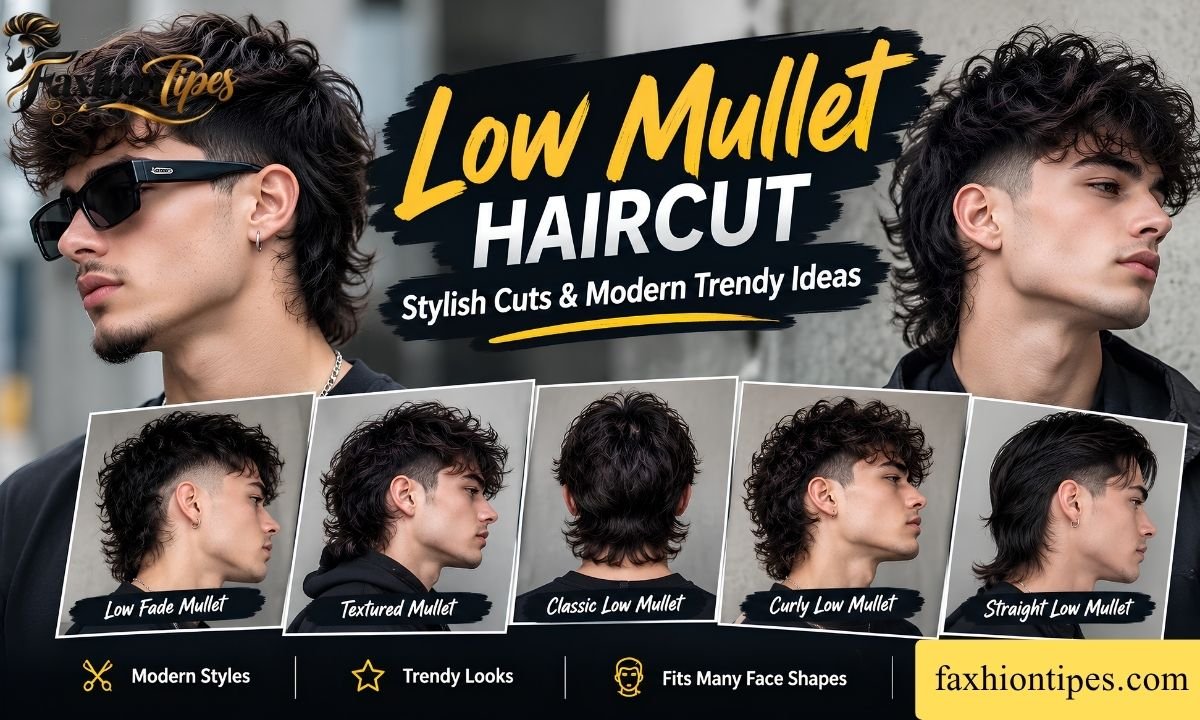
Low Mullet Haircut: Stylish Cuts & Modern Trendy Ideas
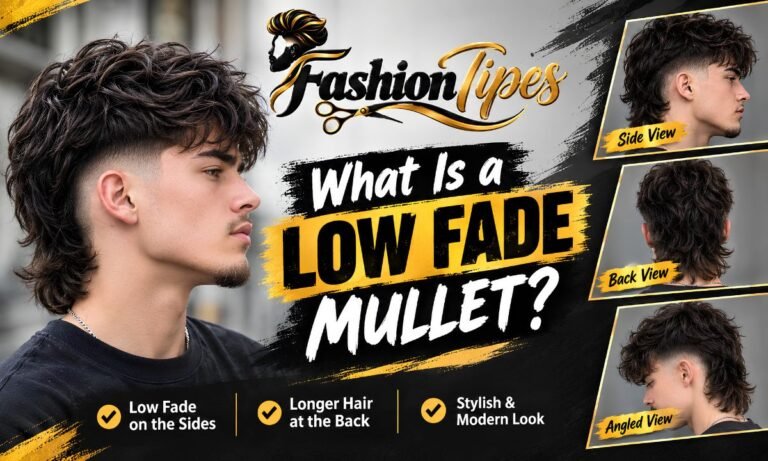
A low mullet haircut keeps the sides tight and low, with length left on top and back. It’s the mullet’s cleaner, more grown-up cousin. If you want the party-in-the-back energy without looking like you walked out of 1985, this is the cut your barber has probably already suggested to you.
I’ve cut a lot of these in the chair, and I still get the same question every week: “Can you just do a low taper on the sides but leave my mullet alone?” Yes. That’s this exact haircut. Let’s break down every version so you walk in knowing exactly what to ask for.
What Is a Low Taper Mullet
A low taper mullet is a mullet with a low fade or taper starting near the ears, not up near the temple. The sides stay short and tight, usually a #1 or #2 guard, blending into longer hair on top and a longer nape.
This keeps the whole cut lower on the head, which is why it reads as modern instead of retro. Most barbers start the taper about an inch above the ear and blend it into skin or a #1 by the hairline. The top can run anywhere from 3 to 6 inches, depending on how much “flow” you want in the back.
Read more hair:low mullet haircut
Face Shape and Hair Type Guide
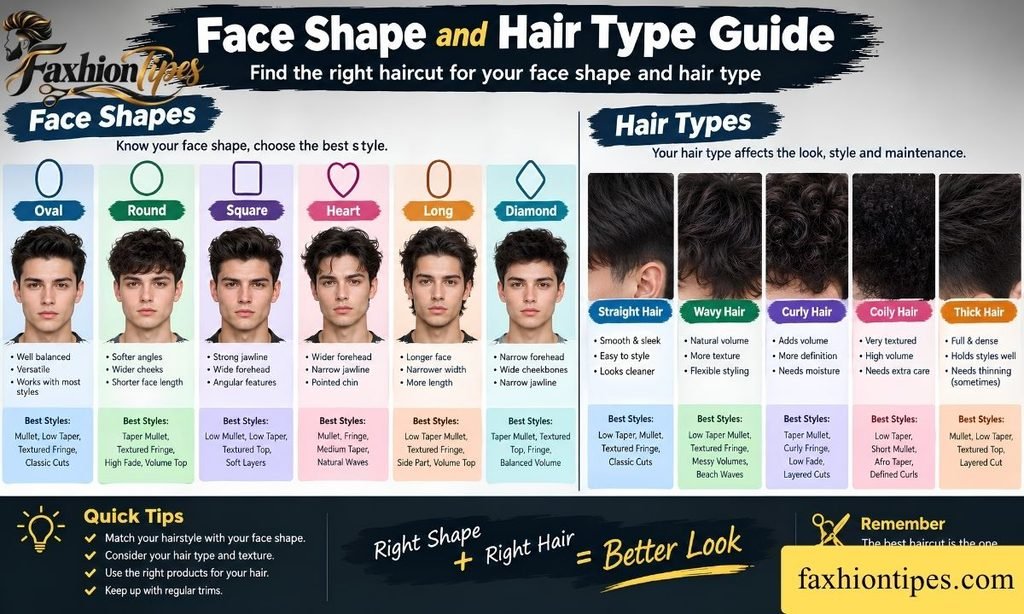
Your face shape and hair type decide how your low taper mullet should be cut, not just what looks cool online. A round face does better with more height on top and a tighter low fade to add length. A square jaw can handle a blunter, heavier back section since strong bone structure balances it out.
Oval faces can wear almost any version of this cut without much adjustment. Long faces should ask for less length on top and more weight left in the back, so the eye doesn’t get pulled downward.
| Face Shape | Best Low Mullet Style | Barber Tip |
| Round | Low taper mullet with height on top | Add texture, avoid heavy fringe |
| Square | Low fade mullet, straight back | Keep edges soft, not blocky |
| Oval | Any variation works | Focus on hair type instead |
| Long | Mid-length top, fuller back | Skip extra height, keep it low |
| Heart | Low taper with side fringe | Cover the forehead width |
Hair type matters just as much. Straight hair holds a cleaner line and shows off the fade better. Curly and wavy hair add natural texture on top, so you often need less product to get movement.
Variations
There are more ways to wear a low mullet haircut than most people realize. Below are the main styles, broken down by fade type, hair texture, and finish, so you can point at exactly the one you want.
Which is best, mullet or low fade?
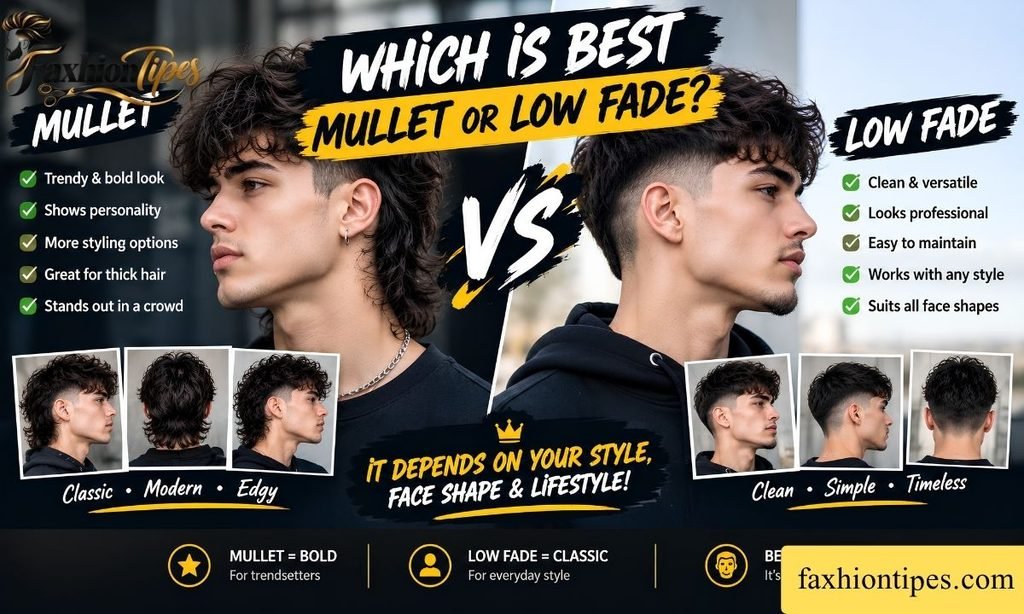
A low fade mullet blends both looks, so you don’t have to choose. It gives you the sharp, clean sides of a low fade with the length and flow of a mullet on top. If you want low maintenance, a plain low fade wins. If you want more personality, the mullet version wins.
Is mullet haircut attractive?
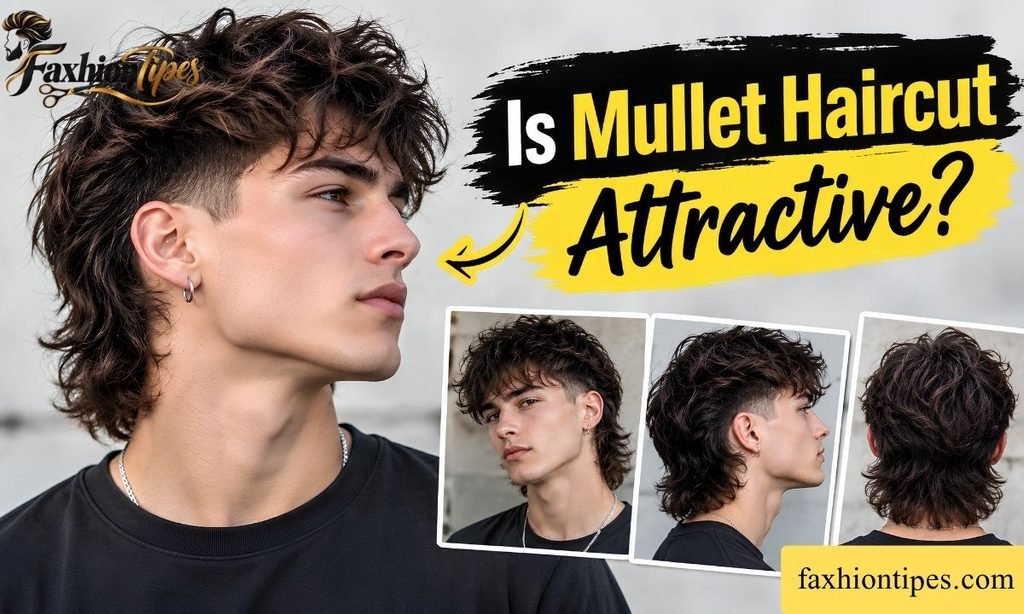
Yes, a well-cut low mullet is considered attractive by most barbers and stylists right now. The key word is “well-cut.” A sloppy fade with an uneven mullet in back looks messy, not stylish. A clean blend and proper shaping is what separates a good mullet from an outdated one.
Is the mullet still in style in 2026?
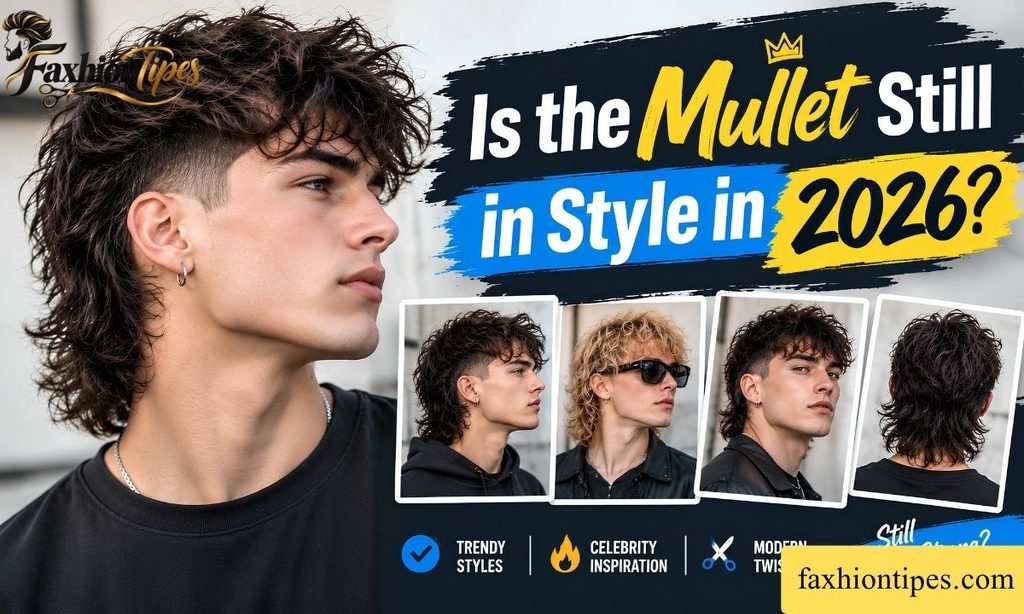
Yes, the mullet is still trending in 2026, especially in its low taper form. Search interest and barbershop requests for low taper mullets have stayed steady over the past few years. It’s shifted from a niche trend into a normal request in most shops now.
What is a V-shaped mullet haircut?
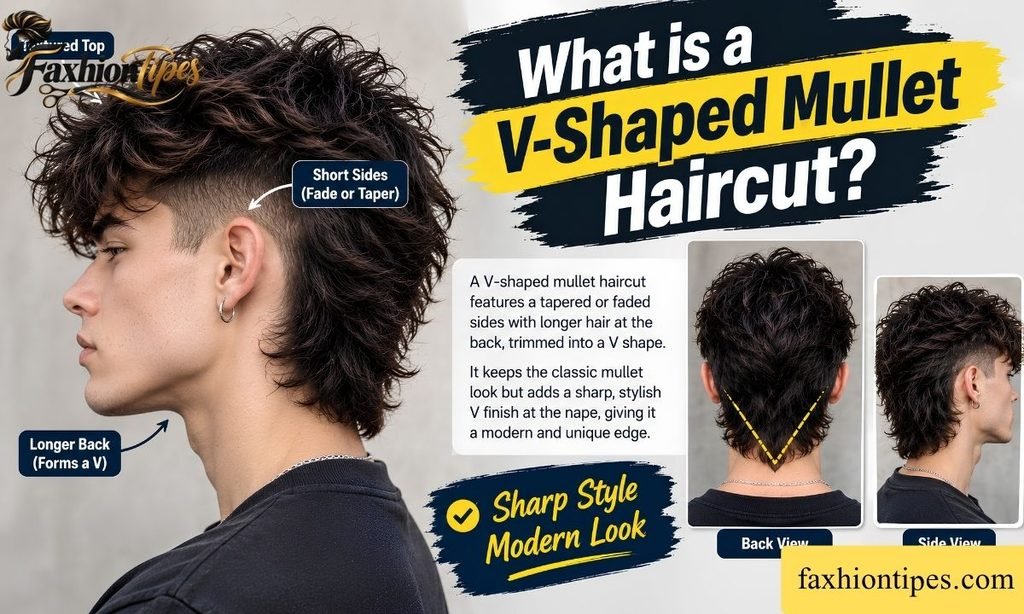
A V-shaped mullet haircut has the back cut into a V point instead of a straight line. It’s a detail cut into the nape hair, usually with clippers or shears, for a sharper finish. Barbers often add this for clients who want their mullet to look more intentional and less like grown-out hair.
1) Low Taper Mullet (Baseline)
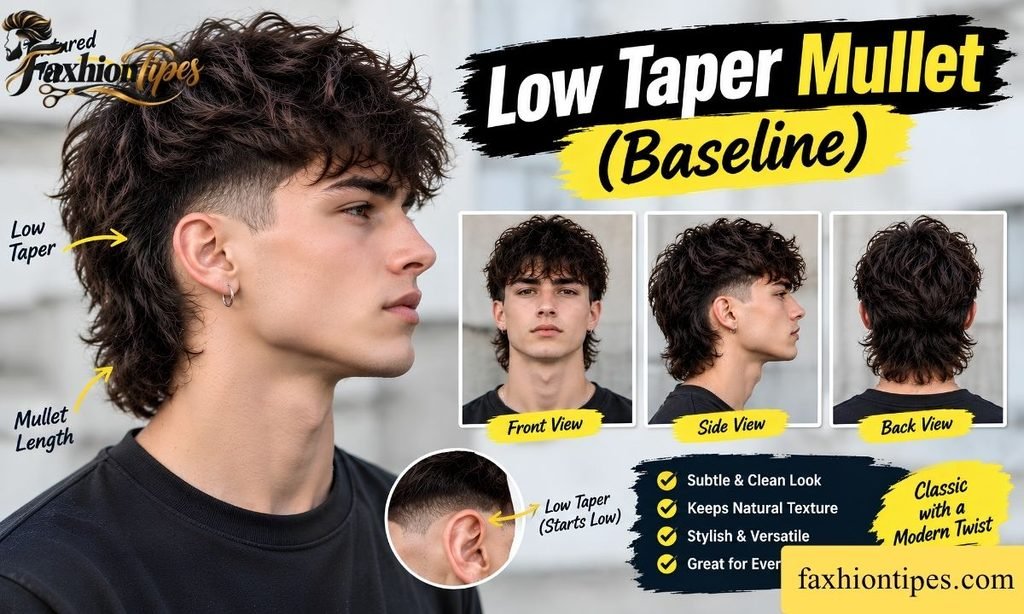
This is the standard version everyone means when they say “low taper mullet.” The sides taper from skin near the ear up to about a #2 or #3, blending smoothly into 4 to 5 inches of length on top. It suits most hair types and face shapes, which is why it’s the most requested version in shops. Maintenance is easy: a trim every 3 to 4 weeks keeps the taper from growing out and losing its shape.
Mid Fade mullet haircut
A mid fade mullet moves the fade start point up to mid-skull instead of near the ear. This version suits guys who want a bit more contrast between the sides and the top length. Ask for a #2 guard blending to skin around the temple, about an inch above the ear line. It needs slightly more upkeep than a low fade since mid fades grow out and blur faster.
2) Low Taper Mullet Fade
This is the fade-heavy version, where the taper turns into a true skin fade at the bottom. It gives the sharpest, most defined line between the short sides and the long top and back. Barbers usually take it to skin with a 0.5 or 0 guard, fading up to a #2 by mid-ear. Because skin fades grow out fast, plan on a touch-up every 2 to 3 weeks to keep the line crisp.
3) Low Taper Mullet Straight Hair
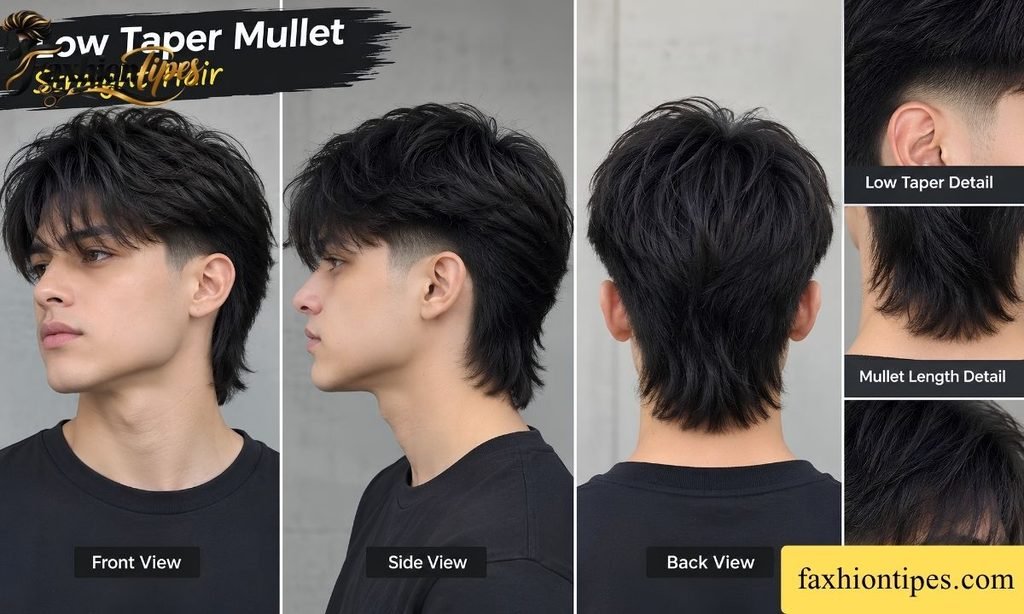
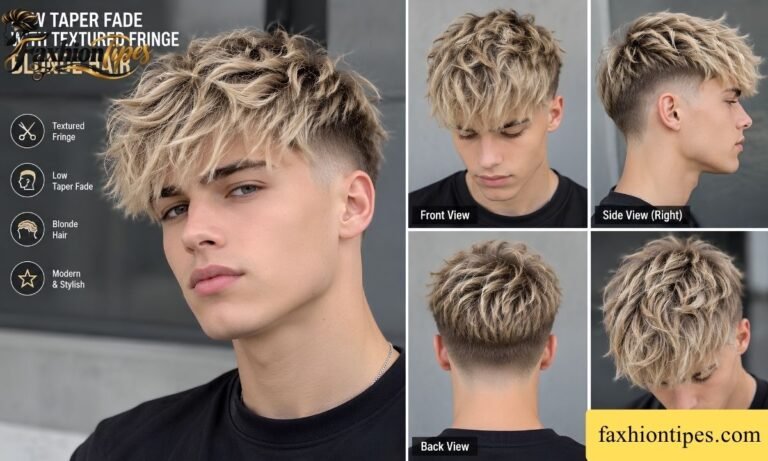
Straight hair shows off a low taper mullet’s lines better than any other texture. The fade blends visibly clean, and the top lies flat enough to style with a simple side part or slick-back. Ask for a #2 taper with the top cut to a blunt 4 inches for the most control. A light pomade or clay is usually all you need since straight hair doesn’t need much to hold shape.
4) Low Taper Mullet Curly Hair
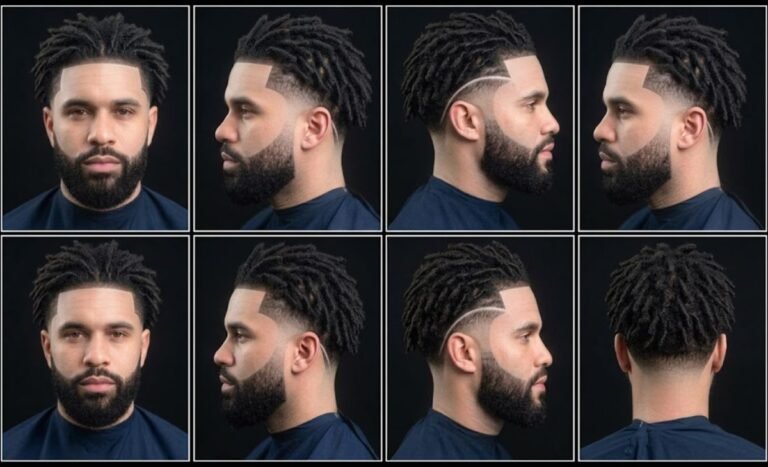
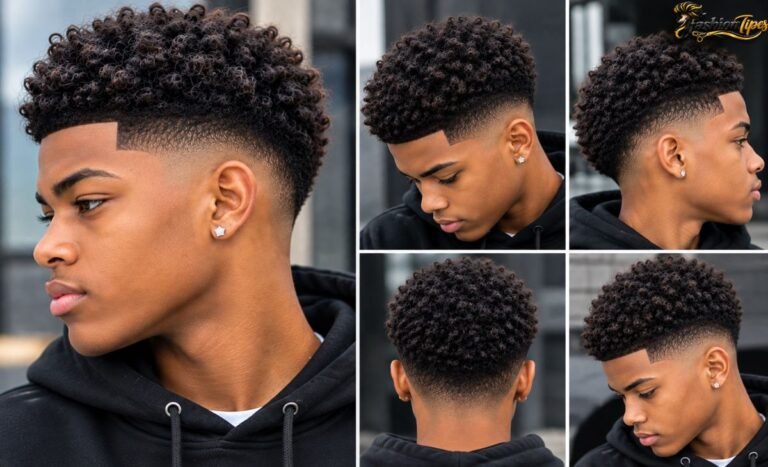
Curly hair changes the whole shape of this cut, since curls shrink up and add width. The taper stays the same, but the top should be cut slightly longer to account for shrinkage once it dries. A #2 guard on the sides paired with shears on top, not clippers, keeps the curl pattern intact. Curl-specific cream or gel is worth using here to define the curls without weighing them down.
Low Mullet Haircut Curly Hair
For curly hair specifically going low, the barber should cut dry, not wet, to see the true curl shape. This avoids the common mistake of cutting curls too short when they’re stretched out wet. A #1.5 or #2 fade on the sides works well against a fuller curly top. Regular deep conditioning matters here more than styling product, since dry curls fight the fade’s clean look.
5) Low Taper Mullet Wavy Hair
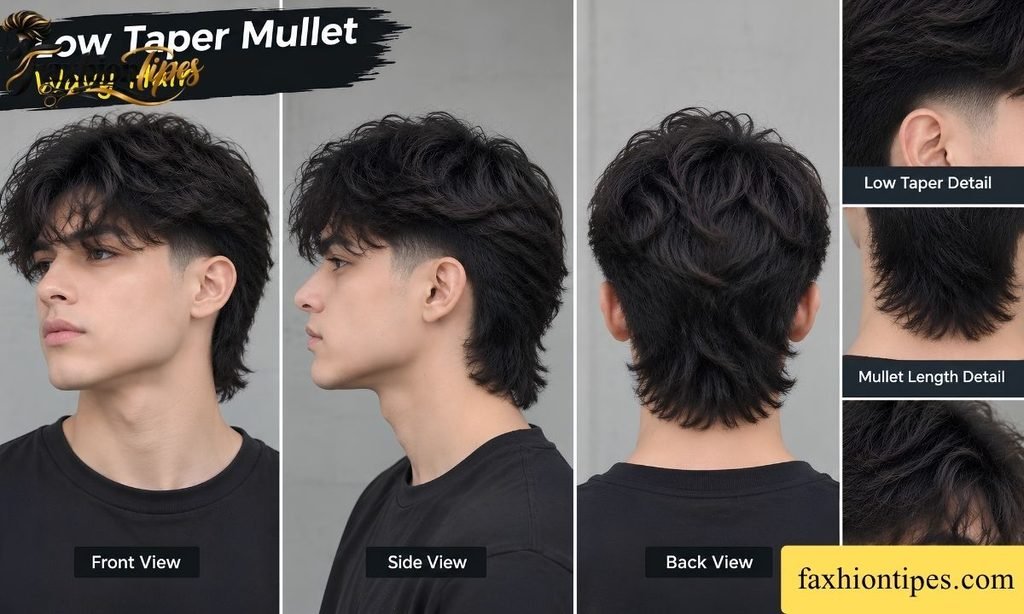
Wavy hair sits right between straight and curly, giving this cut natural texture without much effort. The waves add movement to the mullet’s back section, so it looks styled even on a lazy day. A #2 taper works well, with the top left around 4 to 5 inches to let the wave pattern show. A sea salt spray brings out the texture better than heavy pomades, which flatten waves.
6) Modern Mullet Taper Fade
This version leans into current trends with a sharper taper and a more textured, less blocky top. It suits guys who want their mullet to look intentional and styled, not accidental. Barbers usually pair a #1 to #2 low taper with point-cut texturing on top for a shaggier finish. Regular trims every 3 weeks keep the modern shape from turning into an unstructured mess.
7) Taper Mullet Fade
A taper mullet fade is a general term covering any mullet where the sides fade into a taper rather than staying one length. It’s the broadest category and includes low, mid, and high versions depending on where the fade starts. For a true low version, tell your barber “low taper fade mullet, blend starting at the ear.” This phrase alone avoids most miscommunication in the chair.
8) Mid Taper Mullet
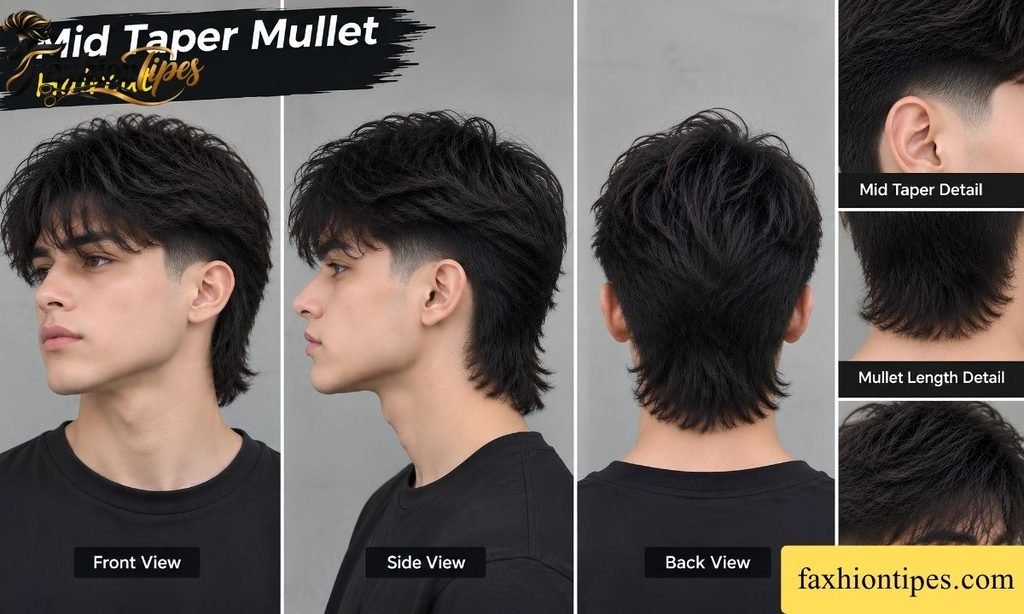
The mid taper mullet starts its fade higher than a low version but lower than a high fade. It works well for guys who want more visible contrast without going too dramatic. A #2 to #3 guard blending around an inch and a half above the ear is standard here. It grows out a bit slower than skin fades, so touch-ups every 4 weeks usually keep it clean.
9) High Taper Mullet
A high taper mullet takes the fade up near the temple, giving the most contrast of any version listed here. It’s a bolder look, better suited to guys comfortable with more attention on the sides. Ask for a #3 fading to skin starting just below the temple line. Because it’s higher maintenance, expect to visit the barbershop every 2 weeks to keep the fade sharp.
10) Tapered Mullet
A tapered mullet, without a specific “low,” “mid,” or “high” label, usually means a soft, gradual taper rather than a hard fade. There’s no skin showing anywhere; it’s just a smooth transition from short to long. This suits older clients or professional settings where a sharp fade feels too flashy. It’s genuinely low maintenance, needing a refresh only every 5 to 6 weeks.
11) Short Low Taper Mullet
This version keeps everything shorter, including the top and back, for a more subtle mullet effect. It suits guys easing into the mullet trend or those in conservative workplaces. A #2 taper on the sides with just 2 to 3 inches on top keeps things understated. It holds its shape longer between cuts since there’s less length to grow out of control.
Low Mullet haircut straight Hair
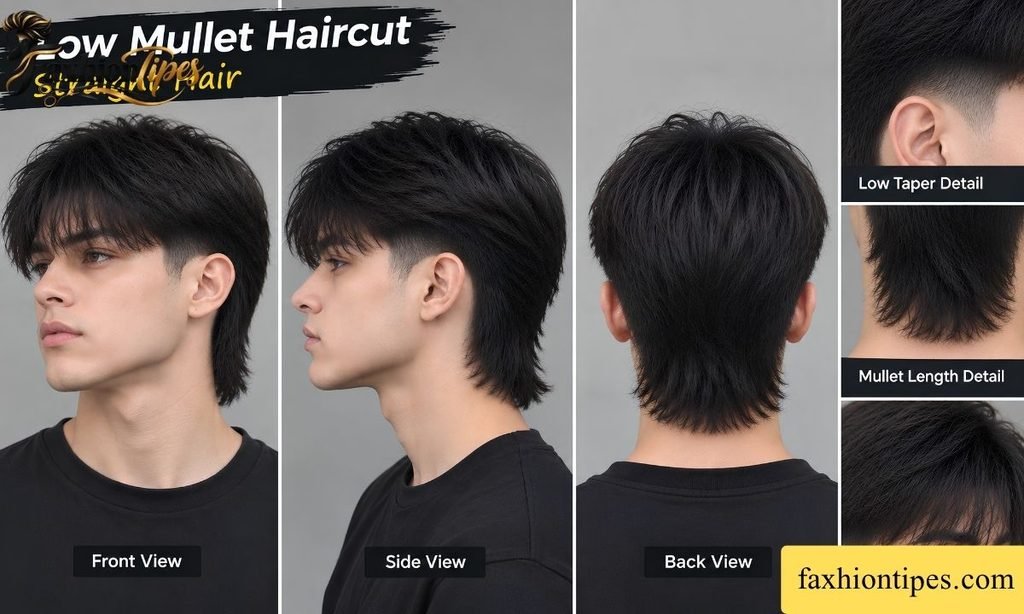
Going low with straight hair specifically means the barber can cut the fade almost surgically clean since there’s no texture hiding the line. This version photographs the sharpest of any hair type paired with a low taper mullet. A #1 to #2 blend works best, cut with the client’s hair completely dry for accuracy. A light matte paste finishes it off without adding shine that straight hair doesn’t need.
12) Low Taper Mullet Middle Part
Adding a middle part to a low taper mullet gives the top a different, more deliberate shape. It suits guys with straight or slightly wavy hair, since curls fight a middle part’s clean line. The top usually needs to be at least 4 inches to part properly without gaps. A blow-dry with a round brush, followed by light pomade, keeps the part from splitting open during the day.
13) Low Taper Mullet Flow
The “flow” version is all about the back and sides blending into one long, unbroken movement of hair. It works best on guys who want their mullet to look like it’s growing out naturally, not styled hard. The sides stay at a #2 taper while the top and back are left to grow past 5 inches. Air-drying with a light sea salt spray gives the most natural, effortless flow result.
14) Men’s Low Taper Mullet
This is really the same core cut, just the standard way most men ask for it across any hair type. It’s the safest option if you’re not sure which specific variation to request. A #2 taper on the sides with 4 inches on top is the reliable starting point most barbers use. From there, you and your barber can adjust length and texture at your next visit.
15) Low Taper Mullet Fade for Wavy, Curly, Straight
This final version is really a reminder that the low taper mullet fade adapts to any texture with small tweaks. Wavy and curly types need slightly more length left on top to account for shrinkage. Straight types can go shorter since there’s no shrinkage to plan around. Whatever your texture, a #1 to #2 fade on the sides stays the constant across all three.
Read more hair:low mullet haircut
FAQs
What is a low mullet haircut?
A low mullet is a subtle version of the classic mullet where the length difference between the front/sides and the back is minimal, giving a blended, low-maintenance look rather than a dramatic contrast.
How short should a low mullet be?
Sides and top are typically kept short (1-3 inches), while the back is left just slightly longer, often blending gradually rather than showing a sharp cut line.
Is a low mullet good for thin hair?
Yes, a low mullet works well for thin hair because the subtle length difference doesn’t require heavy volume to look intentional, and it can create the illusion of thickness.
How do you ask for a low mullet at the barber?
Ask for a “subtle mullet” or “low-contrast mullet” with short, faded sides, a slightly longer back, and a soft blend instead of a hard line between lengths.
Does a low mullet suit round faces?
Yes, a low mullet can suit round faces, especially with added height on top and shorter, tapered sides to elongate the face shape.
Summary
A low mullet haircut gives you a clean, modern base with room to make it your own. Whether your hair is straight, wavy, or curly, there’s a low taper mullet variation built for it. Bring the exact wording from this guide to your next barber visit, and you’ll walk out with the right cut the first time.