Low Taper Fade with Textured Fringe Blonde Hair Style
A low taper fade with textured fringe is one of the easiest haircuts to ask for and still walk out looking sharp. You get a close, clean fade near your ears and neck, then a soft blend up top into a choppy, textured fringe that falls over your forehead. It works on straight hair, wavy hair, and curly hair. It works blonde, brown, black, or bleached. Your barber can do it in about 30 to 45 minutes, and most shops charge between $25 and $60 depending on where you live.
This guide skips the fluff you see on other sites. You’ll get real guard numbers, real prices, a word-for-word script for your barber, and a face shape chart you can actually use. Let’s get into it.
What Is a Low Taper Fade Textured Fringe?
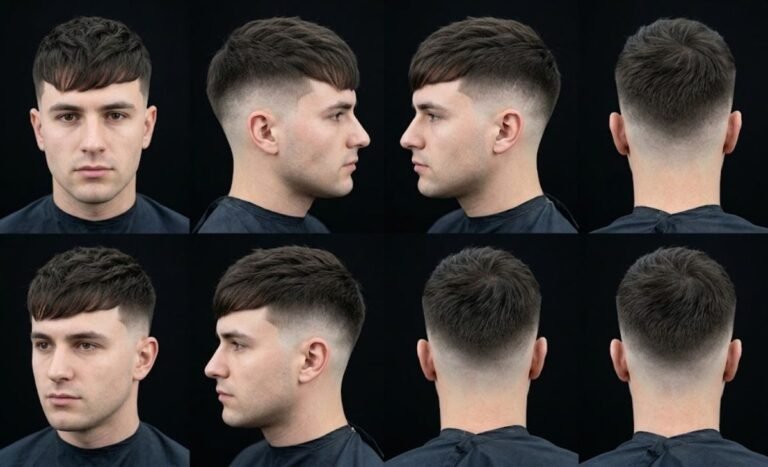
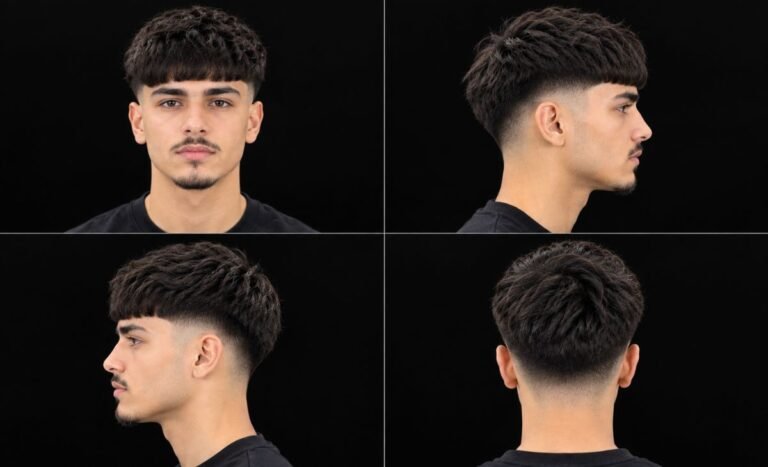
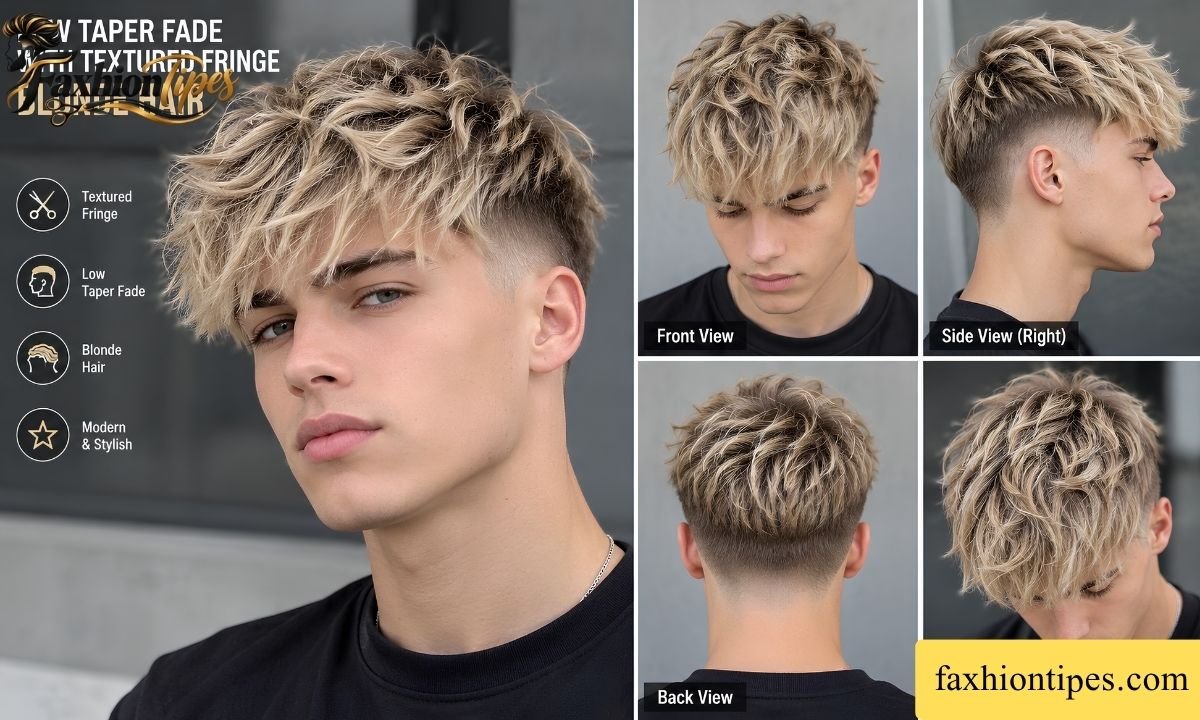
A low taper fade with textured fringe is a haircut that fades short near the neckline and ears, then keeps more length on top for a choppy fringe. The fade starts low, usually right above the ear, so it looks subtle from a distance. Up top, the barber leaves 2 to 4 inches of hair and cuts it with texturizing shears or a razor to break up thickness. The result is soft, piecey strands that fall forward instead of a stiff, combed-over look.
This cut is different from a high or mid fade because the short part stays close to the bottom of your head. Your natural hair color, or a fresh bleach job, shows up more since more length stays visible. Guys pick this style because it looks neat at work and still has personality on weekends.
Read more hair:low taper fade with textured fringe
Why This Style Became So Popular
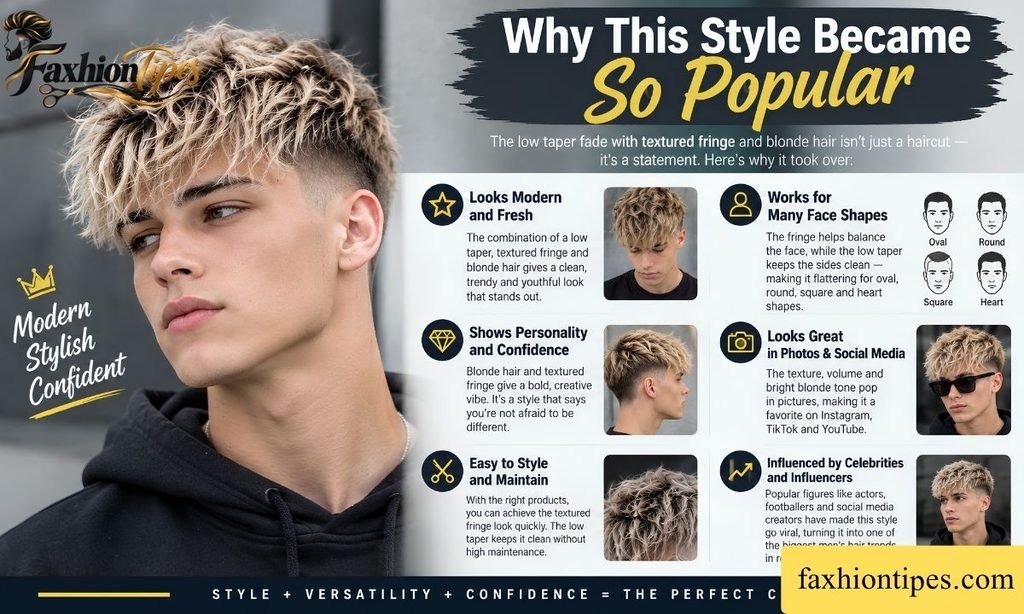
This style blew up because it looks good with almost zero daily effort. You wake up, run some product through the fringe, and you’re done in under two minutes. Barbers love it too, since the low fade hides growth longer than a high fade does. You can go three to four weeks between visits before it looks messy instead of styled.
Social media pushed this cut hard over the last few years. Barbers post before-and-after clips of the blend, and the textured top photographs well under any lighting. Add blonde or highlighted versions, and the contrast between the dark fade and the light fringe makes it stand out even more in photos.
What Fade Goes Best with a Textured Fringe?
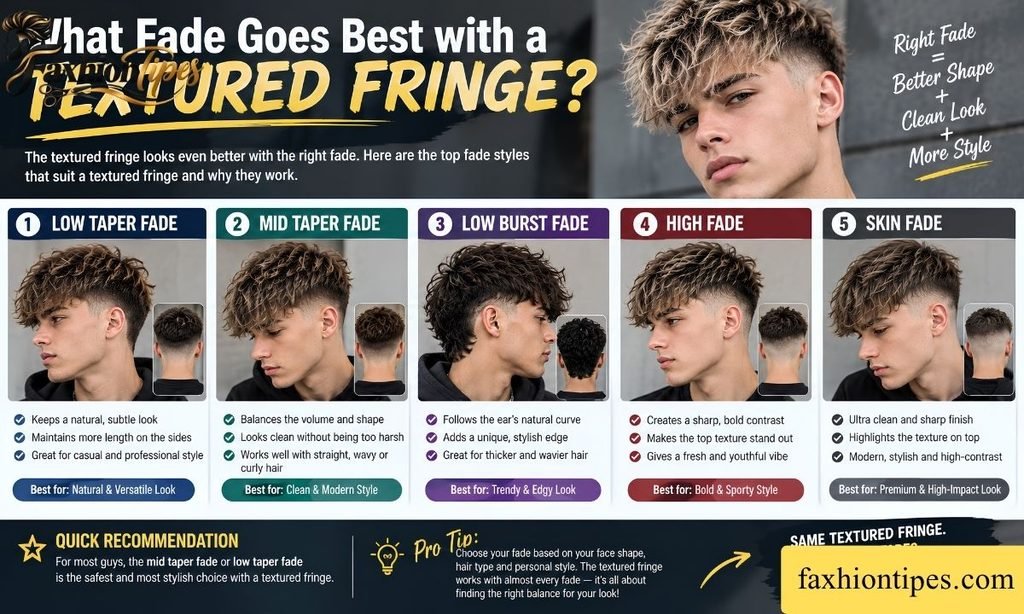
A low skin fade or a low bald fade pairs best with a textured fringe. The skin fade gives you a sharp, clean line at the bottom, which balances out the loose, messy texture on top. This contrast is what makes the whole haircut pop instead of looking flat.
If you want something softer for work or school, ask for a low taper instead of a skin fade. A taper blends the hair down gradually without shaving to the skin, so it reads as more conservative. Either option keeps the fringe as the star of the haircut.
| Fade Type | Look | Best For |
| Low skin fade | Sharp, bald near the skin | Bold, high-contrast style |
| Low taper fade | Soft blend, no bald spots | Office jobs, school, first-timers |
| Low bald fade | Same as skin fade, slightly higher | Guys who want a clean line but not too aggressive |
What Taper Fade Is Best?
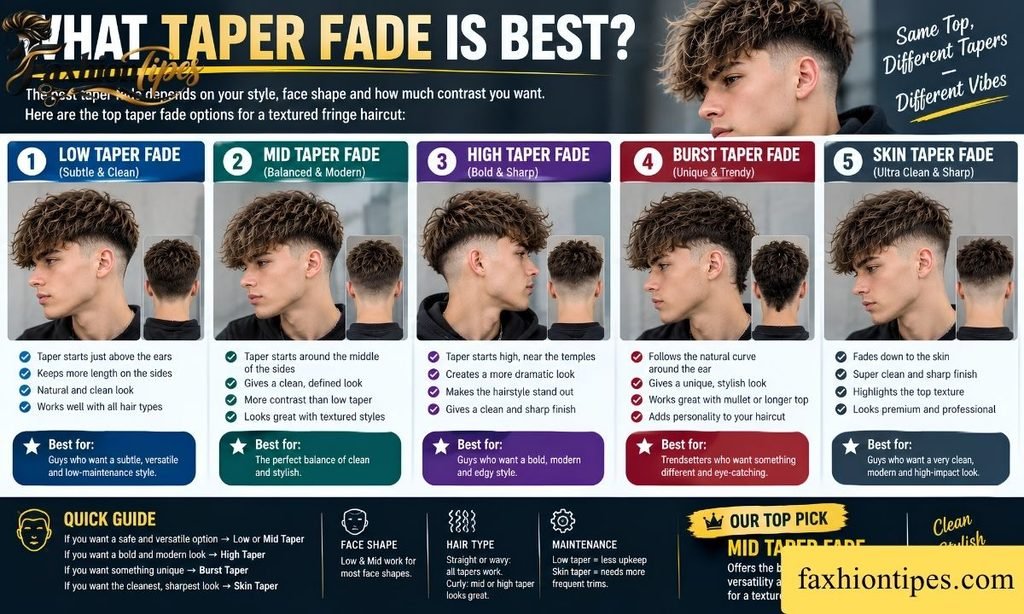
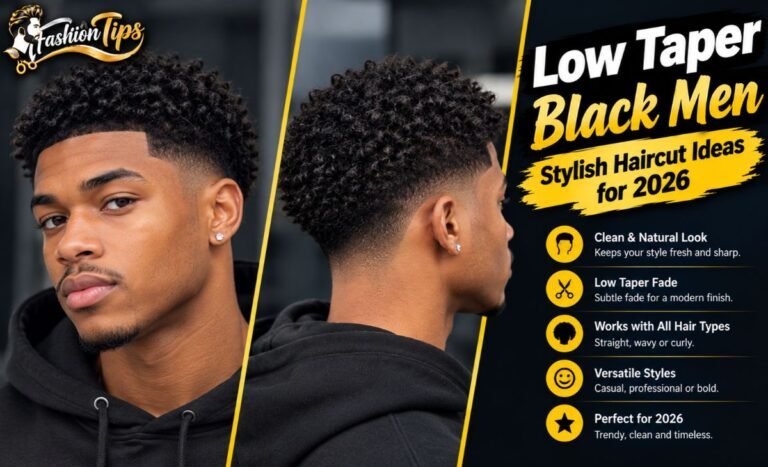
The best taper fade for this look uses a 1 or 1.5 guard on the sides, blending into a 0.5 or skin near the hairline. Most barbers start with a 2 or 3 guard higher up the head and step down as they move toward the ear and neck. This gradual drop is what creates that soft, low blend instead of harsh lines.
Ask your barber to keep the taper “low and tight,” meaning the fade line should sit at or below your ear, not up near your temple. A low taper fade with textured fringe looks best when the fade stays subtle and lets the fringe do the talking.
What Face Shape Suits a Low Taper Fringe?
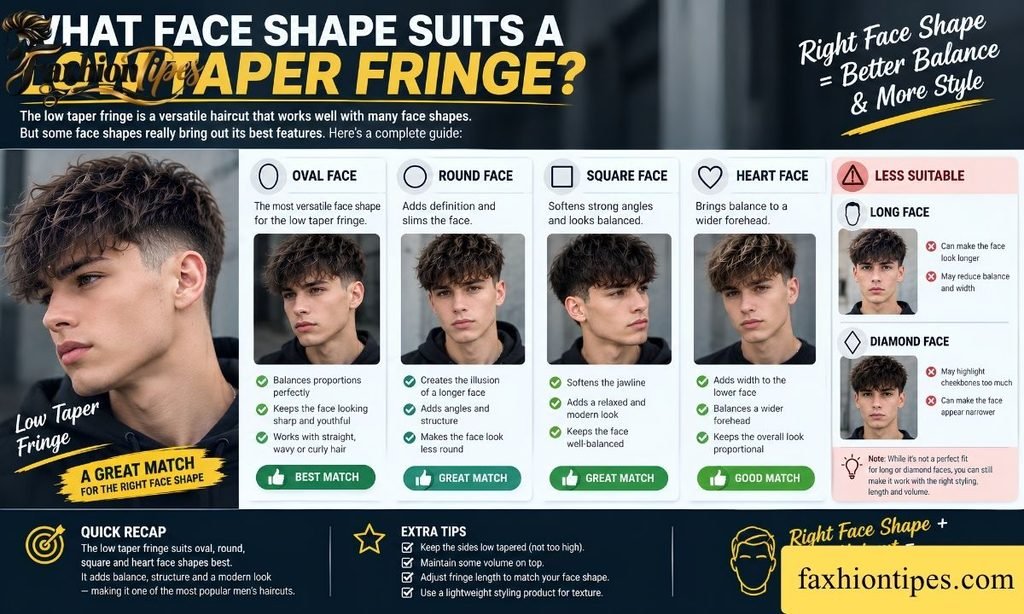
Round, square, and oval face shapes all suit a low taper fringe, though the fringe length changes for each one. A longer, side-swept fringe adds height and length to round faces. A shorter, straight-across fringe works well on square faces since it softens a strong jawline.
| Face Shape | Fringe Style | Why It Works |
| Round | Longer, side-swept fringe | Adds visual height, breaks up roundness |
| Square | Shorter, textured fringe | Softens strong jaw and angles |
| Oval | Almost any fringe length | Naturally balanced, hard to get wrong |
| Long/Rectangle | Fringe with more forward fall | Shortens the look of the face |
| Heart | Side-swept, wispy fringe | Balances a wider forehead |
If you have a long or rectangle-shaped face, avoid a fringe that’s slicked straight back. Keep it forward and low on the forehead so it visually shortens your face instead of stretching it.
Can I Get a Textured Crop with Fringe with a Low Taper Fade?
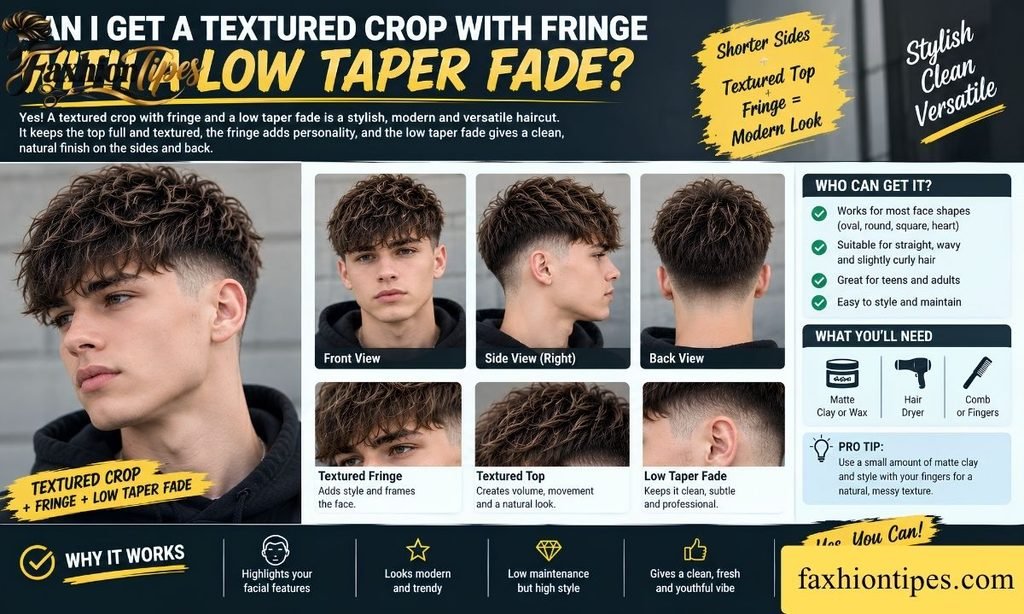
Yes, a textured crop with fringe and a low taper fade is one of the most requested combos in barbershops right now. The textured crop refers to the top section, where hair is cut short and choppy, usually 1 to 2 inches long, rather than the longer 3 to 4 inch fringe.
This version suits guys with thick or wavy hair since the shorter length is easier to manage daily. It also grows out cleaner than a longer fringe, so you can stretch your barber visits a bit longer without it looking shaggy.
Variations of the Low Taper Fade with Textured Fringe
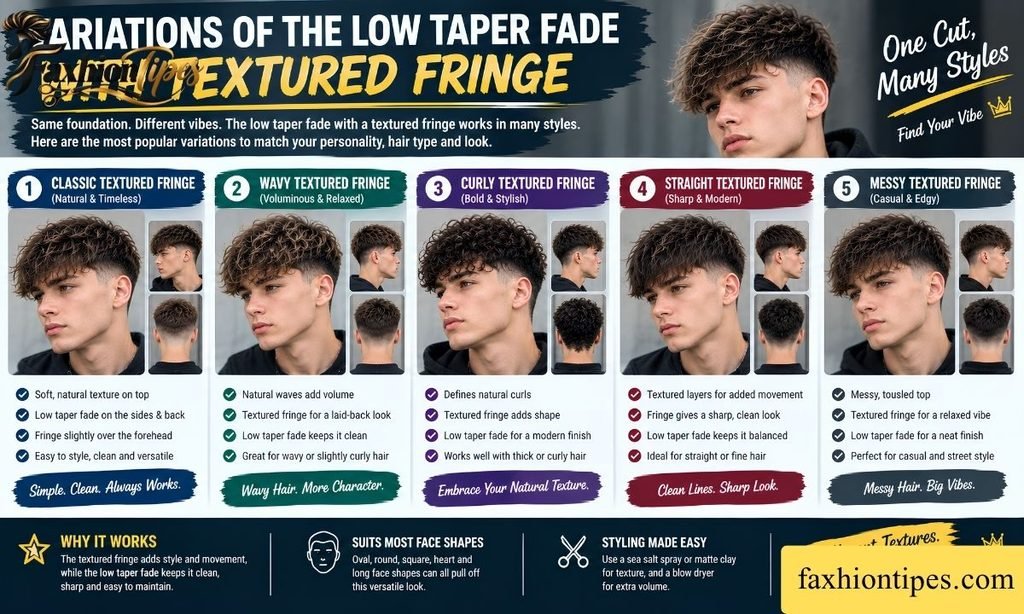
There’s no single way to wear this haircut. Your hair type, face shape, and daily routine all change which version fits you best. Below are the most requested versions barbers see every week.
Short Textured Fringe
This version keeps the top length around 1.5 to 2 inches instead of longer fringe styles. It suits guys with thick, straight hair who don’t want extra bulk sitting on their forehead. Ask your barber for a 2 guard on top blended into a 0.5 or skin fade on the sides. Because the hair is shorter, you only need a small amount of matte paste to hold the texture through the day.
Wavy Fringe with Low Taper
Wavy fringe relies on your hair’s natural bend instead of a straight, combed look. It works great for guys with type 2 wavy hair who want texture without using a flat iron. Keep the top length around 3 inches so the waves have room to show, and pair it with a 1 guard fade on the sides. A sea salt spray brings out the wave pattern better than gel does.
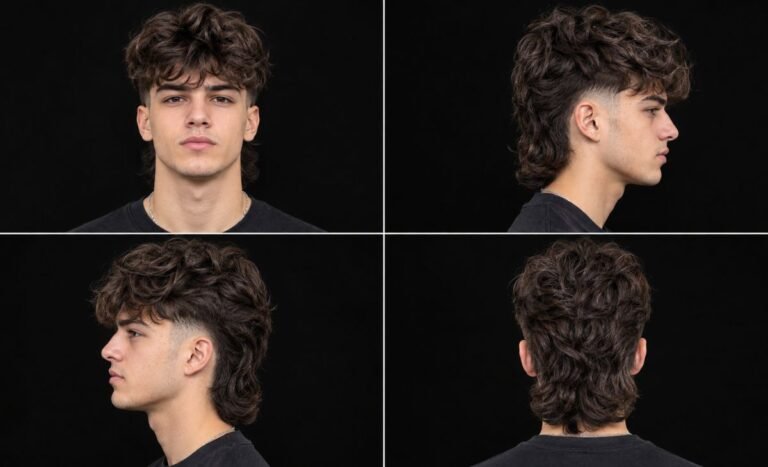
Low Taper Fade with Textured Fringe Front View
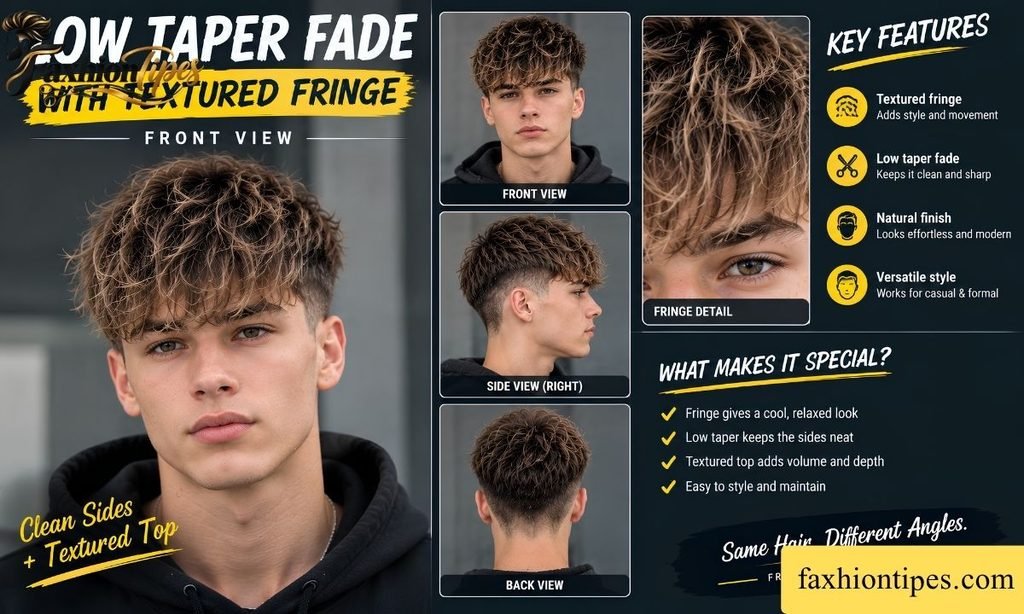
From the front, this haircut shows off the fringe falling just above the eyebrows, with the low fade barely visible under the ears. The front view is what most guys screenshot to show their barber, since it captures the length, the part, and the texture in one shot. A good front view has clean, separated pieces, not one solid clump of hair. Barbers usually finish this look with a texturizing spray to keep strands looking separated instead of flat.
Curly Fringe Low Taper
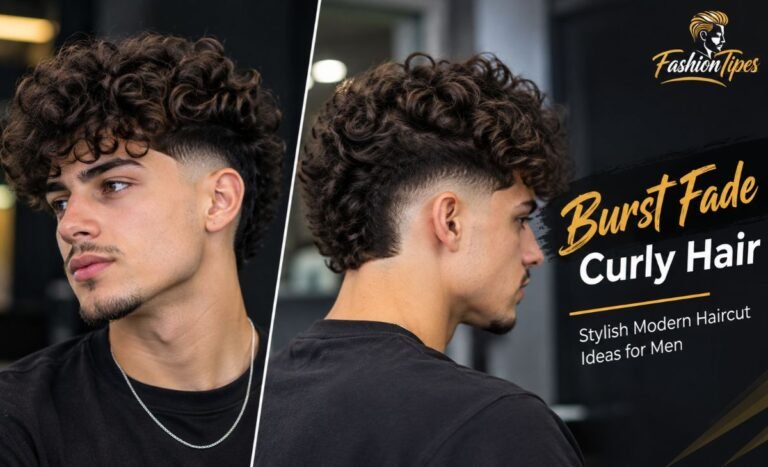
Curly fringe keeps your natural curl pattern intact on top while the sides stay tight and faded. This works best for guys with type 3 curly hair who’ve struggled to find a fade that doesn’t fight their curls. Ask for a low taper, not a skin fade, since curly hair needs a bit more length near the part line to blend smoothly. A curl cream or curling custard, applied to damp hair, keeps the curls defined without frizz.
Messy Textured Fringe
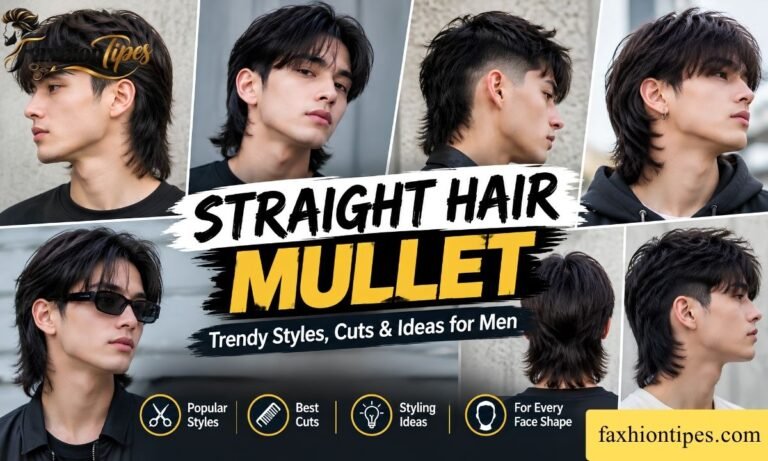
The messy version skips the neat comb-over look for a piece-y, undone finish. It suits guys who want a low-maintenance daily routine, since you can style it in under a minute with your fingers. Barbers create this by point-cutting the ends instead of cutting a straight line across the fringe. A light matte clay, worked in while hair is still slightly damp, gives the best messy texture that lasts all day.
Layered Fringe with Low Taper
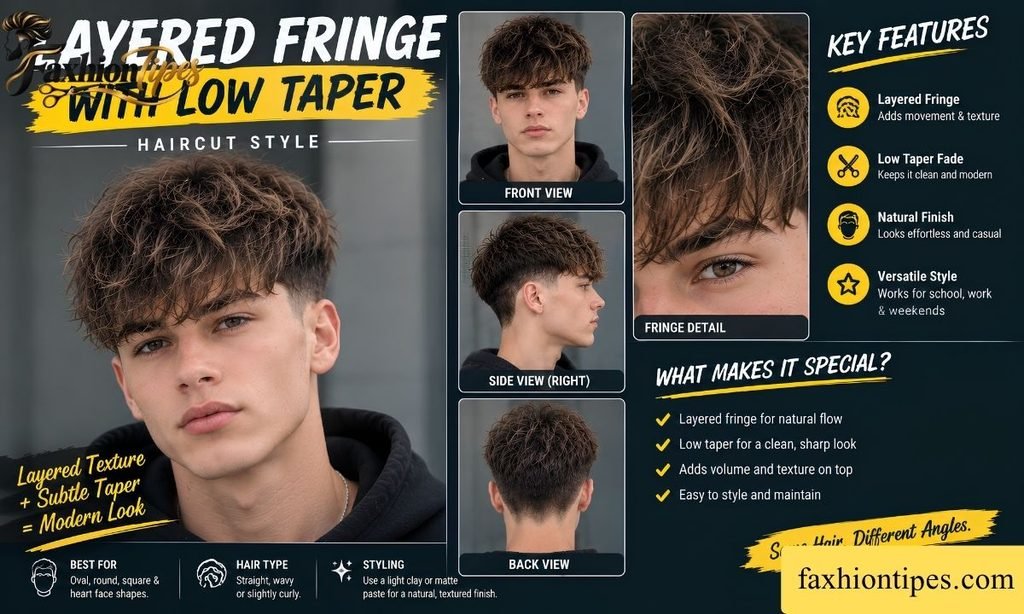
Layered fringe uses two or three length levels on top instead of one uniform length. It works well for guys with fine or thin hair, since the layers create the illusion of more volume. Ask your barber to point-cut layers starting around 3.5 inches at the crown, shorter near the fringe. A volumizing mousse, applied at the root, keeps the layers looking full instead of falling flat by midday.
Low Taper Fade with Textured Fringe Short
The short version brings the whole haircut down in length, both the fringe and the fade blend. It suits guys in more formal jobs who still want texture but need a tidier, shorter overall look. Length on top usually sits around 1 to 1.5 inches, faded into a 1 guard on the sides. Because it’s shorter, this version needs a fresh cut every 3 weeks to keep the shape sharp.
How Your Barber Creates This Haircut
Your barber starts with clippers on the sides and back, working from a shorter guard near the neck up to a longer guard near the crown. This is the taper fade part, and it usually takes 10 to 15 minutes to blend cleanly with no visible lines.
Next, they switch to shears or thinning scissors for the top section. They point-cut or texturize the fringe to remove bulk and create those separated, choppy pieces. The whole haircut, start to finish, takes 30 to 45 minutes at most shops.
Here’s the general flow:
- Clipper work on sides and back, starting low with a 0.5 or 1 guard
- Blend up toward the crown, switching guards every half inch or so
- Comb the top section forward and point-cut the fringe to your chosen length
- Texturize with shears to break up thickness
- Style with product and check the fade in the mirror from both sides
What to Say to Your Barber
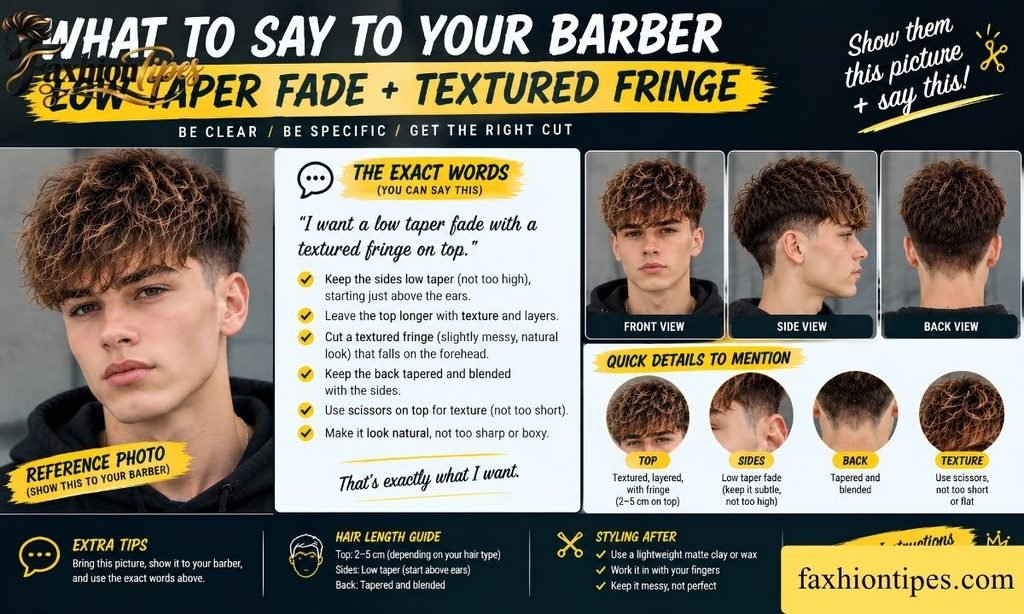
Bring a photo, but also use words your barber hears every day. Try this: “I want a low taper fade, blended low near my ears, with a textured fringe on top around three inches long. Keep the top choppy, not straight across, and point-cut the ends.”
If you’re not sure about guard numbers, say this instead: “Keep it tight on the sides, nothing bald, and leave enough on top that I can push it forward with product.” Most barbers can translate that into the right guards without you needing to know the exact numbers yourself.
Low Taper Fade with Textured Fringe Blonde
Blonde versions of this cut show off the texture even more because lighter hair catches light differently than dark hair does. The contrast between the low, dark-shadowed fade and the bright, bleached fringe gives the whole haircut extra depth. If you’re going full blonde, plan for a toner touch-up every 3 to 4 weeks to stop it from turning brassy. Barbers usually recommend a purple shampoo once or twice a week to keep the blonde looking fresh between salon visits.
How to Style a Low Taper Fade Textured Fringe at Home
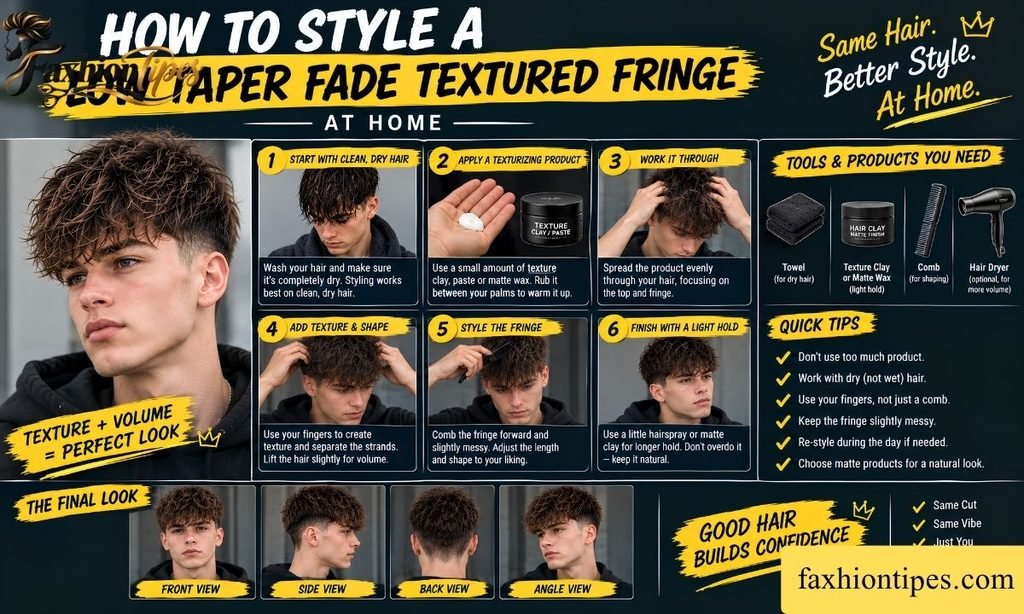
Start with damp, towel-dried hair, not soaking wet hair. Product spreads and holds better when hair is about 70% dry. Rub a dime-sized amount of matte clay or paste between your palms, then work it through the fringe from the roots to the tips.
Use your fingers, not a comb, to push the fringe forward and create separation between pieces. A comb makes it look too neat and flat, which isn’t the point of the textured look. Finish with a light texture spray if you want extra grip that lasts through a humid day.
Daily styling routine:
- Towel-dry hair until damp, not wet
- Apply a dime-sized amount of clay or paste
- Work product through with fingers, pushing hair forward
- Add texture spray for extra hold if needed
- Adjust the fringe part with your fingers, not a comb
Maintenance and Hair Care
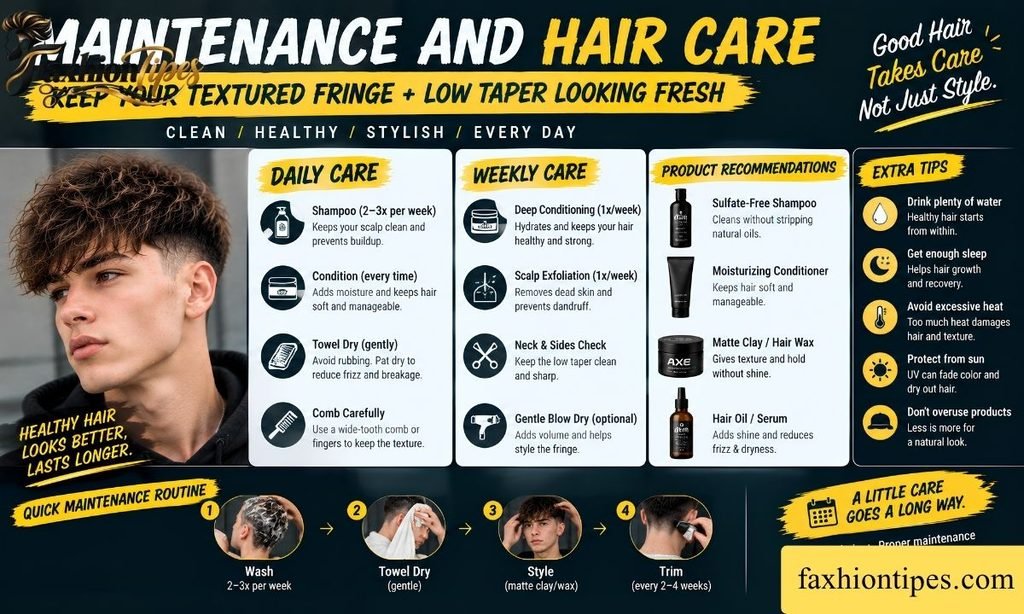
Wash your hair every 2 to 3 days, not every single day. Washing too often strips natural oils and makes styling products harder to work with. On non-wash days, a light spritz of dry shampoo at the roots keeps things looking fresh.
Trim the fringe yourself between barber visits if it starts falling into your eyes. Use small, sharp scissors and only snip a tiny bit at a time. It’s easy to cut too much, so go slow and check in the mirror often.
Barber Visits
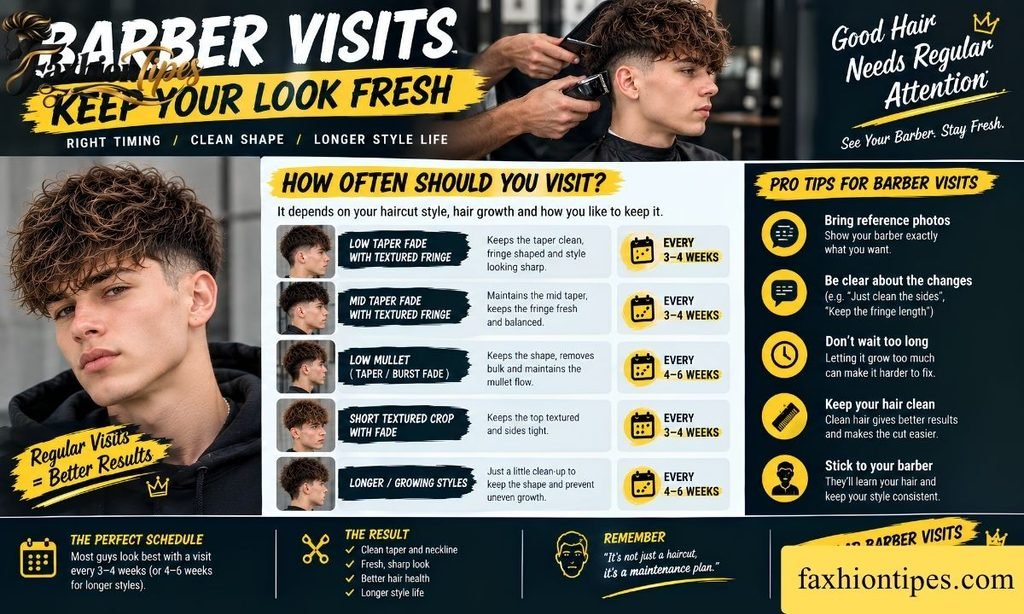
Book a fresh cut every 3 to 4 weeks to keep the low taper fade with textured fringe looking sharp. The fade grows out faster than the top, so waiting longer than a month usually means the contrast between the sides and top starts to disappear.
Most barbershops charge $25 to $40 for a standard taper fade, and $35 to $60 if you add a skin fade, a design, or a shampoo service. Tipping 15 to 20% is standard in most areas, and a bit more if your barber nails a tricky blend on curly or thick hair.
Read more hair:low taper fade with textured fringe
FAQs
What is a low taper fade with textured fringe?
It’s a haircut where the sides gradually shorten near the ears and neckline (taper fade) while the top hair is left longer and cut with texture to create a piecey, movable fringe over the forehead.
Is a low taper fade good for thick hair?
Yes, it works especially well on thick or wavy hair since the texturizing removes bulk and the fringe adds natural-looking movement and shape.
How often should I get a low taper fade trimmed?
Most people need a touch-up every 2 to 4 weeks to keep the taper clean and the fringe from growing out of shape.
What’s the difference between a low taper and a mid taper fade?
A low taper starts fading near the ears and hairline, while a mid taper starts higher, around the temples, giving a slightly shorter overall look.
Does a textured fringe work for a receding hairline?
Yes, a textured fringe can help soften and disguise a receding hairline by adding volume and broken lines at the front.
Summary
A low taper fade with textured fringe gives you a clean, low-effort haircut that still looks intentional. The fade stays subtle near your ears, while the fringe on top carries all the personality and texture. Pick a variation based on your hair type, whether that’s wavy, curly, thick, or fine, and match your fringe length to your face shape for the best result.
Bring the barber script from this guide to your next appointment, ask about guard numbers, and book your next trim before the four-week mark. Your barber will thank you for showing up with clear direction instead of just a vague photo.